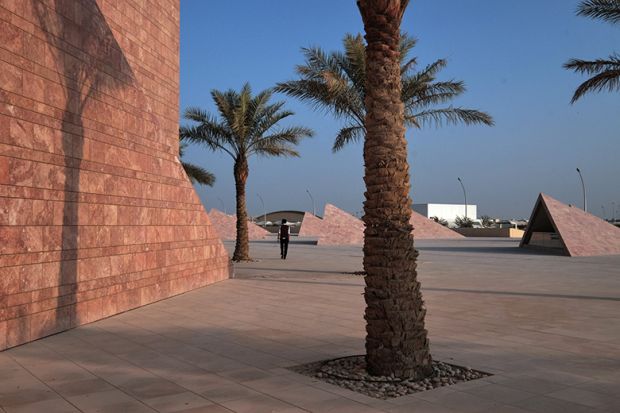
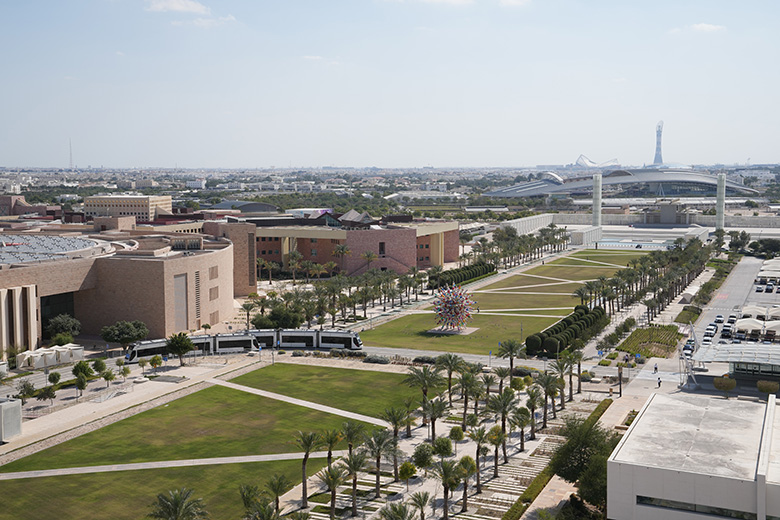
On the western edge of Doha, a succession of striking contemporary buildings with Islamic architectural trappings are scattered along a wide, palm tree-lined boulevard. Once nothing but desert, this 12 square kilometre sector of valuable Qatari real estate is now home to a cluster of universities, research institutions, a public library and a modern mosque.
This is Education City, the original international education hub, officially inaugurated in 2003 and now containing six overseas branch campuses of US universities, including Georgetown, Northwestern and Carnegie Mellon, plus one operated by the HEC Paris business school and Qatar’s Hamad Bin Khalifa University.
The official purpose of Education City is to bring “world-class education to Qatar’s doorstep”. But the co-location of the campuses is not just supposed to make life easier for Doha’s town planners. The Qatar Foundation’s vision is that interactions between the neighbouring institutions will make the purpose-built site a “pretty unique place” that is greater than the sum of its parts: “During just one short walk – or tram ride – around campus, you could be visiting an Ivy League university, cross the street to browse one of the region’s largest libraries, and then attend an open mic at the neighbouring university behind it.”
Yet since it was founded, Education City’s claims to uniqueness have been sorely tested as several other Asian countries have established their own international education hubs. Neighbouring Dubai opened its Academic City in 2007. Malaysia has EduCity Iskandar, Korea has Incheon Global Campus. China is currently building Hainan Li’an International Education Park, with a plan to be a “world-class education park with major influence” by 2050. And India has recently announced that it will open its own “EduCity” on a 250-acre site in Navi Mumbai, a city in the Mumbai Metropolitan Region, with interest reportedly already expressed by the universities of Aberdeen, York and Western Australia, as well as the Illinois Institute of Technology and Italy’s Istituto Europeo di Design.
Hub campuses have lots to offer Western universities seeking to establish a foothold in Asia. Construction, which often includes accommodation and sports facilities as well as academic infrastructure, is often heavily subsidised or funded outright by the developer or quango responsible for the development. Notes on navigating an unfamiliar regulatory jungle can potentially be compared with fellow travellers. And then, of course, there is all that cross-pollination, turning what could otherwise be a somewhat isolated and sleepy outpost into part of a vibrant campus.
Yet the recent announcement by Stanford University that it will close its research centre on the Incheon Global Campus (IGC) after five years of operation – citing “financial and operational difficulties” – has cast further doubt on how successful these developments really are in practice.
Stanford is by no means the first university to withdraw or cancel plans to launch in a global educational hub. The University of Aberdeen abandoned its own plans to open an IGC campus focused on offshore engineering in 2019 owing to financial and logistical difficulties exacerbated by a downturn in the oil and gas industries.
And in 2019, the University of Reading had to drastically scale back its Malaysia campus after running up multimillion-pound losses, halving its workforce and releasing one of its two EduCity buildings.
And Education City has not been immune. In 2024, Texas A&M University’s board voted to close its campus there by 2028, citing “heightened instability in the Middle East”. In a press statement issued in 2024, board chairman Bill Mahomes said: “By the middle of the 21st century, the university will not necessarily need a campus infrastructure 8,000 miles away to support education and research collaborations.”
And UCL withdrew from Education City in 2020 after choosing not to renew its 10-year contract with the Qatar Foundation. Its cultural heritage and museum studies programmes were transferred to Hamad Bin Khalifa.
So do international education hub campuses ever live up to the hype? How cautious should universities be before getting involved in one? And if a university is set on establishing a branch campus, would it actually be better to set it up in a location of its own choice?
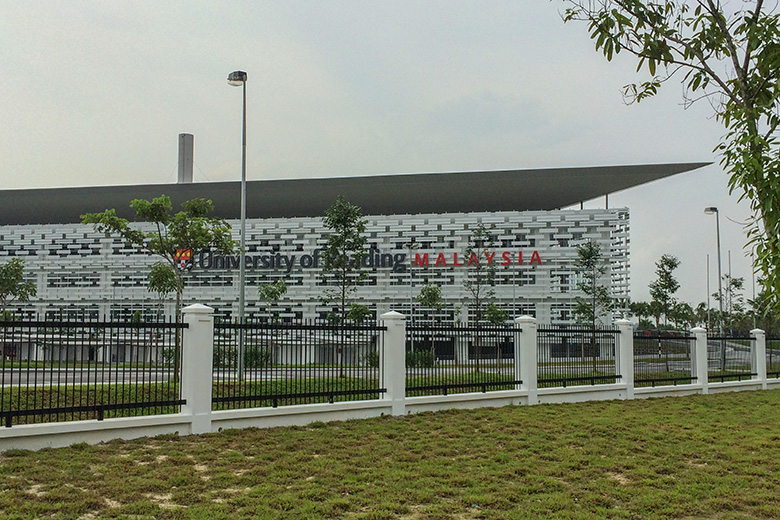
Adrian Mutton, founder and executive chair of consultancy Sannam S4 Group, said establishing outposts at international education hubs comes with potential reputational and marketing advantages, offering universities “a little bit more visibility and a little bit more credibility”. Moreover, the shared facilities and infrastructure lower the financial risk and make it “more affordable” since “they’re not all having to set up single canteens, single sports facilities, single central spaces and so on”.
That view was endorsed by Vincenzo Raimo, an international higher education consultant who was previously pro vice-chancellor for global engagement at Reading and chair of its Malaysia campus.
There, “the shared sports facilities, including the stadium and swimming facilities, were on a scale that would have been very difficult to justify for an individual institution, particularly while it was still relatively small,” he said.
However, shared infrastructure also means “giving up some control”, he added.
“You can influence how common facilities and services develop, but ultimately you don’t control them.”
And that can have negative consequences. For instance, “some of the early accommodation provision at EduCity simply wasn’t well suited to the private higher education market, particularly the international students we were seeking to attract,” he explained. “We therefore had to identify alternative off-campus provision.”
Moreover, the university’s lack of control over the hub’s location can also throw up recruitment challenges. Such hubs are often on the outskirts of cities – and those cities are not always ones to which students are naturally drawn.
As Mutton put it, many global hubs haven’t “got the connectivity proposition right with urban environments that appeal to the students in the first place”. For instance, getting to IGC is “a little bit of a mission” in his experience.
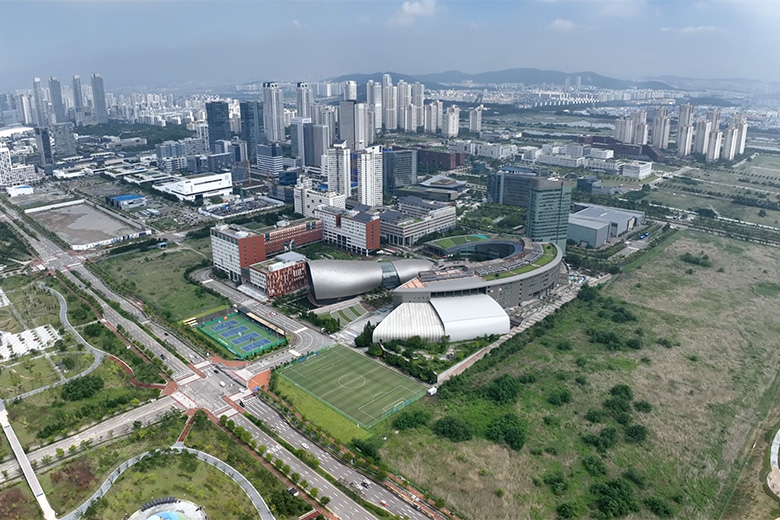
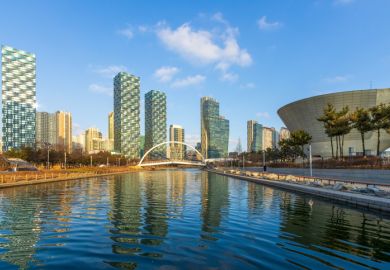
Launched in 2012 with the aspiration to host 10,000 students and 10 international campuses by 2025, IGC was constructed in Songdo, an internationally oriented “smart city” within the city of Incheon, about 30km south west of Seoul. Songdo, built entirely on land reclaimed from the Yellow Sea, was central to Korea’s vision of building a north-east Asian regional hub and attracting a UN agency (the Green Climate Fund is now headquartered there). But it is not central to many students’ aspirations about where to pursue their higher education and, currently, only five international universities are open on IGC. And as of 2024, student enrolment had reached 4,225, less than half the 2025 target.
“If you look at the appeal for a young international student or local student, they want to be part of the Seoul metropolis,” Mutton argued. “They want to be able to go and enjoy the city for all it’s worth.” Hence, he doubts that previous students who were drawn there by the internationalisation rhetoric “are coming back with the best reviews. I don’t think it’s living up to the expectations in all cases, certainly not…from a student experience perspective.”
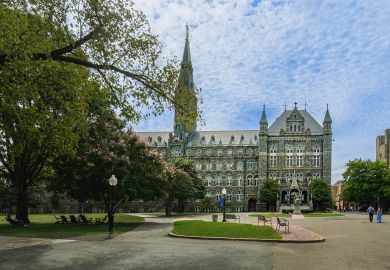
Qatari students are presumably happy with Education City’s location in the country’s capital – albeit on its periphery. Moreover, unlike at other international hubs, students at one campus there can register for additional courses run by any of the others. And the options are wide. By a mix of direction from the Qatar Foundation and self-organisation by the institutions themselves, the campus covers a wide range of non-overlapping subjects. Northwestern specialises in media, for instance, while Weill Cornell Medicine-Qatar offers medicine and Georgetown focuses on political science and liberal humanities.
Gagan Oberoi, executive director (TNE) at Acumen, said such “programme exclusivity” is “fundamental” to the success of an international education hub.
“If you start competing for the same student cohort and it is not large enough, then that advantage of having multiple universities turns into a slight disadvantage,” Oberoi said. “Initially, there is always a focus on collaboration, but if things are not going well, it starts to turn into a competing environment.”
But there are still questions about how vibrant campus life at Education City is – and, related, how successfully it fulfils its cross-pollination aspirations.
Karl Widerquist, professor of philosophy at Georgetown University in Qatar, said one of the campus’ “big fails” is how spread out its constituent parts are, making for a relatively low population density.
And that view was endorsed by Widerquist’s colleague Ian Almond, professor of world literature. While the “sprawling campus...along a main boulevard” is “really impressive” architecturally, “one of the effects” of that size is that it is “hard to bump into people”, he said. “Everybody’s in their own kind of little bubble.”
Those bubbles are certainly gilded. Over the past two decades, Georgetown, in common with its Education City neighbours, has received many millions of dollars from the Qatar Foundation to run its Qatari outpost. But the finances of running a hub campus are not always so rosy, according to Raimo.
“It would be misleading to conclude simply that a stand-alone campus is financially riskier than being located in an education city,” he said. “You really need to look…at the ownership, financing and risk-sharing arrangements.” For example, “the University of Nottingham’s stand-alone Malaysia campus was established with substantial local investment and Nottingham was a minority shareholder”. Reading’s Malaysian subsidiary, on the other hand, is wholly owned – and financed – by the university.
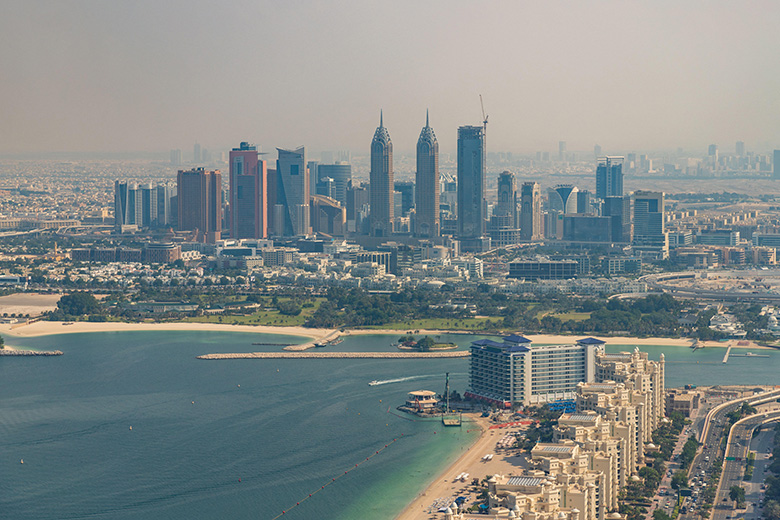
Moreover, developing a campus with a commercial partner can be complicated. Last year, for instance, De Montfort University was accused of “illegally terminating” its contract with the company that helped establish its Academic City campus, which opened in 2021. In 2024 the university announced that it was moving to a larger space at a different development, Dubai Internet City, half an hour’s drive across the city and much closer to the waterfront.
And even when the host nation is liberal with its investment, the money only goes so far. While Georgetown Qatar is “working fine” on its current small scale, it would take “massive investment” from the Qatari government to make it “a real knowledge hub”, Widerquist said.
Nor are large initial state investments always sustained. For instance, while the Korean government initially invested $1 billion in IGC, to establish scholarships for international students and accommodation for faculty, funding has since “largely dried up”, according to one professor who used to teach there, who spoke to Times Higher Education on the condition of anonymity. Hence, the opulence of the promised “luxury apartments” for international faculty was “scaled back”, for instance.
Disputes about degree accreditation and academic standards also arose. US universities wanted to add a disclaimer on IGC degree certificates to say the classes were taken in Korea. But students’ families “baulked” at such a suggestion. The universities backtracked, but students’ confidence in the campus was damaged, the academic said.
Nor, it seems, were employers convinced by those certificates. For example, the academic knows of a student who dropped out of Ghent University’s Incheon campus after an older peer struggled to get employers to recognise their qualification despite graduating with a very high GPA – in part, the academic believes, because the US grading system is unfamiliar to Koreans.
On the other hand, there is one aspect of IGC that is not distinctive enough, according to Oberoi: “English-medium instruction was one of the strong value propositions that they had for the domestic students. But as there are so many high ranked universities already in Korea increasing their English medium instruction, that differentiator doesn’t really remain.”
Enrolment in Korea, especially outside Seoul, is already struggling because of demographic decline, but other universities with outposts at IGC appear to be flourishing. George Mason University’s campus, which opened in 2014, saw enrolment grow by more than 12 per cent this year, buoyed by a 37 per cent increase in international students.
“Mason Korea is an important part of the university’s global strategy,” a university spokesperson told Times Higher Education, operating “as a financially self-sustaining unit” and generating $7.9 million (£5.9 million) in revenue this year.
The University of Utah has also experienced sustained growth in student enrolment at IGC. Entering a second decade in Korea, Randy McCrillis, vice-provost for global engagement and university connected learning, said that Utah is “actively planning” for the “continued growth and development” of its campus.
And there could yet be further additions to IGC. In 2024, the University of Southampton told THE it was exploring “establishing a presence in South Korea” and had signed a memorandum of understanding with Incheon city leaders – although when asked for this article whether the plans had progressed, a spokesperson for Southampton said the position “has not changed”.
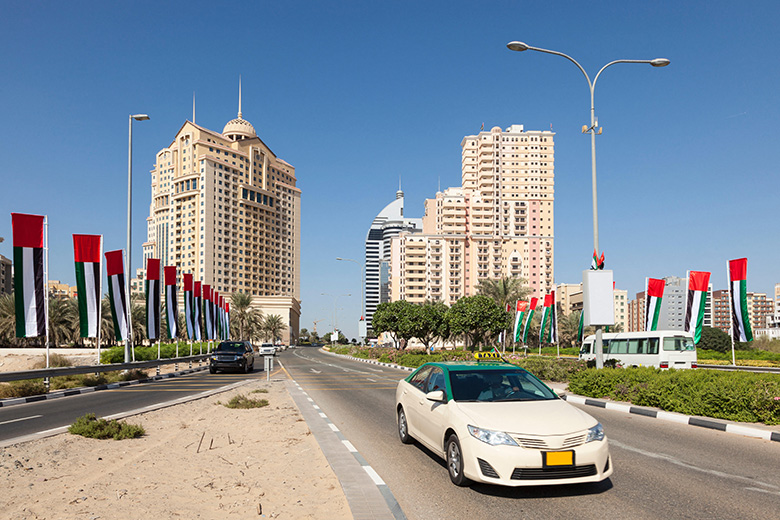
IGC’s small number of institutions contrasts starkly with the 27 at Dubai’s Academic City, including Indian, Australian and UK institutions. And nor do such higher numbers necessarily lead to cut-throat competition. The range of tuition fees and value propositions of the various campuses makes it easier for them to work together in attracting students, Oberoi said. And while there is some overlap in the programmes offered, there is “enough [student] demand owing to the job opportunities in the UAE”.
Phil Anderson, assistant professor of education at the University of Birmingham Dubai, explained that the UAE has experienced rapid population growth in the past two decades, driven by its emergence as a global hub for business, technology, finance and professional services. “With that comes a pool of people seeking…high-quality education and research,” he said. And expatriate families who have moved to the Gulf and who may previously have sent their children to more traditional higher education destinations in the US and Europe “are increasingly choosing to educate them locally”, Anderson added.
Proximity to industry has also been factored into the design of India’s GIFT City (Gujarat International Finance Tec-City), conceived of by the Gujarat state government as a global financial and business hub. University branch campuses are being lured there – although not to a specifically designed hub – with the promise of tax breaks provided that they offer STEM- and finance-focused degrees. Deakin University, the University of Wollongong and Queen’s University Belfast have all opened campuses in the still developing city, with Surrey and Coventry universities joining them next year.
Rahul Choudaha, managing director of DrEducation Research, echoed Oberoi’s view that “industry benefit” is fundamental to the success of international education hubs, adding that co-location with industry can create better outcomes for students in terms of “salaries and networking”.
But Choudaha says the GIFT City campuses “won’t have a major impact” for at least five years, noting that initial student cohorts are very small. But in the “medium to long term, there is a very promising opportunity for universities…if they have the staying power and the investments to be put into it”.
Yet history suggests that the scale of that promise may be somewhat limited. In the view of Acumen’s Oberoi, there are “very few examples of highly successful branch campuses” anywhere, whether on a hub campus or established in splendid isolation. Even at Education City, “it took a lot of time and a lot of effort” to attain “the kind of [enrolment] numbers that make them sustainable”, he said. And there are fears that the heightened regional instability brought about by the US-Israeli war with Iran may reverse that progress (Georgetown’s campus recently closed for five months amid fears of an Iranian attack).
But for universities on a hub campus, the key is to identify both “where [it] adds value to the hub campus and how it benefits from its presence there”, Raimo said.
“Whether that works in practice depends significantly on the quality of that wider environment, the governance arrangements and, ultimately, whether there’s sufficient student demand at a price point needed to sustain the institutions within it.”
Register to continue
Why register?
- Registration is free and only takes a moment
- Once registered, you can read 3 articles a month
- Sign up for our newsletter
Subscribe
Or subscribe for unlimited access to:
- Unlimited access to news, views, insights & reviews
- Digital editions
- Digital access to THE’s university and college rankings analysis
Already registered or a current subscriber?