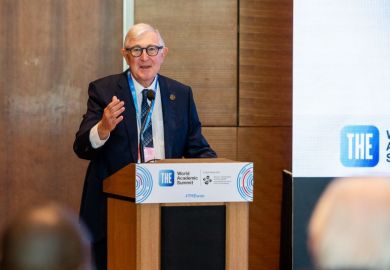
What do the 2026 Sustainability Impact Ratings tell us about the countries and regions whose universities are prioritising work towards the UN Sustainable Development Goals?
Manchester knocks WSU off top spot, while lower income countries like Malaysia narrow the gap with wealthier competitors in tables showing best universities for sustainability, writes Patrick Jack
The Sustainable Development Goals – and independent assessments based on them – help guide the University of Manchester towards its ‘north star’, writes vice-chancellor Duncan Ivison
Improving sustainability and resilience can be a way of life for a higher education institution, writes Western Sydney University vice-chancellor George Williams
When whole campus communities are displaced and war continues, sustainability becomes an endurance test that can help an institution rediscover its true mission, writes Mykola Trofymenko
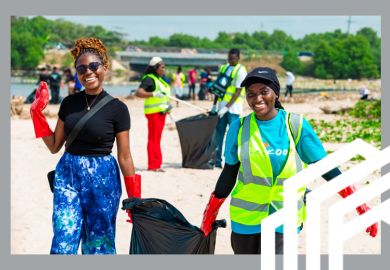
From beach clean-ups to integrating greener practices in curricula and institutions, student participation is key if we want young people to drive Africa’s future sustainability, say Belinda Mensah and Divine Edem Kwadzodeh
The Sustainability Impact Network is a community of more than 1,600 universities from 116 countries dedicated to improving and amplifying the role that universities play in the global race for sustainable practices
The global Times Higher Education Sustainability Impact Ratings measure universities’ success in delivering the United Nations’ Sustainable Development Goals. Here, we explain how we arrive at the results for the impact ratings
China’s ongoing strength means small gains for countries like Japan and South Korea are not enough for them to remain competitive. Meanwhile, Malaysia proves it’s one to watch. Tash Mosheim reports
A new entry-level subscription to DataPoints will enable more universities to unlock actionable, data-driven insights from the rankings, says Phil Baty
As they respond to global challenges including climate change and food security, universities are driving progress across the Arab region, writes Ellie Bothwell
The World University Rankings performance indicators are the heart of the Latin America University Rankings but we make some adjustments to take account of the region’s unique characteristics
The Interdisciplinary Science Rankings measure global universities’ contributions and commitment to interdisciplinary science. Here, we explain how we arrived at the results
A careful approach is required to rank the Arab World’s universities fairly. We adjust our World University Rankings methodology to take into account the region’s distinctive characteristics
Without bespoke research funding it is harder than ever for research universities to collaborate with those in low-income countries. Jack Grove hears from two institutions that have fought to make these partnerships work
A year after joining the ‘MIT of the Middle East’, the former King’s College London president reflects on the need for scholars to align their research with national priorities and the joys of leading a ‘city community of scholars’
Two universities that have high shares of students taking internships explain how they prioritise sustainability while improving graduate employability
The Times Higher Education World University Rankings measure research-intensive universities across all their core missions. Here, we explain how we arrive at the results for the global rankings
Neither Arizona State University nor Chonnam National University explicitly targets marginalised students but both score highly in THE’s Impact Rankings for enrolling them. The institutions’ admissions teams explain how
For two decades, Germany has spent billions of euros on boosting the research capacity of its top institutions. As selection proceeds for another six-year Excellence Strategy, Emily Dixon examines whether greater competition and stratification are having the desired effects

THE is relaunching the Impact Rankings, allowing us to work in closer partnership with participants and evolve the exercise as the SDGs themselves develop, says Phil Baty

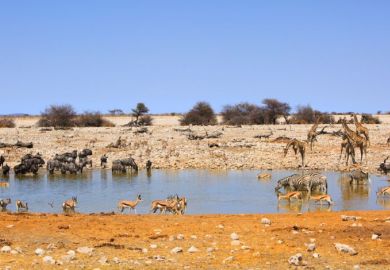
Institutions in low- and middle-income countries host most of the world’s refugees, despite having the least resources, but their efforts receive limited global recognition, say Frankie Randle and Arash Bordbar