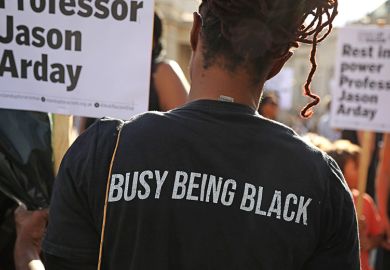
A barrister and crown court judge involved in some of the UK’s most high-profile public inquiries will lead the second part of an independent review established by the University of Cambridge following the death of sociology professor Jason Arday.
Jason Beer KC will chair the second stage of the review that was announced prior to Arday’s death aged 41 on 12 August, nine days after he quit as a professor at Cambridge’s Faculty of Education.
His resignation with immediate effect on 5 August came after the university launched an investigation into his “academic qualifications and honorary appointments.” It followed several weeks of intense media scrutiny after concerns were raised about extensive plagiarism in his 2015 PhD thesis. Arday admitted errors in his work but denied misconduct. The awarding institution, Liverpool John Moores University, investigated the claims and concluded the qualification should stand.
Questions were also raised about Arday’s claims to have raised millions of pounds for charity and a series of ultra-running feats, as well as other aspects of his personal story that featured in his memoir Great and Unfortunate Things published in August.
The first part of the independent review into the support provided to Arday after allegations of research misconduct were made will be led by Nazir Afzal, a former public prosecutor and chancellor of the University of Manchester. It is due to report back in early 2027.
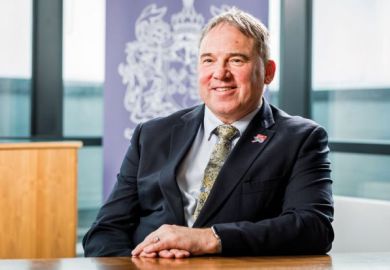
The second stage of the review will be conducted by Jason Beer, head of 5 Essex Chambers who sits as deputy High Court judge and recorder in the crown courts. He has previously been involved in some of the UK’s most significant inquiries including the Stephen Lawrence inquiry, the Hutton inquiry and the Grenfell Tower inquiry.
His part of the review will investigate and report on the university's institutional policies, procedures, decision-making and oversight, and how these operated in practice during Arday’s recruitment, appointment and subsequent time at Cambridge.
It will examine his recruitment and appointment as the 2002 Chair of Sociology of Education in late 2022, the induction, mentoring and support received by Arday and other professorial staff and the support and protection available to academics facing significant public and media scrutiny
It will also examine the university’s response to allegations of research and other misconduct in the case of Arday and more generally and the university’s institutional arrangements for recognising and responding to race equality, disability, neurodiversity and reasonable adjustments – including how these arrangements operated in relation to Arday.
Beer, a University of Warwick graduate, will be supported by a panel of academics including Rachael Gooberman-Hill, professor of health and anthropology at the University of Bristol who is co-chair of the UK Committee on Research Integrity.
Rachel Brooks, a professor of higher education at the University of Oxford, Bertha Ochieng, professor of integrated health and social care at De Montfort University and chair of the Black Leaders in Higher Education Network Steering Group and Margaret Ayers, who has held senior HR roles in five universities and a former board member of the Equality Challenge Unit will also advise.
Announcing the start of the review, which is set to take about six months, Beer said it would be an “independent, thorough and searching examination of the University’s institutional arrangements, and the decisions made, in the case of Professor Arday”.
“That is a weighty responsibility, and one which I approach with an open mind, without preconceptions and with a determination to reach conclusions on the basis of what – and only what - the evidence establishes,” he said.
The review would “examine some difficult and potentially uncomfortable questions,” he continued, adding that he would “look not simply at what the university’s policies and procedures required, but also at whether they were themselves reasonable; how they operated in practice; who was responsible for making decisions; what information was reasonably available to them; whether relevant concerns were recognised and properly addressed."
The review would also “examine whether the university's various structures and functions worked together effectively – all in the case of Professor Arday, and more broadly”.
“I hope that those who have relevant knowledge or experience will feel able to contribute to the review,” said Beer.
“Their perspectives may be important in understanding not only what happened in Professor Arday’s case, but whether there are wider institutional changes to be made. I will take seriously my responsibility to treat participants with sensitivity, to respect confidentiality and to ensure fairness to anyone whose actions may be examined,” he said.
Beer, who will be supported by a junior barrister and a team of solicitors, will be responsible for determining the review’s methodology, lines of inquiry, findings, conclusions and recommendations, he said.
“I recognise that no review can undo the tragedy of Professor Arday’s death,” said Beer.
“I nevertheless hope that a careful, transparent and independent examination of these matters can contribute to understanding, accountability, the rebuilding of trust and the process of reconciliation.”
Register to continue
Why register?
- Registration is free and only takes a moment
- Once registered, you can read 3 articles a month
- Sign up for our newsletter
Subscribe
Or subscribe for unlimited access to:
- Unlimited access to news, views, insights & reviews
- Digital editions
- Digital access to THE’s university and college rankings analysis
Already registered or a current subscriber?