Jason Arday’s memoir will still be released in the UK this week, his publishers have confirmed, with the late sociology professor’s family saying they want to “honour his wishes”.
In their first public comments since the academic was found dead in London on 14 August, Arday’s family released a statement via Simon & Schuster UK that says the book, Great and Unfortunate Things, will “speak for itself”.
Arday had intended to publish his account of his life on 27 August, before he became the subject of at the centre of a media frenzy after questions emerged about his academic and personal achievements.
The book, which charts how Arday rose to become the youngest black professor at the University of Cambridge, was released in the US on 11 August and will still come out in the UK on Thursday, the statement says.
“To the very end, Jason was clear that he wanted his memoir to be published and it is only right that we honour his wishes.
“There has been so much that has been written and said about our beloved brother, son, father, partner and uncle, mostly by people who don’t know the truth of what he experienced, and we experienced as a family, or what an extraordinary person he was.”
Arday reportedly told The Guardian he received a £1.4 million advance for the book but it sold just 433 print copies in its first five days in the US.
Several reports in advance of its publication highlighted how claims had apparently been toned down in the final version of the book, compared with a draft circulated in January.
Arday’s family said they will not be speaking further about the memoir. “We are happy to allow the book to speak for itself and won’t comment further on its content,” the statement said.
“The family is still in shock and we are grieving. We call upon the media to give the family the space it needs to come to terms with this terrible loss.”
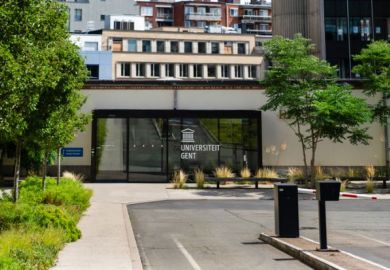
Meanwhile, more than 500 academics have signed an open letter to the rector of Ghent University, calling on her to protect postdoctoral researcher Nathan Cofnas “for exercising his academic freedom”.
Cofnas, who was the first to air allegations that Arday plagiarised his PhD thesis, was suspended by the university last week amid disciplinary proceedings called over this involvement in the case.
“An essential component of academic freedom is the ability to scrutinize the scholarship of other academics, regardless of their position or status”, says the letter, signed by the likes of British physicist David Deutsch and Harvard psychologist Steven Pinker.
“This must include the freedom to provide evidence of academic misconduct, such as plagiarism and fabrication. The pursuit of truth depends on rigorous self-policing by academics.
“We are also concerned that the University appears to be treating threats to academic freedom, whether from its own staff claiming distress or from external actors announcing boycotts, as grounds for disciplining the very individual targeted by those threats.”
In their latest public statement on the case, senior leaders at the University of Cambridge said they were “appalled that many of our Black students and staff, as well as members of our Faculty of Education, continue to receive racist, hateful and abusive messages in online forums and on social media, and condemn all forms of abuse”.
They said that, as a result, they were “coordinating with external providers to enhance our provision of culturally and racially-sensitive support for staff and students, and this information is being shared with those directly impacted”.
Register to continue
Why register?
- Registration is free and only takes a moment
- Once registered, you can read 3 articles a month
- Sign up for our newsletter
Subscribe
Or subscribe for unlimited access to:
- Unlimited access to news, views, insights & reviews
- Digital editions
- Digital access to THE’s university and college rankings analysis
Already registered or a current subscriber?