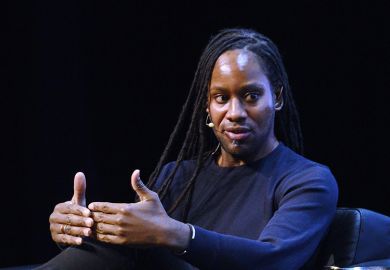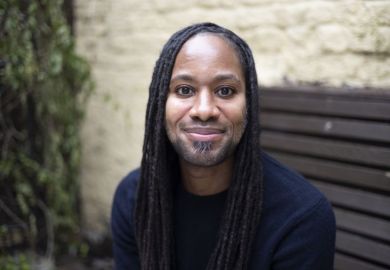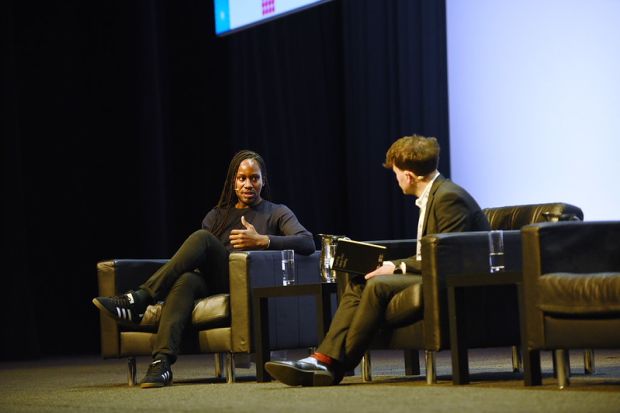
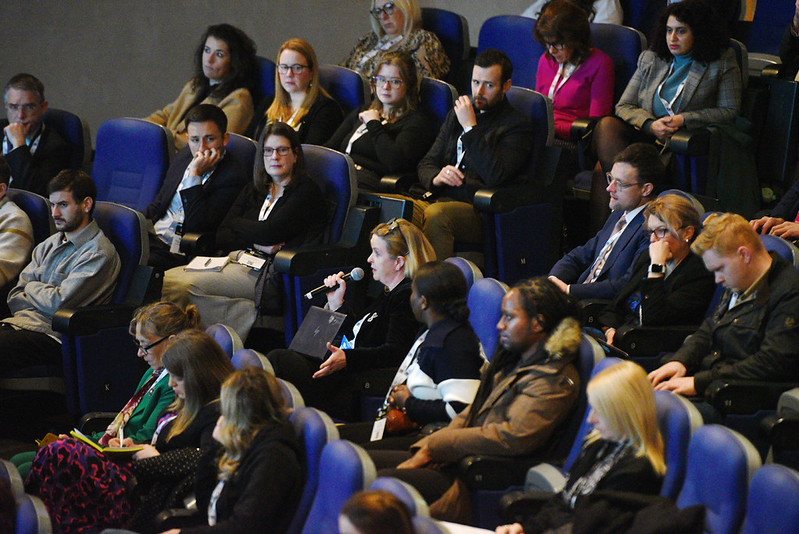
I spotted Jason Arday among the crowd, tucked away near the back of the vast conference hall at the International Convention Centre in Birmingham.
A tall black man with long dreads, he couldn’t help being conspicuous. But he wore a long green parka pulled up around his neck and was shrunk back somewhat in his chair, watching the university leaders opining on stage.
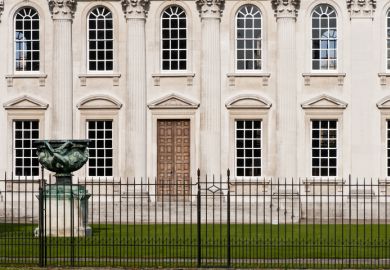
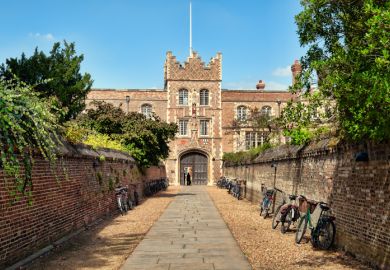
It was late November 2024, and I was about to interview Arday for a Times Higher Education event. He had been a University of Cambridge professor for a little over a year and was at the height of his powers but, as I watched him, he seemed to want to go unnoticed.
THE has always been a champion of diversity in academia, telling the stories of those who have followed less well-trodden paths. I had been aware of Arday for some time – he had often featured in our coverage as one of the UK’s most prominent black scholars – but we had never met.
Later, as I approached him by the side of the stage before going on, I was somewhat taken aback when he greeted me with a big hug. By this point Arday had been transformed.
Shorn of the big coat, he now had an aura about him and, as he began talking that day, he captured the room – primarily because he had such a powerful story to tell.
It never occurred to me to question it. I was more concerned with getting his take on some of the latest issues of the day – rising tuition fees, academic job cuts. He was an important figure, and it mattered what he thought about stuff.
At the end of the event I left feeling privileged to have met him. Looking back at my notes, I described him as someone who had emerged as “one of the most powerful and articulate voices in the higher education debate” whose work on widening access and addressing structural inequalities was “hugely relevant”. I felt proud my job pulled me into the orbit of people like Arday and that I could play a small role in using his story to inspire others. The line we covered from his talk that day was that his success “means nothing unless it raises others up”.
It was nearly a year later that an email dropped into my inbox out of the blue urging us to look into Arday’s work.
I get emails like this regularly, alleging bullying, harassment or misconduct. Many are unreportable owing to a range of legal, ethical and editorial reasons. But we have on many occasions covered stories concerning figures accused of plagiarism.
Some sources clearly have an agenda, but this time the person was almost apologetic in raising their concerns. It focused on similarities in Arday’s academic papers with other published work and apparent lack of ethics approval for studies he had been involved in.
I thought it was serious enough to take a closer look. Of course, it was noteworthy that it was Arday who was being accused. The academy, like much of the rest of society, is inherently interested in people who come to represent far larger issues than their own individual stories. Arday did this more than anyone else I can think of. He benefited from it and then suffered unimaginably.
I asked Jack Grove to take a look, and he has eloquently told his side of the story elsewhere. Our role as editors was to provide guidance and see how things unfolded.
As Jack came to us having gathered more detail about Arday’s work and life story, our questions were always the same: What can we evidence and what is speculation? How much of this is in the public interest? And, most importantly, do we feel all this is egregious enough to publish, given the obvious reputational risks? It seemed painfully clear that airing the accusations could open Arday up to more brutal reporting elsewhere.
We looked at the side-by-side comparisons of Arday’s PhD thesis with another, like many have done since, and saw a clear case to answer. But, as important as PhDs are, most academics would not tout them as their best work and there’s a thin line between citation errors and outright plagiarism. His research had holes, claims that didn’t stand up based on seemingly flimsy evidence. But you could find the same elsewhere quite easily.
Did Arday’s actions really stand out? Was he excused from some of it by his unconventional path? Or did all the different pieces together add up to serious misconduct?
Much of the time it was the absence of evidence that confused us. It seemed unlikely that people he interviewed would express views closely resembling the thoughts of other academics. But no one could prove they didn’t. Everyone insisted he had ethics approval for his work, which involved studies where participants were vulnerable and being asked about their mental health, but no one could show us the forms. We may now never know the full picture.
When we put our questions to Arday, we were met with legal threats, and ultimately we decided to shelve the investigation. I agreed with that decision and moved on; the news agenda moves so fast that it’s hard to dwell on things.
More recently, when I was alerted to Nathan Cofnas’ now infamous blog, I hadn’t thought much about Arday in months.
But then a slow trickle of stories became a flood and what started as a story about the actions of one man became so many other things.
It became a story about the ethics of research, the successes and failures of equality initiatives, the racism scholars of colour face, the elitism of Oxbridge, the archaic promotion processes of academia, the perversities of the “publish or perish” culture. It became a story that was impossible to ignore.
That’s not to say I agree that all the reams of coverage that has appeared in the past few weeks were justified, and I was always keen to avoid THE being seen as joining a pile-on. Our focus throughout has been to treat the story as sensitively as we could, reflecting its many complicated layers and the often-conflicting views it prompted.
It is hard to dispute the claim made by many that the national press would not have taken such an interest if these had been the actions of a white, middle-class academic.
But I don’t think that fully explains why this became such a furore worldwide. Arday’s story was just so compelling – whether it was the one he told in Birmingham of going from not being able to read to a Cambridge professor in a few short years or the more knotty, difficult picture that has emerged over the past couple of weeks.
It is hard to separate this from the human being that was at the heart of it. But throughout this period, I have often thought of the man who gave me a hug as our lives were momentarily thrown together a few years ago.
I’ve thought about him a lot this past weekend, of course, after the news of his untimely death emerged on Friday night.
The Arday I met, albeit briefly, seemed warm and engaging. It felt like he belonged on that stage far more than I did. He was a deep thinker and it mattered what he said.
I have come to know a much more complicated man through our reporting. But, as he showed, people can be many different things at the same time.
Tom Williams is news editor of Times Higher Education.
Register to continue
Why register?
- Registration is free and only takes a moment
- Once registered, you can read 3 articles a month
- Sign up for our newsletter
Subscribe
Or subscribe for unlimited access to:
- Unlimited access to news, views, insights & reviews
- Digital editions
- Digital access to THE’s university and college rankings analysis
Already registered or a current subscriber?