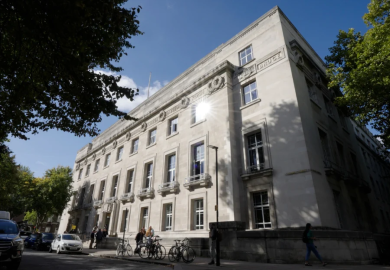
The University of Sunderland has become the latest institution to launch two-year degrees, promising graduates will pay less and get into work sooner.
The university has announced it will expand its offering of “accelerated” undergraduate courses beyond its existing options of occupational therapy and policing to include business and management, law, and criminology.
In doing so, it says it will give people access to the “same quality teaching and placement opportunities”, all within a shorter timeframe than those studying on its traditional three-year route.
Possibly the UK’s best-known provider of accelerated study is the University of Buckingham, which has offered them since the 1970s, though London Metropolitan University offers the option in areas like primary education, and the University of Kent has a two-year degree in business and management.
Royal Holloway, University of London also has a handful of accelerated courses, while the University of Derby teamed up with Rolls Royce last year to unveil a two-year programme in international business and artificial intelligence.
With fears around public mistrust in the value of a traditional three-year university education rising, and the difficulties facing young people looking for work, it is possible more universities could follow suit.
Anthony Finkelstein, president of City St George’s, University of London, earlier this year suggested the attachment to the three-year model was “largely a historical artefact”.
Available from autumn next year, Sunderland’s faster degrees have the potential to cut down on costs, with the institution suggesting students may save an average of £6,000 across their programme compared with those staying for an additional year.
The university notes that “although annual tuition fees for accelerated degrees are typically higher than those for traditional three-year degrees, the overall cost can be lower because you're studying for one less year”.
“You may also save on accommodation and other living costs, depending on your circumstances,” it adds.
Students will also need to prepare for a “sustained study commitment”, with shorter breaks between teaching periods.
Sunderland vice-chancellor and chief executive David Bell said the institution recognised that “students’ priorities are changing”, and “many are focussed on entering the job market as soon as possible”. He also suggested the programmes would allow Sunderland to be “more agile in responding to the changing needs of the workforce”.
“It is important that universities recognise this and provide flexibility, so people can study in the way that works best for them,” he said. “In a region like ours, with one of the lowest progression rates to higher education in the country, it is incumbent on us to innovate and find ways to support people to achieve their full potential.”
Register to continue
Why register?
- Registration is free and only takes a moment
- Once registered, you can read 3 articles a month
- Sign up for our newsletter
Subscribe
Or subscribe for unlimited access to:
- Unlimited access to news, views, insights & reviews
- Digital editions
- Digital access to THE’s university and college rankings analysis
Already registered or a current subscriber?