Browse the full results of the latest Times Higher Education Sustainability Impact Ratings
What can an elephant skeleton, a campus displaced by war and an app for scouting water availability in Indian villages tell us about higher education? Each is the result of a university’s drive for sustainability, and provides an insight into how many institutions view their mission as something much larger than their own academic excellence.
This is what Times Higher Education also believes, and this conviction runs through the core of our eighth annual Sustainability Impact Ratings (formerly Impact Rankings), the only global university ranking that examines how institutions are performing in relation to the United Nations’ Sustainable Development Goals (SDGs).
As Julian Skyrme, executive director of social responsibility and civic engagement at the University of Manchester, puts it, the impact ratings encourage institutions to consider “what universities are good for, not just what universities are good at”.
For Manchester, which leads the 2026 impact ratings, placing an elephant skeleton in a busy train station to spark a conversation about extinction was just one of many ways the university strives to reach the community beyond the university and contribute to cultural life.
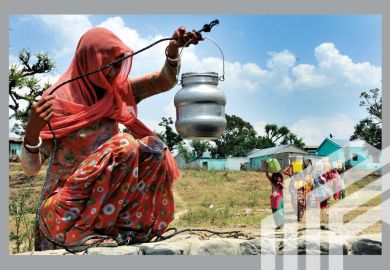
And in Western Sydney, Australia, a drive for community-based initiatives saw local water knowledge in India combined with a smartphone app to optimise crop planting in the area.
Whereas in Ukraine, now into its fifth year of conflict since the Russian invasion in 2022, sustainability takes on a broader meaning of survival. As Mykola Trofymenko explains, the ratings’ four pillars of research, resource stewardship, community engagement and teaching “have merged into a single test of institutional endurance”. He describes how the physical destruction of campus buildings and forced relocations have strengthened Ukraine’s commitment to the SDGs of quality education (4) and peace, justice and strong institutions (16) – both tables in which Ukraine performs well.
This year’s ratings include data covering 1,646 universities from 116 countries/territories. They are rated across 17 individual SDG tables and one overall ranking.
Although wealthy nations continue to dominate the ratings, this year our data reveals how lower-income nations are beginning to narrow the gap thanks to a dedicated focus on SDG alignment.
There are now four lower-middle-income institutions in the global top 50, double the number from last year. And upper-middle-income countries such as Malaysia continue to build on their success from previous years.
This steadfast global commitment is heartening at a time when the higher education sector finds itself under pressure financially, and often politically too.
One of THE’s key metrics for evaluating SDG performance is evidence: what proof of initiatives and outcomes universities can provide. In this way we aim to take the SDGs from an abstract concept of “saving the planet” to concrete projects where we might see greater numbers of low-income students entering higher education or environmental schemes that demonstrably improve the lives of those in the region. Because having a positive impact in a tangible way should always be part of higher education’s mission.
naomi.firsht@timeshighereducation.com
Top 10 countries/territories represented in the overall Sustainability Impact Ratings 2026
|
Country/territory |
Number of universities ranked |
Top ranked university |
Rank of top institution |
|
Philippines |
160 |
201-300 |
|
|
India |
110 |
23 |
|
|
Turkey |
74 |
=59 |
|
|
Thailand |
69 |
19 |
|
|
Indonesia |
67 |
15 |
|
|
United Kingdom |
59 |
1 |
|
|
Ukraine |
55 |
Interregional Academy of Personnel Management (IAPM) |
201-300 |
|
201-300 |
|||
|
Pakistan |
52 |
71 |
|
|
Uzbekistan |
50 |
Alisher Navo’i Tashkent State University of Uzbek Language and Literature |
101-200 |
|
101-200
|
|||
|
Algeria |
46 |
201-300 |
= joint
See the full results of this year’s Sustainability Impact Ratings
Register to continue
Why register?
- Registration is free and only takes a moment
- Once registered, you can read 3 articles a month
- Sign up for our newsletter
Subscribe
Or subscribe for unlimited access to:
- Unlimited access to news, views, insights & reviews
- Digital editions
- Digital access to THE’s university and college rankings analysis
Already registered or a current subscriber?