ADVERTISEMENT
Ukraine’s universities are a case study in resilience
When whole campus communities are displaced and war continues, sustainability becomes an endurance test that can help an institution rediscover its true mission, writes Mykola Trofymenko

Source: Associated Press/Alamy
Browse the latest results of the Times Higher Education Sustainability Impact Ratings
For most higher education systems around the world, conversations about sustainability begin with energy efficiency, climate policy or greener campuses. For Ukraine, they begin somewhere else entirely: can a university continue to teach, research and serve its community when the country is living under air raid sirens, strikes on critical infrastructure and the constant risk of losing people?
I know this not from briefing notes or ministry reports. I am from Mariupol. Before joining the Ministry of Education and Science, I served from 2020 as rector of Mariupol State University. After the full-scale Russian invasion began in February 2022, we resumed operations in Kyiv by April 2022. Our historic home campus – the place the university was built around – was partially destroyed and looted by the occupying forces. And yet the university survived. That experience made something permanently clear, something that is easy to overlook in peacetime: a university is not a building or a campus. It is a community, an institutional memory, a capacity to hold together when the familiar world falls apart.
Ukraine has dozens of stories like this. Universities from occupied territories in the east and south have been relocated. Those closest to the front lines have restructured their operations under conditions of constant danger. Others across the country stepped in to help – hosting displaced staff and students, adapting their systems, ensuring their communities could keep learning in safety. Some institutions moved entirely; others shifted to blended formats, adjusting their schedules around air raid alerts. But none stopped. None abandoned their mission. Because a university is the core of a community. It holds people together in a shared space of decision-making, supports displaced youth, preserves academic culture and keeps the connection between education and the future from breaking.
This is precisely why the Sustainability Impact Ratings resonate so strongly with us. Research, resource stewardship, community engagement, teaching – in wartime Ukraine, these four dimensions have merged into a single test of institutional endurance. It is no coincidence that Ukrainian universities are most strongly represented in the tables for SDG 4 (quality education), SDG 16 (peace, justice and strong institutions) and SDG 17 (partnerships for the goals). That presence reflects deliberate choices and enormous effort on the part of our academic communities.
Quality education for us means continuity of access and maintenance of standards even when students are studying in different cities and different countries. Peace and strong institutions mean academic integrity, modern governance and the ability of a university to be a reliable partner for both the state and society. And international partnership is no longer an optional dimension of university life – it is a practical condition for development: from community-level collaboration to joint initiatives with international donors and universities across the UK, Poland, Germany, the European Union and North America, all of which have helped ensure continuity of learning for Ukrainian students abroad.
ADVERTISEMENT
It matters to me that the war has not halted our reform agenda – including our path toward European integration. The ministry’s strategic priorities remain in place: modernising the network of higher education institutions, updating governance models, expanding university autonomy where institutional accountability exists, supporting flexible learning pathways and grant co-financing of studies. Alongside this, we are renewing laboratory infrastructure, digital systems and research capacity in partnership with international allies. These are not decorative additions to a reform programme. Without them, resilience remains a fine word rather than a real property of the system.
Ukraine is building a higher education sector that can function under pressure while thinking ahead to post-war recovery. The universities that are upholding their standards today will become the foundation for rebuilding regions, welcoming back displaced communities and reintegrating the country into the European space.
The presence of Ukrainian universities in the Sustainability Impact Ratings is a message to the global academic community: Ukrainian higher education has not gone into standby mode. It is learning to work under pressure, to maintain standards and to think about the future – now. For us, sustainability is not a horizon we will reach after victory. It is something we fight for every day – as we fight for our freedom.
Mykola Trofymenko is Ukraine’s deputy minister of education and science and former rector of Mariupol State University.
See the full results of this year’s Sustainability Impact Ratings
Read more about
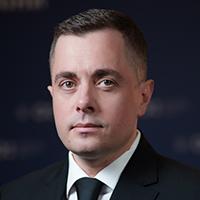
Deputy minister of education and science of Ukraine
Related articles


Featured jobs
ADVERTISEMENT