A protection, not a barrier
Entry standards exist for qualifications across the education system: A levels, BTECs, further education courses and apprenticeships. These are accepted as sensible checkpoints to ensure a student can succeed on their chosen course and the qualification remains at the right standard. There is no reason a university degree should be different.
It’s therefore reasonable that government considers minimum expectations around readiness for higher education as we address broader questions about the quality and purpose of higher education, value for money and championing opportunity.
We would be the first to stand in defence of student choice. Russell Group universities work hard to support student aspiration, at individual universities and through programmes like Advancing Access.
But this must be informed student choice. Scrutiny of student debt and graduate employability has increased sharply. In this context, a student embarking on a course that is not right for them isn’t good news for the individual, the university or the taxpayer. Safeguarding entry standards to access loans would not create a barrier but would protect students’ interests by setting them up for success.
This is ultimately a discussion about the appropriate conditions for access to taxpayer-backed student finance, not government prescribing admissions decisions. It’s about creating a baseline, above which universities remain best placed to assess whether individual applicants are ready for their course.
A new framework, including accepted equivalences, will also support efforts to preserve the sector’s quality and reputation.
Most degrees deliver fantastic experiences and outcomes: not just higher lifetime salaries – although the graduate premium remains strong – but also the broader skills and experiences university offers. However, there are signs of poor outcomes in small pockets of the wider sector.
Government has options to tackle this, including empowering the regulator to act more strongly against poor standards and teaching quality. Designed well, minimum preparedness requirements could help protect public investment and build confidence that students accessing higher education finance are equipped to succeed.
Of course, these conditions must not create unnecessary barriers. Many talented people experience disrupted education or return to education later in life. Our universities, like all quality providers, are committed to alternative pathways for these learners, and to raising attainment throughout the education system. For example, the University of Bristol’s micro-campuses offer micro-qualifications requiring no prior attainment, creating new routes into work or study. Many of our universities also work closely with schools and colleges to improve GCSE attainment, giving young people the best chance of progressing.
Most universities already apply minimum preparedness requirements. The overwhelming majority of students meet them with GCSE English or an accepted equivalent. Institutions are experienced in assessing non-traditional routes, and we will always need flexible pathways to deliver opportunity and access. I do not believe plans for entry standards will be at odds with these initiatives.
The key question is not whether standards matter but how any new framework is designed. It must be evidence-based, protect opportunities for disadvantaged learners, recognise different educational pathways, and command confidence across the sector. It is therefore encouraging that the Department for Education will consult on its initial proposals. Any future framework must include input from a wide range of institutions, representing different types of learners. That way, we can all agree on principles that best serve students, universities and taxpayers.
Libby Hackett is chief executive of the Russell Group.
The Burnham test
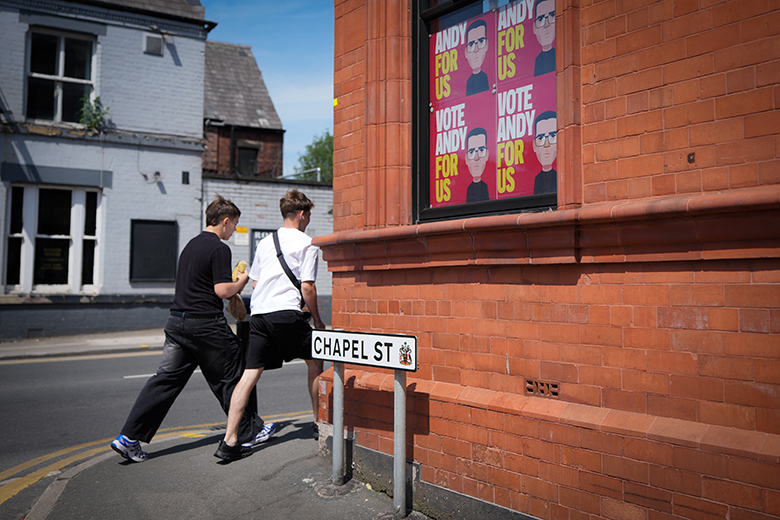
Keir Starmer’s is not the first government to flirt with the idea of minimum entry thresholds. But I strongly doubt that incoming prime minister Andy Burnham will flutter his famous eyelashes in their direction.
The argument that restrictions are necessary to protect standards, improve graduate outcomes and ensure value for money for taxpayers has obvious appeal for ministers looking to contain the rising cost of student loans. Students with lower prior attainment are assumed to be less likely to succeed at university or secure graduate jobs, so preventing them from getting into “unnecessary” debt seems like the best solution for everyone.
But educational attainment is not simply a reflection of talent or potential. It is shaped by family circumstances, school quality and a host of factors beyond an individual’s control. This is why universities have embraced contextual admissions, recognising that talent is widely distributed across society while opportunity is not.
It is also why minimum entry thresholds fall foul of the “Burnham test” of whether a policy expands opportunity and reduces inequality. Restricting access to higher education at the point of entry achieves neither, falling hardest on those who have faced the greatest barriers while doing nothing to address the injustices that have shaped their outcomes.
Universities have long been viewed as engines of social mobility, built on the principle that those with the aspiration and potential to benefit from higher education can access the means to do so. But rather than widening opportunity, minimum entry standards risk entrenching disadvantage.
Of course, entry standards matter. But they are best determined by institutions to reflect the demands of their courses. While academic qualifications remain the primary admissions criterion for many subjects, for others, portfolios, auditions and interviews matter far more. It would be difficult to justify excluding a gifted musician, designer or performer from higher education simply because they fell short of an arbitrary requirement in an area unrelated to their talents.
It is also important to point out that even institutions that currently feel insulated from the likely consequences of minimum entry standards may not always be so. Once introduced, the thresholds could be successively tightened over time by future governments. That would be particularly unfortunate given the realities of the admissions market, in which universities across the tariff spectrum have become more flexible over entry standards as financial pressures have intensified.
This raises the broader question of whether grades really are decisive in determining who can benefit from higher education. But if attainment is to remain the principal gatekeeper, equality of opportunity between institutions themselves is also an important principle.
Lower-tariff providers should not be prevented from recruiting students below a certain threshold while more selective institutions continue to exercise discretion and recruit below their usual requirements when it suits them. This would squeeze the part of the sector that has done most to widen participation and to unlock the potential of students whose talent is not fully reflected in traditional qualifications.
For a new prime minister committed to spreading opportunity more fairly across the country, that would surely be a very difficult outcome to defend.
Diana Beech is director of the Finsbury Institute at City St George’s, University of London.
What is university for?
In a long career as a university lecturer and external examiner, some of the most moving, inspirational and important teaching and programme scrutiny I’ve done has involved mature students’ learning.
Most of those students, in their 40s, 50s, 60s, would not have met the criteria being proposed as a minimum standard for university entry and/or student loans, such as requiring three Cs at A level. But while that made them different to teach from my “standard” 19ish-year-old BA history students, it absolutely did not make them any less worthy.
Women who had missed out on completing their own educations but who had (often while holding down full-time jobs) raised children they enthusiastically shepherded into university; men who had done yeoman service for decades working for local councils or small businesses – they were a stubborn, demanding delight to teach. Unlike students fresh out of A level, they often failed their first timed assessment, but that wasn’t surprising: most had left school decades earlier, at 15. Nor was it pedagogical rocket science to fix it: a mock exam with proper feedback generally did the trick.

As an external examiner on a taught MA at Birkbeck, University of London in the early 2000s, I saw what mature students can also achieve at postgraduate level. Cohorts such as this often have a longer “tail” than younger groups do – more students with more struggles. But they have in essence the same “midriff” of marks (in the 60-69 range), and their top performers, inspired by years of life, commitment and cogitation, submit assessed work that simply knocks your socks off.
Mature students are only one population group that will be disadvantaged if we effectively embrace sumptuary laws limiting prospective students’ opportunities to wear graduation gowns. But they will likely be the biggest. David Kernohan of WonkHE finds that just over 80 per cent of undergraduates whose highest qualifications are below Level 3 (A-level equivalent) are aged over 25.
And what would barring them achieve? Office for Students statistics suggest that prior academic achievement actually makes only a modest difference to someone’s chances of completing their degree: 84 per cent of full-time undergraduates with CCC or above at A level do so, compared with 80 per cent of those with lower qualifications. And given that the government’s lifelong learning entitlement has yet to start, much less to prove effective, I’d be leery of slamming the door to university shut for students with alternative qualifications.
More fundamentally, before we ask “Who should we keep out of universities?”, we should ask “Who and what are universities for?”
If an earlier generation’s belief in the virtues of widening participation is no longer fit for purpose, we should ask why. Which of the dilemmas we face today demands a less educated population? Which social, economic, environmental or political problems will benefit from fewer opportunities for more first-generation or mature learners?
The arguments about reducing students’ access (especially to the loan book) implicitly and often explicitly suggest that a university education is bad value – for students and/or for the public purse. But only when we have fine-tuned our sense of what that value is supposed to be can we address the question of what the piper should be paid – and by whom.
Margot Finn is professor of modern British history at UCL. She writes in a personal capacity.
Protect the forest
A decade has passed but the memory still burns bright. A room packed with a hundred members of Professional Liverpool, the city’s professional networking organisation, all eyeing me sceptically.
I was trying to convince them of the benefits of higher education, but pointed questions kept being hurled at me. Feeling besieged, I asked the audience to raise their hand if they had children who had been to, were at or aspired to go to university. A forest.
An unrepresentative audience? Perhaps. But despite another decade of attempts to dissuade school-leavers from going to university by politicians, policymakers and the press, the trees of ambition have still not been felled. If there is a message for those in government, it is “oppose ambition at your peril”.

That does not mean that university should be the only choice. Nor should it necessarily sit at the top of preference’s totem pole. But it should remain an option for all capable of benefiting from it.
Assessing capability, of course, is the issue. But in my opinion, the key test for university readiness is not whether you have a specified number of points at Level 3, nor whether you have GCSE English or mathematics or both. It is whether, with appropriate commitment and development, challenge and support, you can display the potential capacity to attain honours graduate status three years hence.
But how can we assess this? Even a medium-sized UK university will attract at least 20,000 applications through Ucas in a year; half of them may arrive in a single month (January) and up to a quarter in a single week (at the end of the “main cycle”). Perhaps two-thirds of applicants will not visit a university they’ve added to their Ucas form, making interviews impossible.
There is no simple solution, but the slow demise of upstream activity is a matter of regret. As the host of several widening participation initiatives – Aim Higher North-West, a Lifelong Learning Network and the National Action on Access programme – we at Edge Hill University were able to identify and support potential. But all of these initiatives have been consigned to the history books, while Uni Connect is starved of resource.
Is there a solution? The demise of an effective careers service at all levels, from local to national, has removed an important signposting function, be it for prospective undergraduates or NEETs (those not in education, employment or training). But the refunding of university access courses would facilitate the assessment of the suitability of individuals with non-traditional qualifications, as would the funding of all individuals from the poorest two postcode quintiles to attend interview and open or visit days.
Meanwhile, student support would be enhanced by removing the latest threat to teaching funding (the Strategic Priorities Grant) and installing a reporting system to ensure it is appropriately hypothecated within institutions. And although all of the above has a notional cost, the mid-term position would be of money saved, not spent. Better pre-entry signposting, better retention, better completion and better employment outcomes would all provide a return on investment.
The Office for Students already judges institutions and programmes on student continuation and completion, as well as graduate outcomes. The final measure, in particular, needs to be handled with due cognisance of individual circumstances and the state of the labour market – graduates should not be penalised for the nation’s failure to stimulate economic growth. But it is surely far better to provide opportunity, and then assess outcomes, than to use surrogate measures to block potential and progression at the outset.
John Cater is chair of the Unite Foundation. He was vice-chancellor of Edge Hill University from 1993 to 2025.
The undeniable truth
UK universities have long since expanded way beyond their original purpose of enabling academic excellence to thrive. Instead, the higher education sector has opened its doors to ever less academically able school-leavers under the guise of an inclusion agenda.
Even by 2022, the landscape had changed so completely that when the previous government consulted on the idea of imposing minimum eligibility requirements for student loans (at least a 4/C grade in English and maths GCSEs, or two Es at A level) people were horrified and the idea was scrapped. Now, even as it prepares to consult again on MERs, the government only feels able to float the idea – via a newspaper – of a pass at GCSE English.
It is remarkable that we now have a university system that doesn’t even require the bare bones of previous academic achievement, and there are no minimum standards at all to qualify for a student loan.

It is undisputable that career pay is strongly correlated to prior academic attainment, and those at the lower end of that scale are, on average, destined to earn modest salaries, won’t pay off their loans, and will struggle to justify the overall cost of university, which is now estimated to be above £90,000 for a three-year live-away-from-home degree.
But no matter how bad graduate outcomes become, demand for places at university will – all other things being equal – remain high. The idea of higher education as an opportunity has been baked into the culture by decades of sector propaganda, and the system is set up with a clear commercial incentive for universities to get as many customers in as possible. In the absence of minimum entry standards, demand and supply conspire to create a vicious spiral of ever-increasing participation.
It is morally questionable for society to expect so many school-leavers to pay a 9 per cent extra “tax” for 40 years to gain a degree; and it is a complete nonsense if the extra three years of study isn’t even useful in their subsequent job.
In fact, we have next to no information about whether studying for a degree actually makes you any better at the jobs you end up doing. More often than not, those jobs will have nothing or very little to do with the course subject. And even if there is a connection, there is nothing to say that the same outcome couldn’t have been achieved far more cheaply and effectively with just a few weeks or months of targeted on-the-job training.
We need to completely redesign the system so that far more school-leavers go straight into work as trainees. Employers should pay for and organise any vocational training requirements for their employees, helped by government subsidy – often via the apprenticeship levy.
We can’t ignore the undeniable truth that if you aren’t particularly academic, three more years of formal education isn’t going to do you much good – and minimum academic entry standards are the best method of ensuring only those likely to benefit attend university.
It is not an exact science working out where the threshold should be and a political judgement is going to be required. But, personally, I would set the limit so that about 10-15 per cent of school-leavers qualify for student loans – which, I believe, would entail a minimum entry tariff somewhere around three Bs at A level.
Paul Wiltshire is the founder of University Watch, which campaigns against what he sees as the harms of mass higher education.
Fiddling while Rome burns
Minimum eligibility requirements (MERs) are a potent issue, at least in part because they touch so many sector nerves – access, standards, franchising, overseas students, tuition fees, income, data quality, lifelong learning, student number controls, and so on. But then so do a series of other contested issues.
The problem is that, courtesy of the 2025 Education and Skills White Paper and other initiatives, the government is throwing many of those issues all at once at a sector whose capacity to address them is continually dwindling, as public funding declines to lower than low levels.
For a state that seems to want to replace that funding with regulation, the forthcoming consultation on MERs may offer a convenient solution to several problems. But for universities struggling to get through the financial year, it is yet another added burden to face up to: another political gesture which, much like the international student levy, costs government nothing in terms of political capital but has substantial financial impacts for some universities already struggling to keep all the plates spinning.

It is no doubt too much to hope for that something like a moratorium could be imposed on new government initiatives, to give universities time to catch their breath and, equally, to give everyone time to agree on the issues that really need sorting first and the ones that can wait. But let’s indulge the fantasy a little longer. Such a moratorium might have the added benefit of allowing universities to build a common front to combat everywhere-and-all-at-once government overreach.
University management and both academic and students’ unions could come together with industry, learned societies and large charities like Wellcome in a way that might finally make government really listen to concerns about England’s higher education funding settlement and start treating some of the nation’s most valuable assets as valuable. And if it didn’t work out, it would prompt several conclusions – most especially, that the idea of one university sector with a common cause is an outdated fiction.
Underfunding has progressively denuded universities’ role in building a common good. In its place has grown up a strange kind of marketisation, revealed by some universities’ attempts to balance the books, such as by trying to hold departments to a 50 per cent gross margin or demanding staff-student ratios that degrade both the academic and the student experience. And for all its merits, AI won’t act as a saviour, I’m afraid.
Among this morass of expectations to do more with less, the discussion around MERs may do us a service in casting a light on the vital issue of education inequality. But there will be no use complaining about it if and when, by further restricting their intake of disadvantaged students, the imposition of MERs breaks the back of a number of those institutions at the forefront of tackling it.
MERs are just one part of a much larger problem, and one that needs to be seen in the round. Anything less is a case of fiddling while Rome burns.
Nigel Thrift was vice-chancellor of the University of Warwick from 2006 to 2016. He is chair of the UK government’s Committee on Radioactive Waste Management.
Ducklings and swans
These are strange times, when a Labour government wants to reduce educational opportunities for prospective university students failed by their secondary schools. Even canvassing the idea that GCSE English should be a requirement for entry just adds to the negative messages about higher education that have flowed out from policy elites in the past few years.
The problem is that we have become obsessed with the production of human clones at secondary and, increasingly, even primary schools, teaching to the metric rather than to the child and churning out students who, even at university, expect to be told how and what to think, rather than to learn for themselves. My grandchildren may have a better grasp of the formal terminology of English grammar than I do – thank you, Michael Gove – but they do not read much for pleasure or, more importantly, write stories for themselves and others.
The school curriculum emphasises the skills for today’s labour market, or possibly next year’s, and the pedagogy is founded on compliance, from dress codes that will be checked just to get into the buildings to the model answers that are drilled into exam candidates. What does GCSE English really certify any more? Is it still a marker of an ability to analyse texts for oneself, to identify flaws in arguments or to explore the resonance of metaphors?
What, for that matter, did it ever certify? My own career in higher education spanned more than 50 years and was mostly focused on research and postgraduate supervision, but in selecting graduate students, I became profoundly distrustful of many of the initial credentials they presented, including even their first degrees.

Regardless of social background, degree subject or classification, the best students had acquired wide intellectual curiosity, a strong work ethic and a creative imagination. These are the qualities, as I understand it, that employers also say they want, whether in manufacturing, services or creative industries. And they are the key to governing AI rather than being enslaved by it.
These are the qualities universities should be trying to develop – even if it is an uphill battle against the disconnect with schools. After all, vice-chancellors used to be fond of declaring that universities were in the business of preparing students for jobs that did not yet exist, something that Treasury models find hard to deal with. They need to continue to do that, or we are all lost.
I may have a blue-chip CV myself, but I have never thought my country would be served by slamming doors in the face of others who bring their own gifts and talents to that future. Some of our ducklings will not become swans, but GCSE English will not help us find out who they are.
Robert Dingwall is emeritus professor of sociology at Nottingham Trent University and emeritus professor and founding director of the Institute of Science and Society at the University of Nottingham.
Register to continue
Why register?
- Registration is free and only takes a moment
- Once registered, you can read 3 articles a month
- Sign up for our newsletter
Subscribe
Or subscribe for unlimited access to:
- Unlimited access to news, views, insights & reviews
- Digital editions
- Digital access to THE’s university and college rankings analysis
Already registered or a current subscriber?