Head of school/department
Arriving from outside academia means UK Research and Innovation’s new chief executive is more willing to take unorthodox but correct strategic decisions, say scientists
It’s been a bleak year as war brought more pain to a world still shaken by the pandemic and other pressures. Universities will be glad to put it behind them
Traditional metrics neglect the systematic barriers faced by individuals with various oppressed axes of identity, says Shan-Jan Sarah Liu
Universities’ intellectual property is seen as key to successful knowledge economies. But what is the best way to turn ideas into marketable products? Is it realistic to expect major commercial success? And how much of a stake should universities take in the process – and the proceeds? Jack Grove reports
Emilia Şercan has exposed a vast array of senior public officials for plagiarising their theses, writes Július Kravjar
Universities have a duty to protect students from the power imbalance inherent in a personal relationship with a staff member, says Cara Aitchison
Senior university staff must take responsibility for improving organisational approaches to and understandings of harassment, says Liz Jackson
Offering the opportunity to iteratively paraphrase copied content to lower similarity scores is nothing to do with education, says Július Kravjar
The grip of Silicon Valley on commerce and culture is huge and ever-growing. But as concerns mount about tech firms’ ethics, is there anything that universities – with vastly lower research and salary budgets – can do to put them on a more responsible trajectory? Four experts give their views
The Bourne films had it right. ‘Look at us. Look at what they make you give,’ says Donald Earl Collins
A scandal over unfair appointments of lecturers to the civil service should spark a broader pushback against nepotism, says Fistra Janrio Tandirerung
In new role, Bill Rammell seeks to boost international ties, resist nepotism and push beyond pockets of excellence
Marketing students in business schools increasingly demand to be taught to use audio-visual software, says Emmanuel Mogaji
Border restrictions, differing national Covid strategies and changing demographics have all made significant impacts on overseas recruitment over the past two years. Simon Baker examines the latest data from five major recruiting nations and considers what they might presage for the future
Universities in non-anglophone nations should limit teaching in English and offer English support to students and academics, says Rosemary Salomone
Random selection from a gender-equal shortlist of qualified candidates would remove the effects of implicit bias, says Nathan Burke
Removing Amy Wax from compulsory courses or revoking her named chair would not contravene her academic rights, says Daniel Carpenter
A ban on abortion clinics’ use of university-affiliated doctors is a barefaced interference in universities’ hiring decisions, says Edward Halperin
The publication of three Nature papers demonstrates that money is no substitute for good ideas, open science and collaboration, says Andrea Morello
Higher education must acknowledge the extra workload that comes with higher education in the digital era, says Christopher Schaberg
Without it, we could lose sight of the subtleties of the sliding scale of disadvantage and its impact on participation, says Jayne Taylor
Higher education must double down on the liberal education values of interdisciplinarity, experiential learning and critical thinking, says Eric Skipper
Robbert Dijkgraaf's appointment to the Netherlands’ new government has got academics very excited, says Michèle Wera
The pandemic may just push US colleges and universities to do what they should have done a long time ago: reorganise, says Michael Hadjiargyrou
Teaching modules intensively, rather than in parallel, has had positive results at the handful of institutions that have tried it. But would it work for all students and all subjects? And would academics trade autonomy in course design for more research time? Anna McKie reports
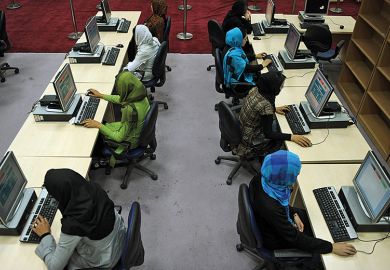
University of the People aims to fund 4,000 Afghans to study, with 600 already enrolled in its courses
The escalating pressures of university life are resulting in all manner of exotic new psychological disorders. Adrian Furnham opens his casebook
As the season of goodwill comes around again, warm words about collegiality and fellowship have been dutifully corralled into all-staff missives from university leaders. But in an era of management, metrics and industrial unrest, does the image of the academy as a commonwealth of scholars still bear scrutiny? Seven academics have their say
Unclear guidelines, screen-tanned conspiracy theorists and government party animals: none of them is helping campus security, says George Bass
Persuasion is everywhere, but universities could do a public service by communicating the messy, uncertain truth more widely, says Michael Blastland
They helped create the problems we face. Now business schools should be fundamentally reimagined as democratic institutions, says Carl Rhodes
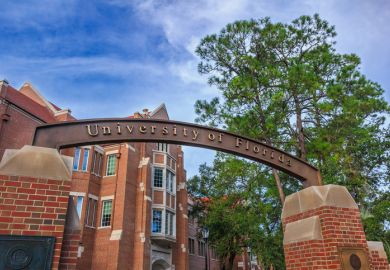
The Florida governor’s control over the make-up of public universities’ boards makes recent controversies unsurprising, says Mei Lan Frame
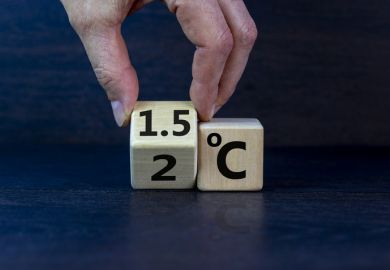
Emily Shuckburgh and Alyssa Gilbert, co-chairs of the COP26 Universities Network, draw the lessons from two years of collective effort
A push to end the habit of assessing researchers by their publication metrics is gaining momentum. But are journal impact factors really as meaningless as is claimed? And will requiring scientists to describe their various contributions really improve fairness and rigour – or just bureaucracy? Jack Grove reports
Scrutiny of graduate outcomes is appropriate but the issue is much more complex than arts v science, says Anna Vignoles
Scholars defend Sergey Zuev’s ‘impeccable reputation’ and liken his treatment to torture
Both dropout rates and attainment have held steady since Abertay radically reduced entry grades for disadvantaged applicants, says Nigel Seaton
The UK’s whole-genome sequencing project could spark a global step change in the treatment of rare diseases, says Damian Smedley
Peter Osborne is intrigued by an account of the political and philosophical ideas that shaped the West German left
Both industry and academia in New Zealand need people who can look past traditional subject boundaries, says Catherine Whitby
Research that is neither rigorous nor insightful serves no one, say Stefan Stremersch, Nuno Camacho and Russell Winer
Meeting the Confucian approach halfway will protect student recruitment and might even stimulate a new politics of mutual benefit, says Paul Breen
New Zealand’s embrace of Māori vocabulary goes hand-in-hand with the incorporation of Māori understandings into curricula. But is a debate about the unintended consequences of this move being stifled by fear of speaking out? John Ross reports
Quite apart from the injustice, institutions that fail to act on complaints undermine trust across entire disciplines, says Irina Dumitrescu
The crisis in peer reviewing can be overcome if journals and universities do more to incentivise it, say Dirk Lindebaum and Peter Jordan
Inequality, Covid exhaustion, sympathy for students, fear of public opinion and frustration with UCU tactics are all factors, says Glen O’Hara
The brain drain from academia to industry is just one of the glitches that need addressing, says Greg Slabaugh
Graduation days are students’ days. Why can’t they be all-singing and all-dancing, asks James Derounian
Emphasis on student earning outcomes risks overlooking the bigger picture, say academics
The UK government’s £300 million funding pledge must be confirmed in the spending review, and departmental closures must stop, says Jon Keating
Despite their above-average employability, engineering students are hampered by poor-quality provision, says Pushkar
The pandemic revealed that in-person teaching generates greater satisfaction and sense of belonging, say Leonard Saxe and Graham Wright
The targeting such researchers face raises serious questions about universities’ moral responsibilities towards them, say five researchers
The David Miller and Kathleen Stock cases underline the growing threat to human rights, say Alison Assiter and Miriam David
With contention about diversity adding to concerns about employability and declining student numbers, does Classics in the US need rebranding or rethinking? Paul Basken reports
Universities must give credit for the broadened skill sets that the pandemic has prompted academics to acquire, says John Tregoning
In the absence of an express prohibition of class discrimination, a new code offers a beginning for dialogue, says Geraldine Van Bueren
The tactful approach can be effective but it risks obscuring the necessity and urgency of improvements, says Chris Moore
The Covid-enforced pause to in-person visits has been a relief to BAME academics, says Aymen Idris
Schools should be hubs of interdisciplinarity, co-producing research and solutions with key stakeholder groups, says Ansgar Richter