Head of school/department
The new coronavirus variant means that the costs to public health outweigh any pedagogic benefits of reopening campuses sooner, says Simon Williams
The president-elect may have academic connections, but the path from campus to cabinet is rarely travelled successfully, say three political scientists
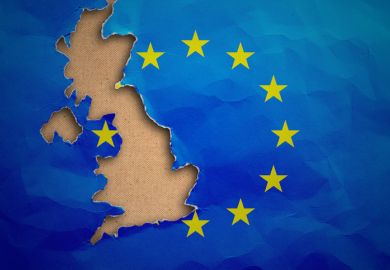
The European programme’s globe-spanning successor, the Turing scheme, is more suited to meeting today’s challenges, says Louise Nicol
The Turing scheme’s focus on outbound mobility will take the UK off the map for most European exchange students, laments Barbara Lorber
Turing scheme will not cover tuition fees, travel costs to the UK or staff exchanges, leaving UK universities to negotiate fee waivers
A huge endowment could help draw the talent and capital to counterbalance the golden triangle, say Neil Lee and Javier Terrero Dávila
The past 12 months will live long in the memory, for all the wrong reasons. But as 2020 nears its end amid fairy lights and optimism about vaccines, six academics tell us the bright spots they managed to find amid the gloom – from human connections to elasticated waistbands
Practitioners have a lot to teach students, but the value of research training should not be dismissed lightly, says Sam Christie
It makes no sense for universities to control all pre-specialism, hospital-based training, says Fistra Janrio Tandirerung
Essay mills’ opportunism, preying on student anxiety about online assessment methods, strengthens the case for legislation, says Douglas Blackstock
Two decades of Bologna-driven programme accreditation has proved that universities can be trusted to assure their quality, says Michèle Wera
In the new world order, leadership is about collaboration and coordination. Higher education networks are an obvious forum, says Annelise Riles
Academics have long grappled with the strains that job scarcity and the mobility imperative impose on their families. But might the experience of mass remote working finally offer a viable solution, asks Jack Grove
Distributing financial aid based on identity or academic attainment leaves many poor people excluded from the academy, says Ryan Coogan
In handling cases, UK universities must clarify the burden of evidence, better train adjudicators and publish incidence statistics, says one survivor
Gavin Williamson’s directive will embolden other groups to demand the enforcement of their interests by ministerial fiat, says Geoffrey Alderman
Universities’ ethics oblige them to pay their own interns, so why do they permit their students to work many months for free, asks Sam Scott
Evidence suggests that different personality types are drawn to – and excel at – teaching and research, says John Dreijmanis
Inevitable examples of jargon or poor research are no reason to reject an entire discipline, say Debby Cotton, Elizabeth Cleaver and Dilly Fung
Academics remain wedded to prestige indicators, but peer reviewers may conclude that the journal is profiteering, says Dorothy Bishop
The ‘Tasmania Model’ of addressing social need offers lessons for the wider sector, say Rufus Black and Nick Fowler
With global warming a priority for the next US president, the International Universities Climate Alliance can lead the academic response, says Ian Jacobs
An Australian university’s attitude towards Rwanda illustrates the West’s failure to treat African academics as equal partners, says Timothy Carey
Most lecturers dread educationalists’ holier-than-thou, discipline-blind invocations of the latest teaching fads, says an anonymous academic
Republican office holders will walk a fine line of supporting their local college while decrying higher education in general, says Anthony Carnevale
Pledged support for equality must be put into practice on multiple fronts, from syllabi and curricula to advising and recommending, say Chisomo Selemani and Anna Young
University careers attract intellectually curious people who want to make a difference. But Donna Swarthout has been disillusioned once too often
If we can’t find the narrative forms to make the world real to one another, we risk losing our politics to the fantasists and cynics, says Lyndsey Stonebridge
The experience of Monash University suggests that staff members’ greatest mental health needs are not necessarily obvious, says Kim Cornish
As the pandemic reshapes both conferencing and publishing, melding talks and papers makes a lot of sense, says Richard Oliver
The potential involvement of the UK, Australia and Canada requires a fair payments mechanism between the EU and associate countries, says Jan Palmowski
Suzanne Rivera receives both praise and abuse on social media in response to offer but says she will continue to defend rights to assembly and free speech
The pandemic has underlined the need for student assessment strategies to adapt to extraordinary circumstances, say Alexander Amigud and David J. Pell
What does it say about our labour culture that a tenured professor stuck in an elevator did not even consider cancelling his class, asks Irina Dumitrescu
Appointments at Hong Kong’s most prestigious university come despite critics’ call for more consultation
Those who make the loudest noises about equality can be among the most myopic about the evils of academic inbreeding, says Bruce Macfarlane
The pandemic underlines the need for executives to be instilled with a more radical approach to sustainability, say Lars Moratis and Frans Melissen
With many students still obliged to learn from their bedrooms, focusing on their well-being and social development is vital, says Benjamin Tak Yuen Chan
Online courses should be easily adaptable to post-Covid circumstances – whatever they may be, says An Jacobs
Tackling bias by urging writers to avoid stereotypically female descriptors undervalues qualities such as cooperation and care, says Davina Cooper
Critics says that 60, or even 65, is too young to end an academic career
Done properly, teaching in front of a webcam is more effective than teaching from behind a visor, says an anonymous academic
Civilised adults should not have to demonstrate that they can stand up to bullying before being offered a job, says an anonymous academic
The country’s deep belief in cooperation coexists with a quiet opportunism about recruitment and funding, say Tim Seidenschnur and Georg Krücken
No matter how hard they work, thousands will be dumped out of the labour market during the pandemic, say Harry Pettit and Alexandra Dales
Urgent action is needed to help doctoral candidates whose research has been halted by Covid-related travel bans, says Lorena Gazzotti
The Netherlands’ cautious, common approach to teaching during the pandemic contrasts with the full reopenings planned by many UK and US universities. But what will students get out of it? And is even 20 per cent campus capacity sustainable? David Matthews travels to the Netherlands to talk to the key players
The pandemic’s demolition of barriers and bureaucracy clears the way for a better higher education sector, says Pat Tissington
The UK, in particular, could find itself gasping for breath by 2024 if it does not take the currents into account, warns Louise Nicol
We must move away from small-scale mitigation efforts and think on a larger scale about how to radically revamp teaching and research, says Joy Carter
Experts stress quick, consistent and centralised approaches, plus extra support for students and IT systems, during webinar
With infection rates increasing and online teaching well established, why risk everyone’s health by reopening, asks Richard Watermeyer
Job security, research funding and work-life balance for young academics have all been worsened by the pandemic, say four academics
Cost transparency isn’t in universities’ DNA, but those who teach and design modules must be able to apply a clear budgetary model, says Terry Young
‘HyFlex’ learning and cutting-edge virtual reality techniques set to help students and staff bridge physical and language barriers
The shielding of the academic workplace from all risk of Covid-19 is not a safe or sane position, says Robert Poole
Students from low-income backgrounds must not suffer from the unavoidable shortage of places, says David Katz
It makes no economic sense for job-retention schemes to postpone the inevitable, says Paul Oslington
Tributes paid to ‘a towering figure in the field of medieval studies’
Knowledge transfer and start-up incubators are more important than ever given the economic downturn in the wake of Covid-19, say university leaders in South Korea