Artificial intelligence in higher education
Academics turn to private sector as research into machine learning fuels massive growth in computational needs
Traditional assessment is an imperfect test of understanding. We’re using AI to improve it – and eliminate cheating worries, say Baba Sheba and Mike Bond
Universities caution against reliance on AI detection tools after media probe alleges 20 per cent of recent master’s theses were mostly produced using chatbots
Post-92s better at equipping students with digital skills – while most undergraduates interested in degrees tailored to them by technology
Morten Axel Pedersen says challenge of adapting to new technologies on same scale as industrial revolution
CRANE says it will look again at all applications from recent cybersecurity research funding call after backlash against non-human review
We should mark a student’s distance travelled, rather than judging them solely on the absolute quality of a final output, says Emma Ransome
Student ambassador programme is the latest example of AI solidifying its place on university campuses, but observers question its ethics
Artificial intelligence used to cull half of applications submitted by cybersecurity scholars, before they got to human eyes
OpenAI’s solving of an iconic challenge to flex its technological muscles raises deep questions about how mathematicians view their subject, says Jon Keating
Deans report experimenting with different assessment methods to stem risk of students falling into AI-induced ‘cognitive surrender’
The point is to prepare students for a more attributable demonstration of competence at sparser checkpoints, says Simona Aimar
Mathematicians express ‘extreme concern’ over the pace of development, following existential risk warnings
One Hong Kong university has rolled out a Cantonese-trained, AI-driven virtual elderly client for teaching social workers
Mary Curnock Cook tells sector to reflect on how digital provision has transformed journalism amid a ‘nightmare scenario’ facing higher education
Finding significant gaps between approaches at private and public universities, Unesco calls for more investment and stronger governance
AI use is being framed as a binary of permitted or cheating, when for second-language writers it is a question of learning, says Özgür Çelik
LLMs cannot be relied on to give accurate indication of student performance, researchers find, as universities explore ways of relieving pressure on markers
We discuss the environmental implications of mass GenAI adoption across higher education and why universities are failing to account for its use in their quest to reduce carbon emissions
Detectors can help pinpoint where image manipulation is occurring but should not be seen as a ‘universal truth machine’, experts say
Threatening sanctions for unauthorised AI use is having no impact on rampant student cheating. Only a ban can save critical thinking in classrooms, says Deborah Rogers
Amid all the debates about student employability and academic integrity, the question of how AI mandates square with universities’ commitments to addressing climate change has been largely neglected. Juliette Rowsell reports
Surge in generative AI use in US federal grant proposals is reducing diversity and narrowing the scope of ideas, study finds
Rather than relying on an annual survey, governance procedures need regular intelligence on AI developments, says Nick McIntosh
Acceptance is not surrender. It is about getting beyond a policing obsession and rethinking what assessment aims to measure, says Shadi Mohamed
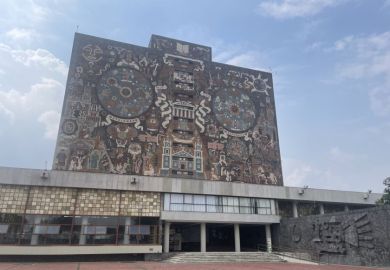
Tens of thousands of applicants will have to redo tests after anomalies in entrance exam scores at National Autonomous University of Mexico
Several universities have committed to giving everyone access to latest technology, but expert says a more nuanced approach is needed
Among the elements of the shared core grammar all students need, mathematics and philosophy deserve special mention, says Manu Kapur
Universities are fusing the world’s oldest discipline with one of its newest innovations. But ensuring a balance between learning technical skills and tackling big questions takes work
Artificial intelligence is already having a huge impact on research, and the technology is advancing so quickly that some suggest it could soon be capable of directing its own research programmes. But will human input ever become truly obsolete, Jack Grove asks several Nobel laureates
Country leads way in producing highly cited papers but overall share of publications drops
The rush to regulate the use of artificial intelligence in scholarly inquiry looks like a defence of intellectual craft. In reality, it’s an act of institutional self-preservation, says Ian Richardson
Almost one-third of students report not using AI at all in their studies, while non-native English speakers at UK universities are among those relying on the technology regularly
New technologies making academic fraud ever more common and sophisticated
Half of all students’ work assessed by company’s detection tools shows ‘at least some’ evidence of AI writing
For those without digital and cultural capital, AI is a dangerous helper whose use is liable to land them in hot water, says Rituparna Patgiri
Given AI’s ubiquity in the workplace, some believe that students should now be assessed on their aptitude in working with it. But others insist employers are still more interested in innate ability – and rampant undeclared AI use demands the revival of traditional ways of testing it. Juliette Rowsell reports
Rapid development of technology outpacing any attempts to reform assessment system, researchers warn
Anxious students offer rich pickings for those offering to check their AI-likelihood scores, say Benjamin Luke Moorhouse and James Mian Jia
Publishers must stop treating AI governance as an ethical burden to be outsourced to those already overburdened and under-rewarded, says Mai Zaki
Rampant technology considered both essential knowledge and an employability threat, survey finds
We have produced a generation who believe their own thinking is not good enough unless it sounds like a machine, says Agnieszka Piotrowska
In the four years since its commercial launch, generative artificial intelligence has had a profound impact on personal and professional life. But are academics enthusiasts or sceptics? Five scholars explain how the technology has affected their own practice – for good and bad
Universities piloting the use of AI tools in assessment identify ‘tension’ in determining correct role for academics to play
Audit of all UK institutions reveals lack of coordination in how student AI use is being managed, with 40 per cent lacking any public policy
Rise in top marks was most prevalent when students completed written tasks at home, says University of California, Berkeley scholar
Research integrity experts commend arXiv’s crackdown on bogus AI-written citations but warn it may be impossible to police at scale
Universities still sending mixed messages, with survey finding even split between those who feel encouraged and discouraged to use new technologies
Loss for the publishing giant in its legal action over AI crawling will make it much harder for scholars to assert control on how their outputs are used, say experts
Automation may be used as an excuse to cut further posts, experts warn, even if it isn’t capable of replacing academics
Withdrawal of education papers by British Education Research Association is long overdue, says integrity campaigner who argues more retractions are needed
Concerns that UK universities not preparing students adequately as annual survey shows big rise in performance-related issues among recent hires
AI glasses and other smart apparel may be impossible to keep out of exams, adding to universities’ woes about the future of assessments
Students expected to use AI for information before evaluating technology’s output as institution seeks to prepare learners for changing labour market
Informal applications of AI, such as academics using tools to grade student work, could potentially fall foul of wide-ranging legislation, policy expert warns
Patchy uptake of new technologies across region, survey finds, with limited connectivity a potential barrier
London School of Innovation set to launch in June after being given stamp of approval by regulator
Political ambition is not enough. Stable funding, coherent regulation and realistic institutional differentiation are also vital, says Kyuseok Kim
Expert says ‘coordination problem’ leaves degree courses out of sync with business needs
Calls to ditch AI because it is destroying students’ analytical skills ignore institutions’ questionable record at developing complex reasoning, says Ian Richardson