ADVERTISEMENT
Of the five stages of AI grief, some managers are stuck in denial
Acceptance is not surrender. It is about getting beyond a policing obsession and rethinking what assessment aims to measure, says Shadi Mohamed
Source: TarikVision/Getty Images
During a recent conversation about generative artificial intelligence, a senior institutional leader offered me a hesitant reassurance: “Well, the calculator impacted how we teach numeracy...I know this is different, but then how big is the difference, really?"
In that moment of institutional blindness, it struck me: universities are not merely struggling with a technological adoption curve. They are grieving the demise of the modern university’s economic and institutional logic.
To understand the scale of this threat posed by AI, consider what the internet did to journalism. Newspapers thrived by bundling together classified advertising with quick news hits, sports scores and opinion columns, using that reliable revenue to fund the expensive social necessity of investigative reporting. The rise of internet advertising did not kill journalism outright but it shattered the bundle, leaving the expensive core product without its historical financial engine.
Universities operate on a similar logic, bundling content delivery, assessment, credentialling, research and professional formation. But generative AI is now commodifying the most visible parts of that package. When AI can deliver personalised explanations instantly and generate the essays and reports we use to measure student capability, the traditional degree loses its role in the labour market as a proxy for understanding. If the bundle breaks, the economic model that funds our deeper purposes is in peril.
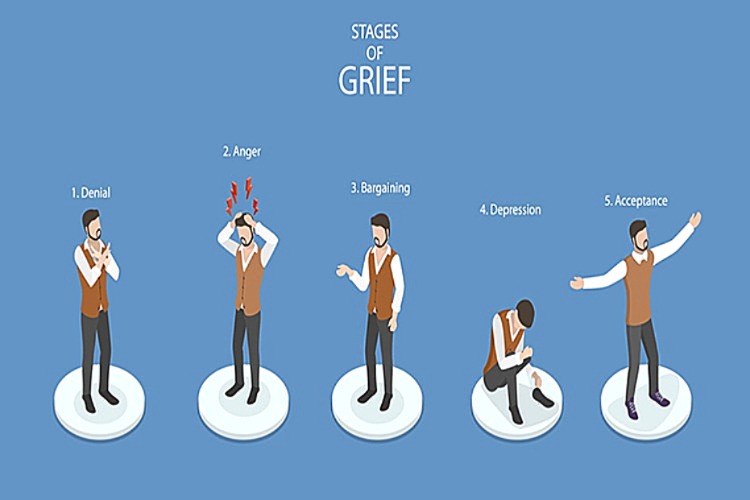
To understand the resulting institutional paralysis, we must look past technology and turn to human psychology. In 1969, the psychiatrist Elisabeth Kübler-Ross published On Death and Dying, mapping how human beings process existential rupture through five famous stages: denial, anger, bargaining, depression and acceptance.
ADVERTISEMENT
Institutions process terminal diagnoses in exactly the same way – but, in the case of universities, frontline academics – the ones actually reading AI-generated submissions – are far ahead of central management.
That senior leader’s resort to the common calculator analogy was a textbook example of denial. But it is not a good analogy. The calculator made arithmetic faster; it did not make mathematical reasoning redundant. But AI threatens to make synthesis, argumentation and structured reasoning substitutable: precisely the cognitive outputs that assessment has always used as proxies for learning.
Denial is not dishonest: it is psychologically self-protective. But it delays, sometimes fatally, the need for structural reform.
Front-line academics and even some managers have long since moved beyond denial but many remain in the second phase, anger. For central management, anger focuses on mass student cheating and prompts the purchase of AI-detection software and the updating of misconduct policies. For front-line academics, the anger is more pedagogical and more legitimate: a lecturer who has spent years designing coursework to guide students through cognitive challenges watches a language model bypass that process entirely. But academics know that there is no policing reform to the crisis.
Universities then pivot to bargaining, visible in the sudden enthusiasm for analogue constraints: in-person invigilation, handwritten essays and mandatory oral examinations. If students will only accept these steps back into the past, everything will be OK with the world.
Some of these have genuine pedagogical potential but not as policing mechanisms. The institution focuses on verifying how the artefact was produced rather than rethinking what assessment is actually supposed to measure.
As the futility of bargaining becomes apparent, depression settles. But, again, its nature differs in academics and managers. Academics who understand what genuine AI integration requires – curriculum redesign, a shift from measuring artefacts to assessing judgement – also understand what it would cost. Yet they are routinely asked to deliver this transformation as an unfunded mandate, with no reduction in administrative burdens or student-to-staff ratios.
ADVERTISEMENT
Management arrives at depression differently, through falling recruitment and the dawning recognition that detection tools are not holding the line. But both groups reach the same paralysing conclusion: the gap between what reform requires and what the institution provides is unsustainable.
True acceptance remains an unresolved future for most institutions but it is not hypothetical. It is already happening in individual departments and redesigned courses. Acceptance is not surrender. It is the point at which the institution stops asking the wrong question and starts asking the right ones.
The oral examination is transformed: the examiner no longer asks, “Did an AI write this?” but “Why did you accept this assumption? What are the risks of this model? What would you change, and why?” Assessment becomes a genuine test of the judgement and professional accountability that education was always supposed to develop and that no AI can supply on a student’s behalf.
Universities will not thrive in the age of AI by defending the broken components of an outdated bundle. They will endure only by having the courage to build the kind of institution human beings actually need in a world of cognitive automation.
Shadi Mohamed is associate professor in structural engineering at Heriot-Watt University.