ADVERTISEMENT
AI is exposing the limits of education’s ‘what works’ obsession
Producing better evidence about interventions is not the same as overcoming educational disadvantage, says Sandra Leaton Gray
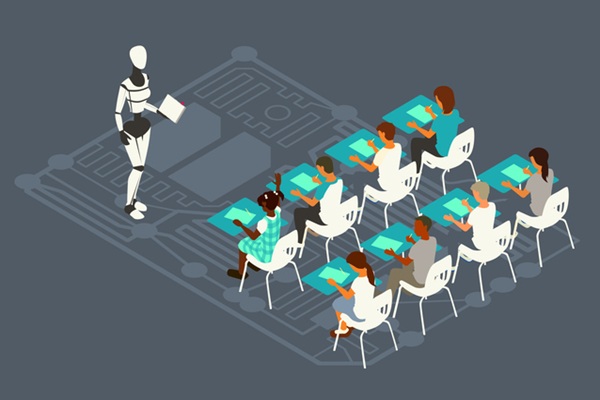
Source: mathisworks/Getty Images
England has spent 15 years building a formidable apparatus for finding out whether educational interventions work. Now artificial intelligence is arriving in classrooms, we might discover that we have become very good at answering the wrong questions.
The government’s £24 million EdTech Testbed programme will involve more than 1,000 schools and colleges. Ministers also envisage AI tutoring reaching up to 450,000 disadvantaged pupils annually. The ambition is to establish which technologies improve educational outcomes. But the most consequential questions about AI might be those that product evaluations cannot answer.
I raised this concern when giving oral evidence to the House of Commons Education Select Committee on 20 October. AI does not simply deliver educational content. It is becoming part of the infrastructure of childhood, increasingly shaping how children learn and grow. The question is not just whether AI helps children complete a task efficiently but what happens to their development when they no longer need to do it themselves. And that, of course, is a question very relevant to universities, too.
The testbed is being delivered, in partnership with the Department for Education, by the Education Endowment Foundation (EEF). Established in 2011, the EEF has become an extraordinarily influential arbiter of educational evidence. Backed by £302 million in government funding commitments, including its endowment and subsequent funding, it is England’s biggest funder of educational research, including that carried out by academics. But its success in establishing the authority of experimental evidence has narrowed our understanding of what educational research should investigate.
The EEF has helped make randomised controlled trials a particularly influential form of evidence in English education. The attraction is understandable. Trials can provide rigorous answers to questions about effectiveness. But the choice of what to measure is never neutral, and when improvement in selected outcomes becomes the principal test of educational value, questions about childhood, relationships and inequality risk being pushed aside.
ADVERTISEMENT
Nor has the growth of intervention evidence resolved the problems it was intended to address. In 2024 the National Audit Office reported that the attainment gap between disadvantaged children and their peers remained stubbornly wide, with the DfE unable to demonstrate value for money across its disadvantage strategy. Producing better evidence about interventions is not the same as overcoming educational disadvantage.
Moreover, there will always be more educational products than any publicly funded system can reasonably investigate. Who should bear the burden of proving they work? Pharmaceutical manufacturers must demonstrate the safety and efficacy of their products, subject to independent regulation. Educational technology is different but why should its manufacturers not face proportionate obligations to substantiate their claims?
There is a deeper problem, too. Randomised controlled trials can establish whether an intervention improves a particular outcome over a given period. They can investigate wider consequences too, provided researchers choose to measure them. But they cannot, by themselves, tell us what happens when children routinely delegate intellectual tasks to AI.
Nor can short-term product evaluations readily capture the consequences of a technology that follows children from the classroom to their bedrooms – where some forms of AI offer them an endlessly patient, obliging companion, mostly free of the frustrations of human relationships, holding their attention for ever longer. What happens when such relationships become ordinary features of childhood?
Then there is the inequality question. In an affluent school, AI might supplement excellent teachers. In a school struggling to recruit, it might substitute for human expertise. Both could report improved attainment. Yet one would be expanding educational provision while the other reorganised it around scarcity. The question is not simply whether AI improves results but whether it expands children’s opportunities or normalises diminished provision.
The UK is well placed to investigate these questions. UK Research and Innovation has committed £42.8 million to Generation New Era, a study following approximately 30,000 children born in 2026. Although not designed to examine AI’s developmental effects, it offers a possible foundation for such research. Existing longitudinal studies, alongside new research involving school-age children, could investigate how sustained AI use affects learning, development and relationships across different social backgrounds, including in relation to university entry and attainment.
To that end, I have proposed a National Observatory for AI and Child Development to the Education Select Committee. Independent of commercial interests, and complementing current provision, it would bring together experimental and longitudinal research, children’s own experiences and scrutiny of commercial claims. It would investigate benefits as well as risks, providing evidence for parliamentary examination of government spending and wider questions about screen time, health and well-being.
ADVERTISEMENT
Controlled trials undoubtedly have an important place in educational research but one research tradition cannot be allowed to define the limits of educational knowledge. UK universities should be asking these harder questions, before today’s decisions about AI use in the classroom (and the lecture theatre) become difficult to reverse.
The danger is not simply that educational AI might fail to work. It is that it might work according to our chosen measures while diminishing important aspects of childhood we never thought to consider.
Sandra Leaton Gray is professor of education futures at the UCL Institute of Education.
Read more about

Related articles

Featured jobs
ADVERTISEMENT