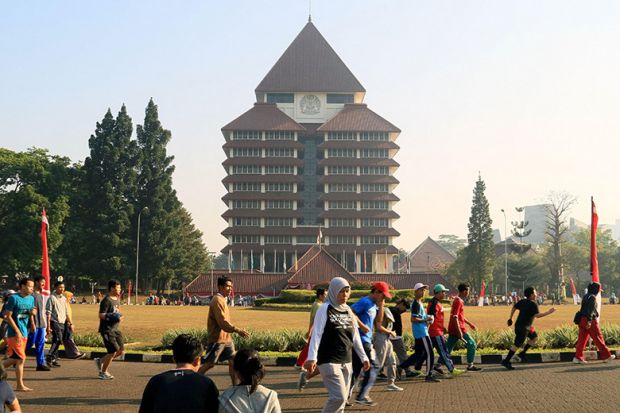
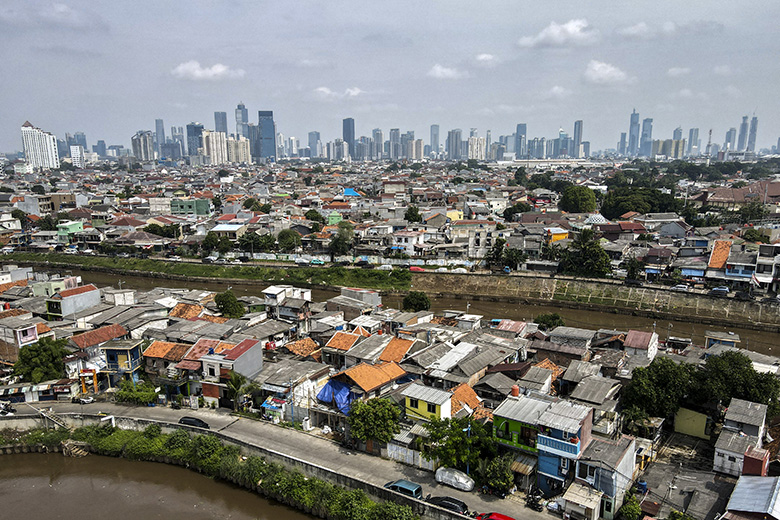
Indonesia’s national university is an oasis – a green enclave wedged in the dense residential spiderweb of the world’s most populous city.
With three-quarters of its 320 hectares occupied by forests and lakes, Universitas Indonesia (UI)’s main campus boasts its own microclimate – a refreshingly cool retreat for its 42,000 students and 4,000 academics, not to mention monkeys, cobras and water monitor lizards that reputedly reach two metres. Local motorcyclists use the campus as an east-west escape hatch, attracted by its open-door ethos, merciful shade and – by Jakarta standards – extraordinarily unclogged roads.
The area was covered by rice fields, rubber plantations and secondary forests until UI, which originated as a medical school in the mid-19th century, outgrew its original site near central Jakarta in the 1980s. Since then, the capital and its satellite city of Depok have grown up around the campus, exemplifying the evolution of the world’s fourth-biggest nation and its top-ranked university over the past four decades.
UI has spawned some of its strongest domestic rivals, with campuses elsewhere in Java and Sulawesi spun out into independent institutions. They include Institut Teknologi Bandung (ITB) and nearby Universitas Padjadjaran, Institut Pertanian Bogor (IPB), Universitas Airlangga in Surabaya and Universitas Hasanuddin in Makassar.
Now, as the world’s biggest Muslim majority nation aspires to an economy befitting its size, universities have a huge role to play in spurring progress. But this is no simple task in a vast archipelago containing more than 200 religions, 700 languages, 17,000 islands and 290 million souls.
A new book, Strengthening Indonesia’s higher education system, highlights the challenges. “Major reform is required,” the introductory chapter notes. “Change will have to range from regulation and funding settings, faculty contracts and incentives to management and monitoring mechanisms, student identities and experiences. It will be a rocky road.”
The mission is complicated by the higher education system’s size and diversity. Its 4,600-plus institutions, barely 10 per cent of them public, cater to more than 8 million students. Most institutions are privately owned, small and of variable quality. Public institutions are largely treated as working units of the Ministry of Higher Education, Science and Technology. Fewer than 25 are autonomous.
For comparison, the book’s co-editor, Hamish Coates, points to the university system in his native Australia which is separated into 40-odd public institutions and a handful of private players. “In Indonesia, you’ve got…30 or 40 different types,” said Coates, a visiting professor at Tsinghua University in Beijing. “One size will not fit all, and the ministry knows that.”
It also knows that it must look outside Indonesia for expertise and best practice. “From a government’s perspective, your capacity to reform education is always very limited and requires a remarkable alignment of serendipities,” Coates said. “Using external power as a lever for internal change is just an obvious no-brainer.”
Before the coronavirus pandemic, Indonesian authorities introduced policies to encourage “internationalisation at home” – a deliberate strategy of injecting domestic curricula with international and intercultural elements by importing foreign students and staff. The policies included a grants scheme to strengthen universities’ international offices and support short-term programmes for foreign students.
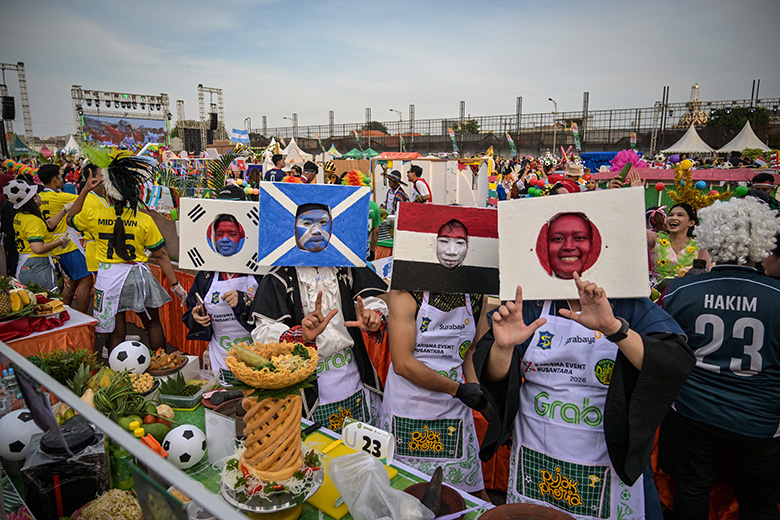
Many Indonesian institutions have since begun to include internationalisation targets in their internal performance metrics, according to Ratih Indraswari of Parahyangan Catholic University in Bandung.
Meanwhile, foreign universities are taking advantage of liberalised Indonesian rules to set up their own outposts in the archipelago. Five exist so far, including a joint campus of Deakin and Lancaster universities in Bandung, King’s College London’s campus in Malang, Georgetown University’s campus in central Jakarta and Western Sydney University’s campus in Surabaya.
The oldest and strongest was established by Monash University, a mainstay of transnational education since it launched its first foreign branch campus in Malaysia in 1998. Monash says that its campus in an upper-crust educational and commercial hub in Tangerang, another satellite of Jakarta, has enrolled 1,150 master’s students since launching in 2021.
A PhD programme established in 2024 has more than 35 students, and the campus enrolled its first cohort of 110 undergraduate students in July. It has forged agreements to deliver postgraduate education to staff from Indonesia’s state-owned electricity company and a PhD co-supervision scheme with universities from one of Indonesia’s largest Islamic organisations.
Coates said branch campuses in Indonesia are best regarded as experiments. “Setting up a foreign campus in someone else’s turf is not a lay-down misère [ie, guaranteed win],” he explained. “We need to understand the culture, the business, the local operating climate.
“The best universities in the world are experimental institutions, and they’re given licence by governments…and industries to play around and do new things. That’s what universities do – push frontiers.”
The five branch campuses established so far are “struggling”, Coates said. “They’re struggling because they’ve come into a country that hasn’t hitherto had foreign campuses. Any foreign university is seen as a premium product that’s competing naturally with the big end of town. Well, the big end of town in Indonesia has been the big end of town for a few decades, and they have their own interests.”
But the big end of town is also struggling, as economic setbacks starve higher education of resources. Education and research budgets were among those slashed to pay for President Prabowo Subianto’s signature Makan Bergizi Gratis or Free Nutritious Meals programme – cuts that fuelled waves of student protests in 2025 and 2026.
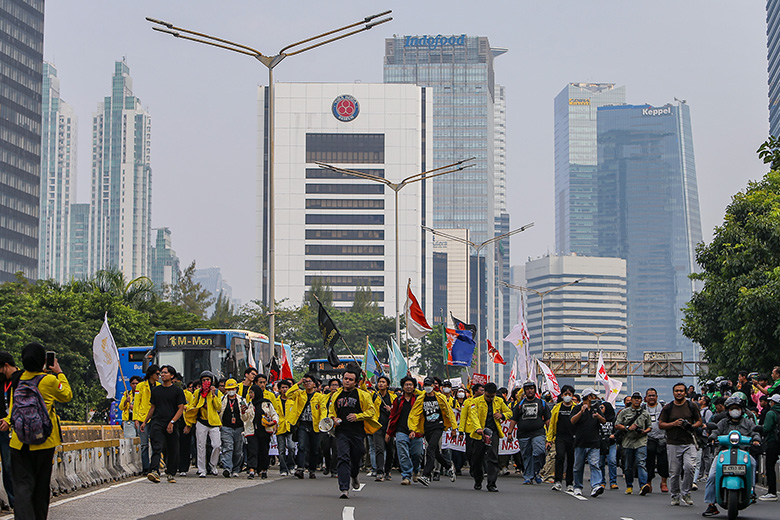
Critics say the programme is misconceived, primarily targeting children in high school rather than in infancy when nutrition is most critical. The scheme has also earned notoriety for causing mass food poisonings.
The outflow of funds may be stemmed following a July Constitutional Court ruling that the free meals scheme can no longer be funded from the education budget. In August, Prabowo reportedly promised to increase support for research.
However, the Middle East conflict has intensified Indonesia’s economic woes by increasing the price of oil. The country’s most widely used grade of petrol is heavily subsidised, with locals paying just 10,000 rupiah (£0.41) a litre and the state-owned oil company compensated for the difference between the sale price and procurement cost.
These subsidies consume close to 2 per cent of the country’s gross domestic product, and every US dollar increase in global oil prices adds an estimated 7 trillion rupiah (£293 million) to the cost. This is exacerbated by the record low exchange value of the rupiah. The country reportedly allocated almost 400 trillion rupiah to bankroll the subsidies in this year’s budget, and announced that it would have to find another 100 trillion rupiah in savings to cover the rising costs.
Rolling budget cuts have robbed universities and colleges of resources and enrolments, with government agencies ordered to curb their spending on educating their staff, and broader student support slashed. Scholarships through the Lembaga Pengelola Dana Pendidikan (LPDP), the major education endowment fund, have been more than halved.
LPDP offers fully funded scholarships at master’s and PhD level, split between students studying locally and abroad. Allocations reportedly reached about 9,000 places annually in 2023 and 2024 but have plunged to just 4,000 in 2025, 2026 and 2027.
Direct government funding for Indonesia’s premier universities has also plummeted. Times Higher Education understands that just 19 per cent of UI’s funding comes from the state, down from 25 per cent five years ago, with student fees contributing more than twice as much.
With taxpayer support in retreat, a special admissions scheme known as jalur mandiri, or “independent path”, has become a key source of funding for many institutions. The scheme, introduced as part of early 2000s reforms to make universities more autonomous, allows taxpayer-funded institutions to charge higher fees for about 20 to 40 per cent of their incoming students.
Jalur mandiri is, in essence, a pay-for-access scheme. While most places at state universities are accessed on merit, with some quarantined for low-income applicants, Jakarta-based tertiary education specialist Agustian Sutrisno says the scheme has nevertheless become integral to many institutions’ financial viability.
Sutrisno, an adviser with Cowater International consultancy and a lecturer at Universitas Katolik Indonesia Atma Jaya in Jakarta, said students using the independent pathway could spend $15,000 (£11,100) more for their degrees than peers who enter via the “regular national test” path, who might pay one-40th as much.
The scheme draws complaints from students who say it favours the rich, from private universities which say it deprives them of enrolments, and from others who blame it for undermining academic standards at state universities.
Sutrisno has some sympathy for the last perspective, with recent statistics suggesting that just 5 per cent of Indonesian institutions are rated “superior” by the National Accreditation Board for Higher Education, while some 1,500 – around one-third – are not accredited at all. “There is clear evidence that quality is an issue,” Sutrisno said.
Contract work is the other primary income source for top universities like UI and its rival Universitas Gadjah Mada (UGM), bringing in about 40 per cent of their overall revenue.
Hali Aprimadya, a lecturer in public policy at Flinders University in Adelaide, said much of the research for government agencies and state-owned companies was conducted by the “elite” universities of UI, UGM in Yogyakarta, ITB in Bandung and IPB in Bogor. This is partly because the tax breaks for research spending are not considered particularly attractive. “There is a bit of reluctance from the state-owned [and] private companies to invest too much in their own R&D,” Aprimadya said.
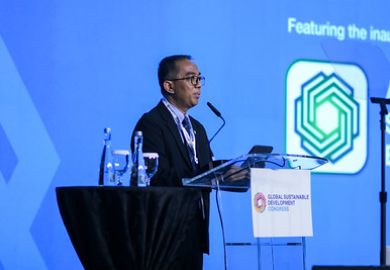
If the corporate world is convinced of Indonesian academia’s research prowess, the government appears less so. Indonesia’s minister for higher education, science and technology, Brian Yuliarto, did not mince words when he criticised the country’s research culture at THE’s Global Sustainable Development Congress (GSDC) in Jakarta in June.
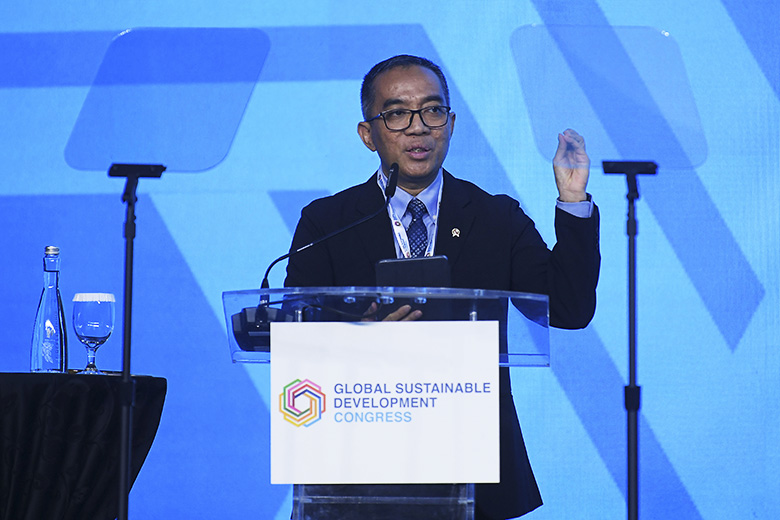
Yuliarto, a former vice-rector for research and innovation at ITB, said seasoned academics were becoming complacent when they reached the “comfort zone” of tenure. This was depriving the archipelago of zeal for the research it needed to drive its “social and economic transformation”.
In comments reported by the Antara news agency, Yuliarto has repeatedly stressed the research sector’s role in supporting Indonesia’s quest for prosperity. University autonomy must be balanced with “public accountability” by ensuring the relevance of research to societal and industrial needs, he reportedly said. “Higher education institutions must deliver tangible benefits to communities, industries and the government for the prosperity of the Republic of Indonesia.”
His deputy Stella Christie, a Harvard-trained cognitive psychologist who juggles her political post with a professorship at Tsinghua University, took up the theme at the GSDC. She said most of Prabowo’s policies were aimed at realising his goal of achieving 8 per cent economic growth through “increased margin of returns. Economic growth means that with the same input, you get more output,” Christie said, citing economist Paul Romer’s endogenous growth theory. “The only thing that will create a sustainable economic growth is ideas.”
Sutrisno said Indonesia resembled many other countries in its desire to turbocharge its economy by pursuing commercially oriented research. But the archipelago did not have a culture of producing high-quality fundamental research, largely because it lacked the necessary infrastructure. Publish or perish imperatives had encouraged a lot of poor-quality research, often printed in predatory journals, although the government was trying to address this by focusing more on research impact.
Incentives that prioritise publication quantity over quality are ingrained in performance arrangements which are regulated by Ministry of State Apparatus Empowerment and Bureaucratic Reform, the agency that oversees Indonesia’s civil service.
All academics are required to perform between 12 and 16 credit units or “points” each semester through a combination of teaching, research, outreach and administrative service, with research typically counting for four or five points. Those who fail to complete the requisite amount of research can lose up to one-third of their pay.
Academic pay is not substantial in the first place, with a basic salary of perhaps £160 a month. This figure can be roughly tripled through pay enhancements attached to accreditation, commissions for securing research grants and two types of “incentive-related” pay: profession pay for all academics and performance-based pay for those with public servant status. Academics who fail to earn their teaching points can forfeit both components.
Distribution of performance pay has been haphazard, and academics at the 24 autonomous universities – known as Perguruan Tinggi Negeri Badan Hukum (State University with Legal Entity Status) – do not qualify at all. Staff at the 100-odd Badan Layanan Umum – “public service agency” universities with some autonomy over their financial management – may or may not qualify for performance pay, depending on incentive deals organised at the institutional level.
The paltry and unpredictable remuneration arrangements mean academics are often forced to moonlight. “Many of them have to engage with consultancies, or teaching at private universities in the evening or on the weekend, just to make a living,” Aprimadya said.
The state controls promotions as well as pay. Aprimadya says all appointments of professors and, in general, associate professors require ministry approval. This is done by committees which usually include senior academics – but not always, according to Aprimadya. Foreign academics and returning expatriates must start at assistant professor level, irrespective of their overseas experience.
All this helps explain why only a minority of academics have doctoral qualifications. Significant numbers of PhD-qualified Indonesians are working overseas. While doctorates carry status at home, the conditions and pay structures in the university and research sectors are simply “not attractive enough” to lure expatriates back, let alone entice foreigners, Aprimadya said.
The government is aware of this. Unlike neighbours Singapore and Malaysia, there is little ambition to attract international academics by offering more generous pay. The focus is on bringing international academics in as guest lecturers while reserving permanent roles for locals. Indonesia has a huge number of education graduates who struggle to find work, Aprimadya explained.
“I don’t think having a significant number of international scholars working in Indonesian universities is a trajectory that we can see in near future,” he said. “Indonesia is trying to approach internationalisation in a different way.”
The problem of unemployed and underemployed local graduates is not limited to those with teaching qualifications. When Jakarta’s provincial government advertised about 1,000 street cleaning jobs last year, it received more than 7,000 applications, including many from people with bachelor’s degrees.
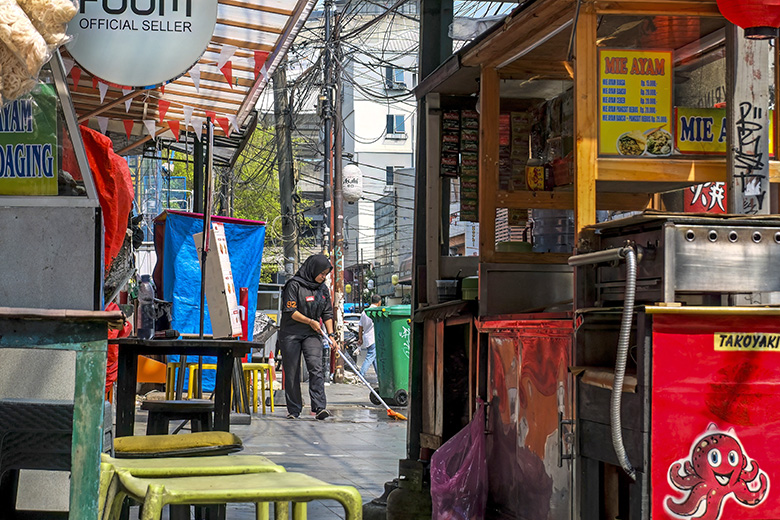
“Graduates [are] working in jobs that do not require the qualifications they spent years acquiring,” noted Elita Pertiwi, a PhD candidate in Universitas Padjadjaran’s economics department. “Economists call this overeducation, and in urban Indonesia it has become the norm.” Writing for the Indonesia at Melbourne university blog, Pertiwi cited statistics that almost one-quarter of young workers hold positions below their skill levels.
Such figures reflect the long tail of what many consider an oversized higher education sector. Institutions keep opening despite policies to discourage them, including a ban on new entrants between 2012 and 2014, a moratorium on private universities obtaining public status in 2013 and a 2016 regulation encouraging mergers of private universities.
While institutions in the outer islands frequently go bankrupt, unmet demand for higher education in crowded central regions – particularly Western Java – is strong. Many large conglomerates run universities of variable quality, sometimes buying and renaming struggling institutions.
The biggest corporate universities include Lippo Group’s Universitas Pelita Harapan and Bakrie Group’s Universitas Bakrie. Universitas Kebangsaan Republik Indonesia in Bandung received its name after Prabowo’s family foundation acquired it in the early 1990s. Prabowo is now its chair while its rector is the deputy speaker of Indonesia’s House of Representatives.
There are concerns that academic freedom is in decline under Prabowo, a former general who was expelled from the military and banned from entering the US over his alleged involvement in the abduction of student activists in the 1990s.
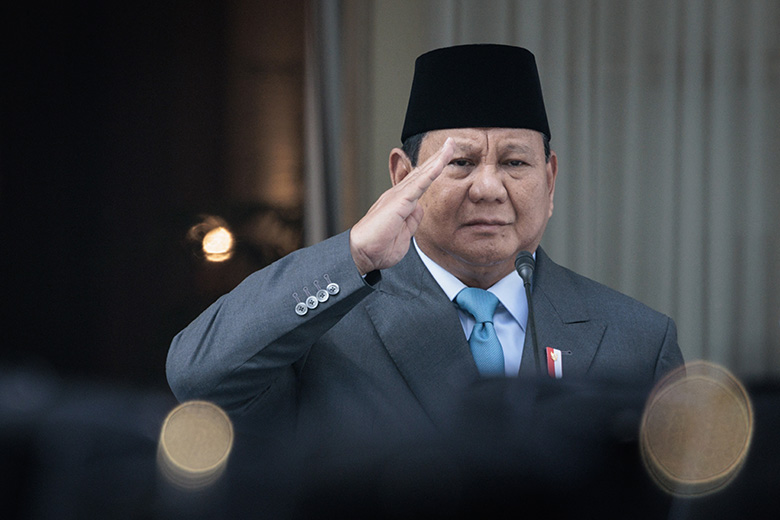
The University of Mataram in Lombok is among a number of institutions where authorities reportedly cancelled screenings this year of Pesta Babi, a documentary about human rights abuses in New Guinea. Universitas Hasanuddin raised eyebrows by staging a conference and opening a campus-based kitchen in support of the controversial free meals programme. “The point is how higher education institutions can play a role in supporting Mr President’s initiatives,” minister Yuliarto reportedly said during a launch ceremony.
Meanwhile, corruption remains a persistent problem throughout Indonesian public life, including in higher education. In a recent book chapter, Sutrisno profiled two cases where university administrators had faced prosecution after procuring additional payments for university entrance through the jalur mandiri scheme. A cabinet minister and a vice-president’s daughter featured among those accused of paying bribes.
Six officials at Universitas Jenderal Soedirman in Central Java have recently been arrested on similar grounds. The Corruption Eradication Commission suspects such practices are “prevalent” at other universities, according to the Jakarta Post.
“Eradicating corruption means transforming the culture and structure of society,” Sutrisno wrote. “HEIs [higher education institutions] have a strategic role in this transformation process through teaching and research. It is unfortunate that they themselves are mired in rent-seeking and corruption.”
The problem is so endemic that any administrative setback risks being viewed through a corruption lens. In June, former education minister and tech entrepreneur Nadiem Makarim was sentenced to 10 years’ imprisonment and ordered to repay some 800 billion rupiah over his procurement of laptops for schools.
“Most graft cases involve kickbacks or unmistakable transfers of value,” wrote Jakarta-based policy consultant Ryan Eka Permana Sakti. “Nadiem was convicted of ‘abusing his authority’ simply for choosing Chromebooks during an emergency, pandemic-era procurement project. It was the kind of decision that other ministers have often made. In this country, the line between a business decision, a policy misjudgement and a prosecutable offence is drawn after the fact by whoever holds power at the time.”
For all its problems, metrics suggest that Indonesian higher education is performing well. Its scholarly output increased sevenfold between 2014 and 2024, and the tally of internationally co-authored papers increased fivefold, according to Strengthening Indonesia’s higher education system.
Bachelor’s enrolments have grown by almost half over that period and the traditional university-age population is rising, “offering a demographic dividend expected to stretch for at least another decade”.
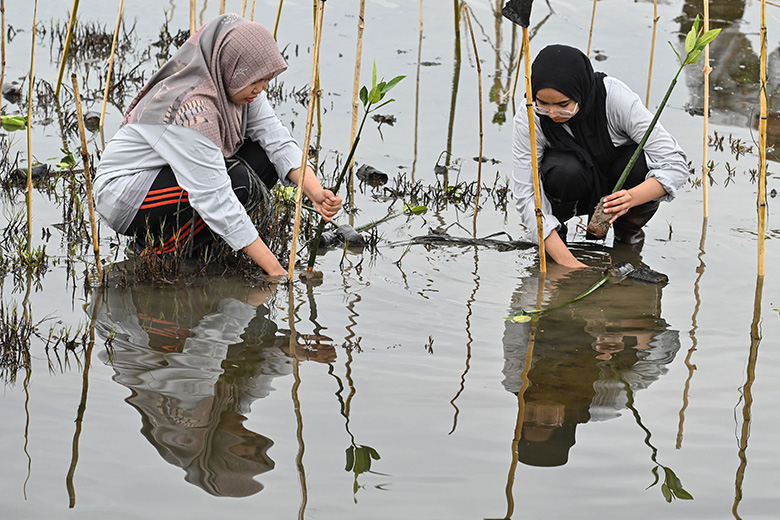
While Indonesian universities are not chart-toppers in research-based league tables, they have performed exceptionally in THE’s Sustainability Impact Ratings, which measure institutional efforts against the United Nations’ Sustainable Development Goals. This is no accident. The Sustainable University Rankings, based on the GreenMetric system developed at UI, have been assessing the environmental efforts of universities across the globe since 2010.
Coates describes Indonesia as a world leader in the assessment of green skills in higher education. “They’re…hugely entrepreneurial. They have their own evaluation systems [and] metrics. They have institutes and mechanisms that are increasingly being spun off regionally and then internationally.”
The sustainability focus reflects an ethos of service that has characterised Indonesian universities since the country’s independence. For decades, academics have been required to engage in community service, while undergraduates perform mandatory community assistance under a scheme known as Kuliah Kerja Nyata or “real work study”. It originated as part of an anticolonial movement at Universitas Gadjah Mada, which was established as a rival to Dutch-administered UI during the independence struggle following the Second World War.
Academics often embrace service on their own time. “I have colleagues who are operating schools in their homes for the local children while they go off and run business faculties in universities,” Coates said.
This reflects national traits like resilience – a necessary quality in a landscape where natural disasters are all too common – and pasrah, a philosophy of calm acceptance of things that cannot be changed, and pragmatic workarounds of things that can be circumvented. Indonesians’ natural inventiveness manifests in their ability to transform waste into retail items, and – for those dealing with tourists – to learn the rudiments of half a dozen European and East Asian languages while mastering two or three local ones.
Coates says Indonesia’s commercialisation “push” reflects “a new way of thinking about research funding”. Rather than paying “brilliant people to come up with brilliant ideas”, Indonesia focuses on the returns. “They’re saying…why don’t we take a leap and fund impact and products [rather than] potential great ideas? In these countries, there’s very little money to waste.”
He says global higher education experts tend to bypass the archipelago – or, at best, treat it as a holiday stopover – during business visits to Beijing, Hong Kong or Singapore. But those in the know are “banging on the door of Indonesia now to try and get in”, lured by the country’s size, demographics and an unaligned status that matters “as the world stratifies down national security lines”.
Indonesian higher education is “probably where China was about 15 to 20 years ago”, Coates says. Its top universities, currently unknown to many, will – like other Asian “powerhouses” – be household names in five to seven years. “Ten years ago, no one knew what Tsinghua was,” Coates observed.
“What the very smart brains are doing now is trying to understand Indonesia and where the real challenges manifest. Universities and governments and grant foundations, tech firms and the like…are trying to go in there and crack the market.”
Register to continue
Why register?
- Registration is free and only takes a moment
- Once registered, you can read 3 articles a month
- Sign up for our newsletter
Subscribe
Or subscribe for unlimited access to:
- Unlimited access to news, views, insights & reviews
- Digital editions
- Digital access to THE’s university and college rankings analysis
Already registered or a current subscriber?