An influx of Western universities into the world’s most populous country has drawn muted interest from locals, with some institutions attracting initial cohorts of a few dozen students – and in one case, single figures.
An analysis of seven Australian and British branch campuses in India, conducted by Mumbai-based researcher and consultant Rahul Choudaha, has found median inaugural enrolments of 120 per campus and 20 per programme.
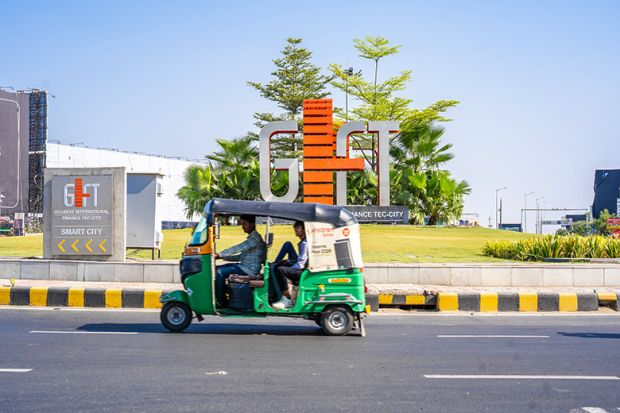
Figures were substantially lower for the forerunners, Deakin and Wollongong universities, which established India’s first foreign university branch campuses in Gujarat International Finance Tec-City (Gift City) – a greenfield precinct where foreign entities are not bound by domestic regulations.
Deakin attracted 43 students in 2024, its first year of operations, while Wollongong opened later in the year with just nine enrolments.
Numbers have improved since, but not by much. Enrolments in 2025 rose to 65 at Deakin and 33 at Wollongong, according to institutional annual reports. Wollongong said another 31 students had joined in its 2026 intake. “While this was below our expectations, we remain focused on building the campus and growing enrolments over time,” a spokesman said.
The highest-ranked Australian university with an Indian outpost, UNSW Sydney, opened its Bengaluru branch campus in August this year with 60 students – well below its predicted initial cohort of 200, subsequently revised to 100. “Operations in India are deliberately starting small, ensuring an excellent student experience, with a progressive expansion plan,” UNSW said.
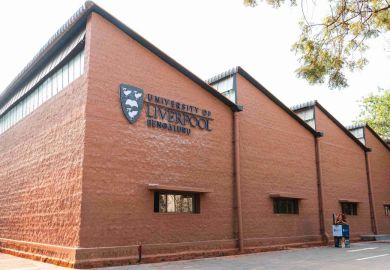
The UK universities that have opened in India appear to have fared slightly better. The University of Southampton, the first UK site to open near Delhi in August 2025, had 150 students initially, while the University of Liverpool Bengaluru is up and running with an initial cohort of just under 300. Both are aiming to rapidly increase enrolments in the years ahead, to 5,000 and 10,000 respectively. Several other UK universities that have launched India campuses declined to provide enrolment figures.
The figures underline the complexity of operations in the subcontinent and the unlikelihood that transnational ventures can compensate for the rapid decline in visa issuances for study in Australia, set to cost public universities an estimated A$2 billion (£1.03 billion) this year alone.
The data also highlight the risks for cash-strapped universities contemplating operations in India. Deakin and UOW have both experienced recent leadership upheavals in the wake of contentious plans to rein in costs.
Deakin vice-chancellor Iain Martin was removed in June after the university unveiled a short-lived proposal to cut about 140 jobs. Wollongong chancellor Michael Still resigned a month later amid a corruption probe over the recruitment of an interim vice-chancellor to plug a A$35 million drop in revenue.
Wollongong said it had spent about A$6.5 million so far on its Gujarat campus. Its annual report reveals campus earnings of about A$26,000 in 2024 and A$398,000 in 2025.
Wollongong’s spokesman said the campus was “a strategic initiative to diversify revenue. The investment horizon is medium to long term, and [the university] expects to recover these funds as the campus grows.”
He said the Indian venture had commenced with a “deliberate strategy of gradual expansion, laying strong foundations for future growth. Our immediate priorities are building academic quality, strengthening industry connections and delivering a strong student experience, alongside growing enrolments and progressing towards financial sustainability. We continue to see a significant long-term opportunity in India.”
Ravi Lochan Singh, managing director of a Sydney education consultancy with operations in India, said the universities that had established campuses in Gift City had been “trapped” by circumstances. Just as Deakin and Wollongong were inking plans for their campuses in Gujarat, Indian authorities were finalising the rules allowing foreign universities to set up outposts across the country, as foreshadowed in the National Education Policy three years earlier.
This unleashed a flood of applications from universities seeking to establish branch campuses in or near the centres of Delhi, Mumbai, Bangalore and Chennai. Gift City, located well outside Ahmedabad, was always going to struggle to compete with the newcomers for students.
Singh said that while Deakin and Wollongong had been able to enter the market ahead of their competitors by establishing in an export zone, thereby avoiding the need for accreditation by the University Grants Commission (UGC), this meant that they had also renounced the marketing advantage of inclusion in the UGC’s list of foreign higher educational institutions.
Meanwhile, some UGC-accredited campuses had received their final approvals only within the past month or so, severely hindering recruitment for 2026. “These campuses should not be judged on this year’s intake,” Singh said. “Next September will be the real test.”
He predicted pressure on foreign campuses from India’s private universities, which were lobbying for “parity” in operating rules, and competition from massive Indian conglomerates such as Tata and Reliance Industries, which were busily setting up their own private institutions – largely to meet internal staffing needs.
While foreign campuses are in for a “pretty messy” time, Singh said, those linked to highly ranked home universities – or able to demonstrate good graduate employment outcomes – would perform best.
He also credited the University of Western Australia (UWA) for being “brave” enough to finance its Indian campuses from its own resources rather than outsourcing the financial risk to partner organisations such as Eruditis or the Education Centre of Australia (ECA). Branch campuses are more durable if the parent institution has a financial stake, Singh said.
Times Higher Education sought 2026 enrolment figures from the five Australian universities that have so far established branch campuses in India. Only Wollongong and UWA supplied numbers.
UWA said it anticipated between 100 and 200 students this year across both its Mumbai and Chennai campuses, and expected to recoup its A$80 million initial investment in about five years.
Deakin said its student numbers had been “growing sustainably in line with projections and strong graduate outcomes. Deakin now has the proof points to succeed in this competitive sector and is tracking well.”
Victoria University said it was “satisfied” with its campus’ progress and remained committed to its long-term development. “The campus has capacity to grow as student numbers increase and our course offerings expand.”
Wollongong said it was refining its courses, reviewing its scholarships and fees and strengthening its recruitment systems to “improve the student proposition” ahead of the 2027 intake. “We are also…building a stronger evidence base around graduate employment outcomes, enhancing the campus experience and developing clearer pathways for students interested in further study at [our] Australian campuses.”
The university said its fees were “competitive with comparable international branch campuses” and would be denominated in Indian rupees from 2027, “providing greater certainty for students and families”.
It said its offshore campuses and partnerships were an “important” part of its strategy for “building financial resilience and diversifying revenue”. Its global operations had delivered a surplus of A$36 million in 2025 and returned more than A$160 million over the past decade.
Register to continue
Why register?
- Registration is free and only takes a moment
- Once registered, you can read 3 articles a month
- Sign up for our newsletter
Subscribe
Or subscribe for unlimited access to:
- Unlimited access to news, views, insights & reviews
- Digital editions
- Digital access to THE’s university and college rankings analysis
Already registered or a current subscriber?