When protests flared across Iran in late December, the impact on universities was immediate.
“It was, quite literally, house arrest: no internet, no classes, no television,” said one student in the country at the time.
University dormitories were evacuated and campuses shut as protests spread. Teaching and laboratory work were suspended and access to information quickly disappeared.
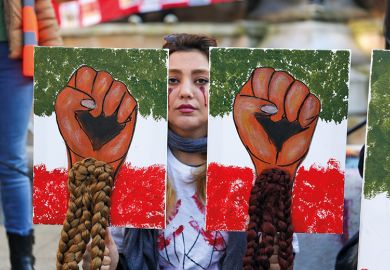
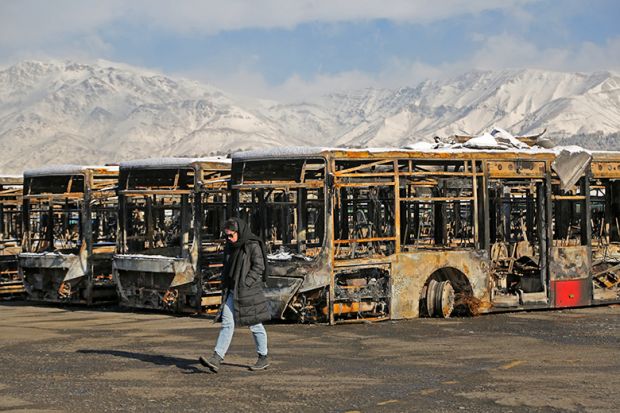
The demonstrations, which began over economic grievances and quickly spread across the country, were some of the largest to hit Iran in recent years and fuelled real hopes of change.
But, almost as quickly as they started, they were met with a bloody crackdown that has left thousands of people dead.
Now students and scholars still in Iran fear they are being forgotten about as international attention shifts elsewhere, but the repercussions of what happened are still being keenly felt.
“Once the internet came back, we were overwhelmed with news of the deaths of our loved ones and friends,” one engineering student at a top university in Iran said. “We have no energy left to study. We are exhausted and hopeless.”
“If you watched a 15-year-old girl die in front of you, a live bullet passing through her throat, would you have the strength to study afterward?” the student said. “Now imagine not one child like this, but hundreds.”
Other students have described how they were caught up in the violence as it unfolded.
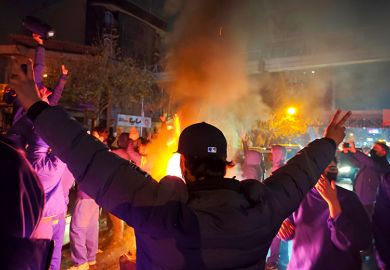
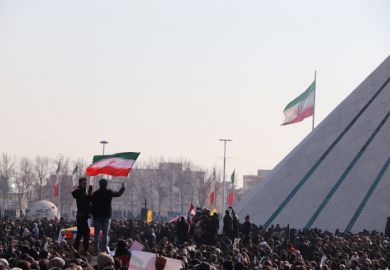
A law student currently based in the UK, who was in Iran when protests escalated, said there were initially optimistic scenes on the streets. “The crowd I saw on the night of 8 January was one of the biggest I’ve seen in my life on the streets in Iran,” she said. “This time, every single city was crowded and many people came out.”
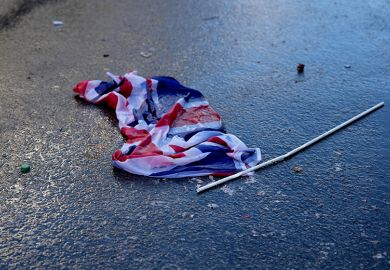
Later that evening, police moved in. “They started shooting. They used tear gas.” The student suffered a severe asthma attack and was helped by a stranger who took her to a nearby pharmacy. “Outside was a literal war zone,” she said. “Police forces were coming on their motorcycles and shooting people.”
Public transport shut early and, with no way home, she spent the night sheltering in a stranger’s house. “They [the security forces] did all of that overnight,” she said. “And in the morning everything was normal, like nothing had happened.” But the following night, protests were smaller. “They had killed so many people,” she said.
The students say universities have offered little recognition of what has happened, or of its toll. “The principals of the universities are really close to the system,” the law student said. “If they say something to sympathise with the students, they’ll say that all these killings were because of terrorist attacks from outside, not by the police forces.”
She said there had been no counselling or welfare support. “There are no options for therapy or anything like that,” she said. “Students are depressed.” Student halls, she added, were placed under curfew. “After 5pm, no one can leave,” she said. “They are literally stuck.”
Encieh Erfani, an academic and co-founder of the International Community of Iranian Academics, said dissent within universities is tightly limited as “it is impossible to become a university president without clear political loyalty to the regime and active compliance with its directives”.
“Faculty members who pass these multiple filters while remaining genuinely opposed to the regime are few and structurally silenced. Even where dissenting academics are numerically significant, their financial dependence on the state and exposure to punitive measures compel silence during periods of crisis. This was evident during the current uprising, when faculty support was minimal or absent.”
Iranian students based abroad had a different experience. Maryam and Mohammad, both PhD students in Australia, said they spent weeks receiving only fragmented updates from home during the extended internet shutdowns.
They said many of those killed or injured were students who had already set their sights on universities overseas including in Australia.
One case Mohammad recounted involved a 23-year-old who had applied to the Australian National University but died after being shot.
Australia has a relatively large Iranian-born population, numbering around 85,000 residents at the most recent census, and is one of the main destinations for Iranian students seeking to study abroad.
Another student affected was a 28-year-old biotechnology graduate, Negin, who had asked about applying to Australian universities months earlier. “She went outside with her father,” Mohammad said. “She was just protesting and she got shot.” Maryam said Negin’s family was later warned not to speak publicly. “They threatened them,” she said. “Most of them cannot even find the dead bodies of their loved ones.”
They also described a friend, Imam, who had received a scholarship to an Australian university but whose enrolment was delayed and later cancelled after years of visa problems. “He got injured with a pellet gun into the face,” Mohammad said.
Other students who survived the protests and were hoping to study abroad are now stuck in limbo. Many have not even been able to sit their exams yet, let alone prepare official documents. “With Google effectively filtered and the country resembling North Korea, email services stopped functioning,” the law student said. “Anyone with interviews scheduled or awaiting application results has reached a complete dead end.”
For her, a student who has made it abroad, universities across the world could be doing more.
She said she had expected more acknowledgement from her own top university in the UK. “They haven’t sent me any email about the situation in Iran,” she said. “Even though they know I’m an Iranian student.” She said the silence was painful. “I expected more from them,” she said. “I expected them to hold events to raise awareness or ask about our experiences.” She added that the lack of response mirrored a wider uninterest after the initial attention. “The world remains silent,” she said.
Register to continue
Why register?
- Registration is free and only takes a moment
- Once registered, you can read 3 articles a month
- Sign up for our newsletter
Subscribe
Or subscribe for unlimited access to:
- Unlimited access to news, views, insights & reviews
- Digital editions
- Digital access to THE’s university and college rankings analysis
Already registered or a current subscriber?