Iran’s universities have been systematically weakened by decades of political repression and isolation from the global academy, but scholars say the system has not been entirely emptied of the expertise needed to help rebuild the country if political conditions change.
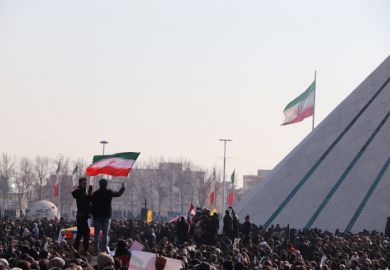
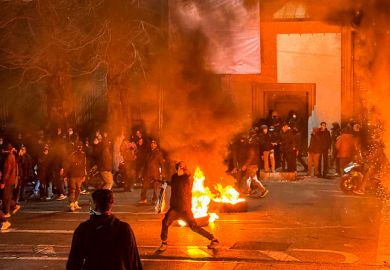
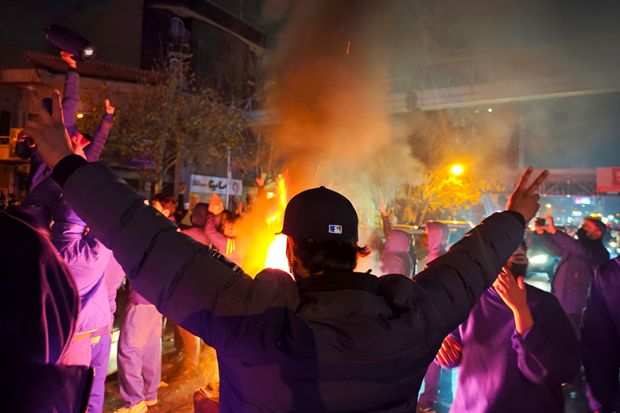
Nationwide protests that began late last year have propelled Iran’s plight on to the world stage, with the US threatening to intervene.
Despite a brutal clampdown from the regime, academics are still hopeful of change, with universities potentially playing a key role.
Nasim Basiri, an Iranian scholar who is currently a visiting assistant professor at the University of Connecticut, said that “despite decades of political repression and external pressure, Iran remains home to some of the leading universities in the Middle East”.
“These institutions have continued to educate students and produce knowledge under sustained attack, demonstrating that academic capacity has not disappeared.”
But she said scholars and educators with progressive or radical perspectives “have been erased from universities through censorship, dismissal, imprisonment, or forced exile” and “any future rebuilding would require reconnecting and protecting the scholars who have long sustained knowledge under repression”.
Saeed Talajooy, a senior lecturer in Persian studies at the University of St Andrews, said Iran still retained a substantial base of academic talent capable of contributing to national reconstruction once political conditions allow.
“We have a great number of highly educated and motivated students and even when it comes to the current staff, more than 70 per cent…have never been complicit in any of the regime’s criminal activities,” he said.
“So, it is very likely that once the political field is open, they will contribute to the rebuilding of the country.”
Talajooy said the most urgent reforms would be institutional rather than intellectual, particularly the removal of politically appointed managers installed to control universities.
“It is very likely that the 30 per cent of the staff that have been appointed to university positions to control universities will have to go,” he said. “The most important measures will probably have to do with putting aside the higher-level managers who do not deserve to occupy the posts that they have and employing people with real expertise.”
While describing the damage caused by repression and brain drain as “huge”, Talajooy said it was not irreversible. “The issues can be resolved within a decade,” he said, adding that many exiled scholars would be willing to return or contribute from abroad.
Encieh Erfani, a co-founder of the International Community of Iranian Academics, agreed that dismantling universities’ “hierarchical, securitised structure” will be key to their rebuilding.
“It is impossible to become a university president without clear political loyalty to the regime and active compliance with its directives,” she said.
But Elika Dadsetan, an Iranian-born scholar now based in the US, warned that sustained repression produces long-term damage to academic culture. “You do not just lose semesters. You lose trust in institutions,” she said. “Even if political conditions change later, rebuilding an academic culture takes decades.”
Several scholars cautioned that external pressure has often worsened conditions for universities rather than improved them.
Basiri said broad sanctions have restricted academic exchange, access to journals, funding and travel, accelerating brain drain even when universities are not the intended targets.
“If Western governments want to be helpful, the focus should be on protection, not pressure,” she said, calling for expanded visas and fellowships, shielded academic exchange, open access to research and safe collaboration between scholars inside Iran and those abroad.
Register to continue
Why register?
- Registration is free and only takes a moment
- Once registered, you can read 3 articles a month
- Sign up for our newsletter
Subscribe
Or subscribe for unlimited access to:
- Unlimited access to news, views, insights & reviews
- Digital editions
- Digital access to THE’s university and college rankings analysis
Already registered or a current subscriber?