Despite the occasional sound of explosions and the risk of lessons being interrupted by missile alerts, an academic from the University of Bradford who is stuck in Dubai amid renewed fighting in the Middle East has said she is concentrating on maintaining a sense of “normalcy” for students.
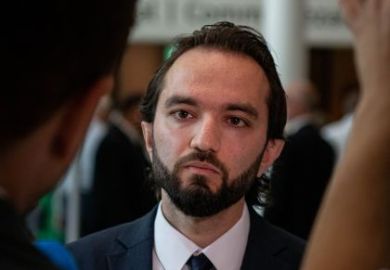
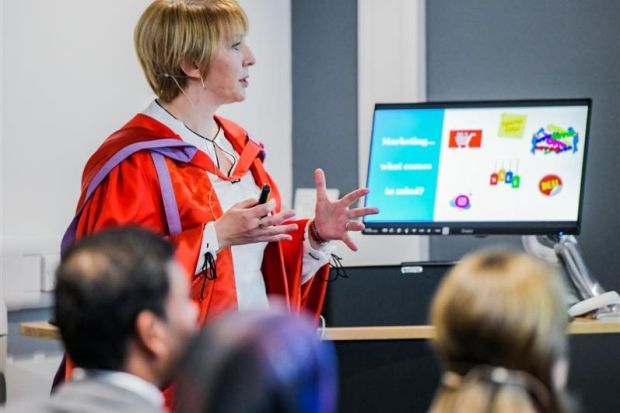
Eva Kipnis, director of the doctoral college at Bradford and professor in marketing, has been unable to fly home after travelling to the United Arab Emirates last week to teach students on an executive MBA course run by the university in Dubai.
Having done the same journey for roughly four years, the professor assumed this time would be no different, until alerts started coming through that Iranian missiles were attacking US military bases in the vicinity of the city.
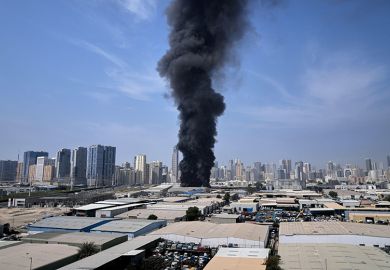
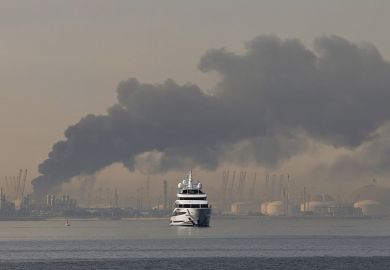
This weekend’s joint attack on Iran by Israel and the US has dragged the region into conflict, with Tehran retaliating by bombing countries previously considered safe.
Kipnis was teaching on 1 March as news of what was happening spread, with her students all starting to get messages from their employers telling them to get to a secure location. She called off classes for the rest of the day so she could “figure out” what was going on and resumed them – online – the next day after everyone had time to decompress.
Although there was apprehension about what will happen next, Kipnis said she was grateful to her students and being able to teach to remain grounded.
“I’m amazed by the resilience of our students,” she said. “It was a little surreal to talk about brands and marketing but at the same time strangely topical – we discussed the British ‘Keep Calm and Carry On’ brand. It was also helpful as it gave a sense of normalcy.”
Group work had to be adapted for the shift to online learning, and she had to inform students that if she disappeared it would be because she’d received a missile alert. Thankfully, none came through.
Since then, Kipnis has been unable to return home after her flight was cancelled and is not sure when she will be able to get back. There is currently a “massive backlog” of people trying to return to the UK, and although Bradford is supporting her through the process, “their options are limited”.
In Dubai, mobile phone alerts continue to inform everyone of incoming missile attacks, telling them to seek refuge in public car park shelters. To access her nearest, Kipnis said she has to travel down 20 flights of stairs – on foot – just to sit in the stairwell. She has since learned to take a mat and some home comforts, including chocolate, to “pass the time”.
Although she said she is not in the “vicinity of anything that falls out from the sky”, she can hear explosions and missile interceptions – and “quite a few of them” at that.
For the researcher, who was born and grew up in Kazakhstan and has Ukrainian family, it brings back memories of Russia’s invasion of Ukraine and her concern for her brother, who was in the country at the time.
“I know first-hand the worry and the anxiety my husband, my sons, my brother, and his family, and my parents are living through because now they watch the news and they see bombs flying out of the sky and then they do not know where I am at times,” she said. “I know what they are going through worrying about me.”
Is she apprehensive about returning to Bradford’s Dubai campus in the future? Not necessarily. “If the situation normalises, why would I be worried? But we don’t know what is going to happen. Nobody does.”
Overall, she said the atmosphere was “tense” and there was “general anxiety” but she insisted she was fine, and grateful for the hospitality of the local community and the clear communication from the local authorities.
“Ultimately, people still come to work,” she said. “I understand that they all have families, and yet they all come to work and they service my room and they cook me food and so on, because I’m in no situation to do this. So these are very ordinary things, but they are very important things because without them, I would be in a very, very different situation. I very much appreciate everything they do.”
Register to continue
Why register?
- Registration is free and only takes a moment
- Once registered, you can read 3 articles a month
- Sign up for our newsletter
Subscribe
Or subscribe for unlimited access to:
- Unlimited access to news, views, insights & reviews
- Digital editions
- Digital access to THE’s university and college rankings analysis
Already registered or a current subscriber?