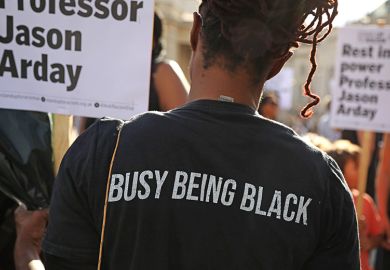
Academics from Harvard University and UCL are among those joining an alternative independent review into the University of Cambridge’s appointment of sociologist Jason Arday.
The Committee for Academic Freedom (CAF) has named Stephen Pinker, a psychologist and co-president of the council on academic freedom at Harvard; Robert Tombs, a professor of French history at Cambridge; and Alice Sullivan, a sociologist at UCL who led the government-commissioned independent Sullivan Review of data, statistics and research on sex and gender, as members of the review panel.
They are joined by political theorist and Labour life peer Maurice Glasman, who is also a professor at St Mary’s University, Twickenham.
The review has been commissioned separately by the CAF to explore “the circumstances surrounding” Arday’s appointment to a professorship within Cambridge’s Faculty of Education, in 2023.
Following allegations of plagiarism, Arday resigned amid intense public scrutiny of his position. He was found dead in his home on 14 August.
Cambridge has launched its own investigation into what happened, which vice-chancellor Deborah Prentice has promised will be independent and rigorous, but some in the sector are unconvinced of its efficacy.
According to CAF, it is funding its own probe to reflect disquiet surrounding the “material change in the language and emphasis of Cambridge’s own review following Arday’s death, which risks prejudging the legitimacy of the scrutiny he faced and displacing questions Cambridge had itself initially identified for investigation”.
Specifically, CAF is concerned that the Cambridge review, part one of which is to be led by former chief Crown prosecutor Nazir Afzal, will focus on what Prentice has called the “appalling period of external criticism and focus” Arday endured. CAF claims that this phrasing “risks prejudging” aspects of the inquiry.
Cambridge was contacted for comment regarding these accusations.
Swaran Singh, professor of social and community psychiatry at the University of Warwick and a Conservative life peer, is to chair the CAF probe. He previously chaired the independent investigation into accusations of discrimination and Islamophobia within the Conservative Party.
Expected to report within four to six months, the CAF-commissioned review is not statutory and therefore cannot compel people to provide evidence. However, its investigative work will be led by journalist Nick Wallis, known for his work on the Post Office Horizon scandal, and a research team.
University of Exeter philosopher Edward Skidelsky, director of CAF, said the review began with “no predetermined conclusion”.
“The questions raised by this tragic case go to the heart of several concerns that recur in CAF’s casework involving academics across the UK: how far non-statutory concepts and institutional orthodoxies can influence recruitment, promotion and judgements of academic merit, and whether university systems are capable of correcting course when those considerations come into tension with academic standards,” he said.
Freddie Attenborough, research and communications manager at CAF, stressed that the organisation had only commissioned the review, and that it was directed to produce findings independently of the committee.
But he said CAF believed the case illustrated wider concerns raised by its members. He told THE: “We hear from academics all the time, from Cambridge and other institutions, who raise concerns about EDI policies around recruitment, appointments and selection. People come to us and say, ‘We think some of these policies go beyond what equality law permits, or misstate the law on positive action’. So we think there are wider issues around that.”
He added: “There is of course a personal tragedy here, and no doubt there are issues for Cambridge to explore surrounding welfare. But I think this case has also brought into sharper focus some important questions about academic standards, merit and institutional decision-making. Our academic supporters want clarity about what happened in Dr Arday’s case and the processes that were followed.”
Register to continue
Why register?
- Registration is free and only takes a moment
- Once registered, you can read 3 articles a month
- Sign up for our newsletter
Subscribe
Or subscribe for unlimited access to:
- Unlimited access to news, views, insights & reviews
- Digital editions
- Digital access to THE’s university and college rankings analysis
Already registered or a current subscriber?