ADVERTISEMENT
Holding a law conference in Hong Kong risks delegates’ safety
Those whose professional interests might lead them to raise topics forbidden by Beijing will have to skip the 2027 LSA event, says Noam Schimmel
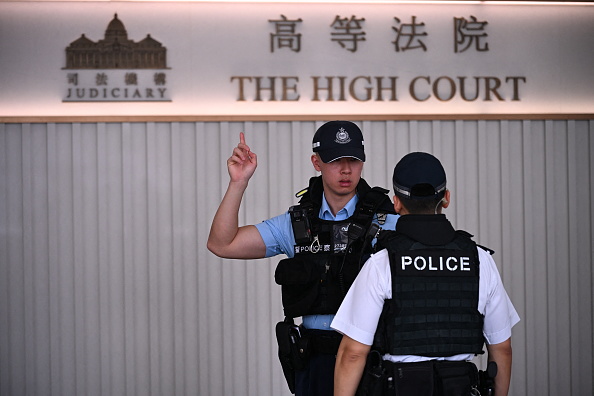
Source: Peter Parks/Contributor/Getty Images
Many major US-based scholarly societies have a global reach. Yet their annual conferences are very rarely held outside the US and Canada.
Such locations are convenient, of course, for an audience likely to hail mostly from North America. But it also helps to build a more inclusive academic community when conference locations are more diversified, and it potentially expands opportunity for those based outside North America to attend.
That is why Sorin Krammer’s recent call in Times Higher Education for the Academy of Management to hold more of its annual mega-conferences beyond the US (and, occasionally, Europe) is relevant beyond the fields of business and management.
However, in determining where to hold a conference scholarly organisations also need to be mindful that academic freedom, physical safety and ease of entry must be assured for all conference attendees, irrespective of their research topics, ethnic and religious identities, and any other protected characteristics in international human rights law.
The Law and Society Association, for example, has already taken the step Krammer urges. For every previous year since 2008, with the exception of 2012 in Hawaii and 2022 in Portugal, the LSA’s annual global meeting has been held in North America. But next year, the society announced in June, it will be held in Hong Kong.
ADVERTISEMENT
That is one of the cities that Krammer mentions as a suitable host for the Academy of Management conference. The difficulty is that for some scholars, that choice of location could put them at risk.
The LSA, a leading association for scholars in law and sociolegal studies, champions democracy, civil and political rights, international human rights law and the rule of law. It states that it “strongly supports the academic freedom of…scholars of law and society, regardless of country of origin or residence” and it “affirms the core principles that the common good depends on the free search for truth and its free exposition”. This is why it “seeks to foster the free exchange of knowledge as a human right and to inhibit infringements on that right by government restrictions on scholars.”
Yet since the National Security Law was passed in 2020, there has been no freedom of expression, of the press or of association in Hong Kong. And this denial of fundamental human rights applies to universities and their faculty and students, who are denied academic freedom.
That law, plus the Hong Kong government’s deference of all branches of its government – including its judiciary – to the authoritarian government of mainland China, makes Hong Kong an unsuitable location for a conference whose participants’ professional interest might naturally lead them to discuss various issues whose mere mention is deemed by Beijing to be a threat to national security.
The LSA states that it does not “discriminate on the basis of race, colour, religion, national origin, sex, age, status as a disabled individual, sexual orientation, gender identity/expression, genetic information or protected veteran’s status”. Yet by hosting its annual conference in Hong Kong, in effect it will be discriminating against a range of individuals of different backgrounds and identities who will not be able to enter Hong Kong safely, speak openly or participate freely in the annual conference. Examples include those whose research relates to the status of Tibet or Taiwan, or to the rights of Tibetans or Uighurs. It also includes anyone in China demanding civil and political liberties, religious freedom, and social and economic rights for all ethnicities.
The presentation of any human rights scholarship could be risky, particularly as it relates to democracy and authoritarianism. So could addressing the rights of women and individuals who identify as LGBT. So conference delegates are likely to censor themselves on such issues, undermining the event’s quality and character.
The peril of raising these issues is likely to be particularly high for racial and ethnic minorities, religious minorities and human rights activists from within mainland China, Taiwan or Hong Kong itself. That includes those with dual citizenship in the West; Hong Kong Chinese nationals have even been persecuted by the Chinese government while in both the UK and Australia. They could face arrest, detention and psychological and physical aggression, including violations of their rights and dignity.
ADVERTISEMENT
The association’s lack of discriminatory intent does not lessen the foreseeable impact of the discriminatory outcome or the responsibility of the conference organisers to have avoided such a discriminatory outcome. It is true that the organisers have made one day of the event a virtual conference, which could allow those who can’t risk entering Hong Kong to participate in a small way. But this still doesn’t meet standards of equity and inclusion because it doesn’t permit full participation.
This is why for several months scholars and human rights advocates in Asia, the US and around the world have been expressing their concerns about this choice of location for the LSA’s annual conference. But these critiques have yielded no change in policy.
The LSA should select a location somewhere that all its members can attend, irrespective of their nationality, ethnicity, race, gender, sexual orientation or political position. That does not mean that it should stage next year’s annual global meeting in North America yet again; Taiwan, South Korea or Japan are obvious alternatives. But it does mean reversing the decision to hold next year’s event in Hong Kong – before it is too late to rearrange.
Noam Schimmel is lecturer in development practice and international and area studies at the University of California, Berkeley.
Read more about
Related articles


Featured jobs
ADVERTISEMENT