Female university leaders need to be “discovered”, and today’s generation of women vice-chancellors can make it happen by becoming “sponsors” rather than just mentors, Times Higher Education’s Asia Universities Summit has heard.
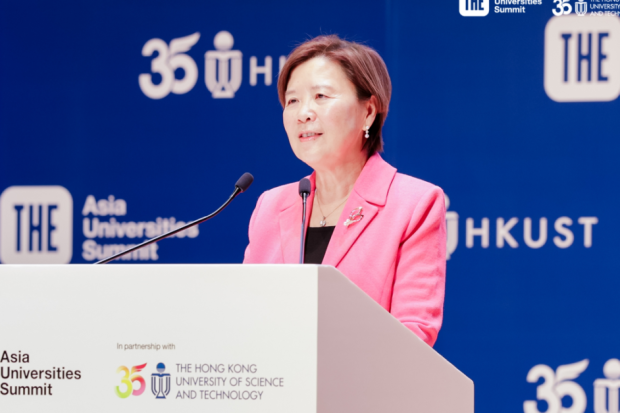
Summit host Nancy Ip, president of Hong Kong University of Science and Technology, said there was no shortage of female academics with leadership qualities. But they lacked visibility, so they sought mentors. “It has to go beyond looking for mentors,” Ip told the summit. “[They need] sponsors that really elevate them; sponsors who take interest in promoting them; [who] nominate them for different leadership roles.
“There aren’t that many…female university presidents. There aren’t that many women provosts. We have to do our part. As university presidents, we should look at the potential women leaders at our universities, identify those that we think can become leaders, and we become their sponsors. We groom them so that they can move up this pipeline.”
Ip is the only Asian female leader of any top 100 institution in THE’s World University Rankings, and the first female president in Hong Kong’s 115-year-old university sector. “In the next five years, I hope the number would be much higher,” she told the summit. “It is really up to us.”
Lily Kong, president of Singapore Management University, said she considered it a “personal responsibility” to help promote female colleagues as leadership contenders. “As we draw more women into the fold, I hope they too will take that attitude,” she told the summit. “That, I think, is what’s going to help shift the needle.”
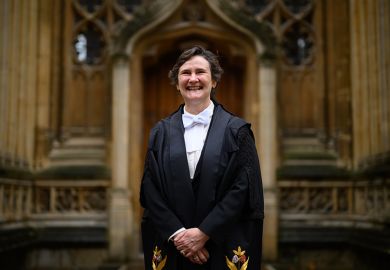
Kong, the first Singaporean woman to head any of her country’s universities, said leadership assumptions were stacked against women. University presidents were expected to present at conferences, for example. “So much of our profession is premised on an expectation of mobility,” she told the summit. “Mobility is not easy for someone with children at home or seniors to look after.”
Equally, women are disadvantaged by metrics reflecting a “continuous kind of trajectory” in their careers. “Women have children and have to take time off, and can’t do everything at the same pace throughout,” Kong noted. But the biggest barrier to leadership, arguably, was women’s estrangement from the networks that “privilege prior engagement”.
She said many of Singapore’s current university presidents had undertaken compulsory military service – where young men “roll in the mud” and “learn to use rifles together” – at the same time. “When they get together, there is a certain camaraderie, a certain understanding, a certain network,” she told the summit. “I’m happy I didn’t have to roll in the mud, but it would have been nice to…have a network [to] rely upon.”
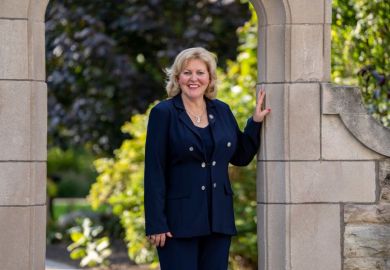
Address Malata, vice-chancellor of Malawi University of Science and Technology, did her master’s studies in Australia because “Malawi didn’t have postgraduate programmes”. She returned Down Under for her doctoral studies, with a 10-month-old baby “on the breast” and a two-year-old child back at home. “It took me 13 years to get my PhD. There were no opportunities; no scholarships.”
All that has changed, partly thanks to reforms Malata introduced after becoming her country’s first female vice-chancellor. “From day one of that type of leadership, you don’t think about the position,” she told the summit. “You think about the legacy.
“I personally believe, as a woman leader, I have a responsibility that those of us that struggle should not allow other women to go through the same. When everything is said and done, what difference did I make – not in that university, but to the people of Malawi and beyond Malawi?
“When I sit in my boardroom…I think about the pipeline. When I’m gone, can another woman get that position? When we get on that table, when we go in that room, we are not thinking just now. We think 30 years from now, 50 years from now. When we are gone, what pipeline did we build?”
Register to continue
Why register?
- Registration is free and only takes a moment
- Once registered, you can read 3 articles a month
- Sign up for our newsletter
Subscribe
Or subscribe for unlimited access to:
- Unlimited access to news, views, insights & reviews
- Digital editions
- Digital access to THE’s university and college rankings analysis
Already registered or a current subscriber?