Greece has granted licences to seven universities from the US, UK, France and Cyprus to set up international branch campuses in the country starting from the 2026-27 academic year.
The country’s Ministry of Education, Religious Affairs and Sports said in a press release that the permits were granted after “favourable opinions” from the National Authority for Higher Education (ETHAAE) and the National Organisation for the Certification of Qualifications and Vocational Guidance (EOPPEP).
The newly approved universities are Georgetown University, Roger Williams University – which will operate as “The American University of Greece” – as well as Iowa State University of Science and Technology, and the European University Cyprus.
France’s Université Sorbonne Paris Nord and the UK’s University of Essex and University of Derby were “re-evaluated and cleared to continue”, the statement said.
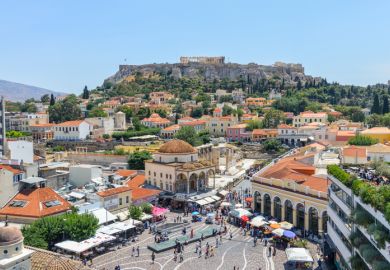
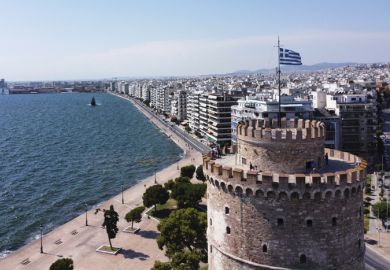
Six of the seven will operate in Athens, while the Iowa State branch will be based in Thessaloniki.
The announcement comes more than two years after the Greek parliament narrowly passed a bill allowing foreign universities to open branches in the country following weeks of student protests. Thousands of students and staff demonstrated outside the country’s parliament, arguing that the changes would favour wealthy students while devaluing degrees from public universities.
Protesters feared that private institutions would offer higher salaries to staff and lower entry requirements for students, worsening public universities’ existing recruitment struggles.
Since the passing of the bill, the education ministry has granted permits to several foreign universities to establish branch campuses in the country. In August last year, it announced that it was allowing the Open University, University of York, University of Keele and the University of Nicosia to open campuses in Athens and Thessaloniki.
“Last year we took the first step. This year we prove that this historic reform was not a single moment, but the compass for a new path in Greek Higher Education,” minister of education Sofia Zacharaki said in a press release.
“For us, the real issue has never been the confrontation between the public and non-public universities. On the contrary, we are simultaneously moving towards the greatest strengthening of the public university in recent decades.”
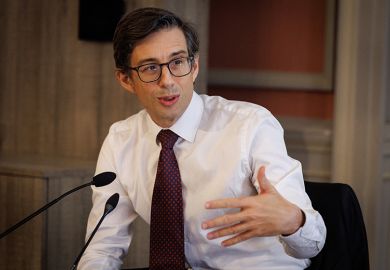
Greece’s deputy minister of education, Nikos Papaioannou, said the move would help address brain drain issues.
“For decades, Greece remained one of the few countries in the world where the operation of non-state universities was not allowed, leading thousands of our young people abroad, weakening the international position of Greek higher education,” he said in the press release.
“Today, with one of the strictest institutional frameworks in Europe, the State ensures that non-state non-profit universities operate under strict academic supervision, with high quality standards.”
Register to continue
Why register?
- Registration is free and only takes a moment
- Once registered, you can read 3 articles a month
- Sign up for our newsletter
Subscribe
Or subscribe for unlimited access to:
- Unlimited access to news, views, insights & reviews
- Digital editions
- Digital access to THE’s university and college rankings analysis
Already registered or a current subscriber?