The emergence of a high-profile “research sleuth” in China who is using social media to call out fake data in studies has both exposed historic failures to act on integrity concerns and highlighted a newfound willingness to take the problem seriously.
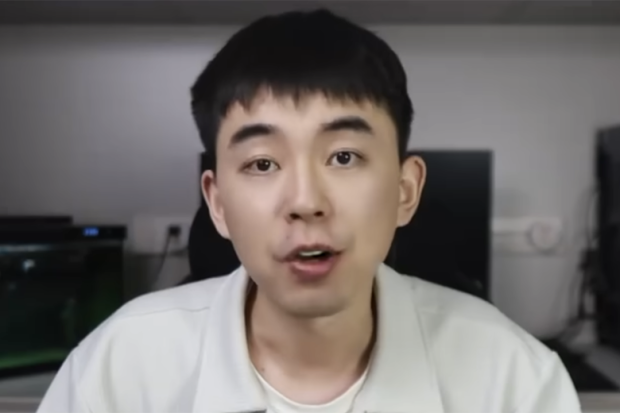
Content creator Geng Hongwei has promised to continue reviewing academic papers published by top scholars after his posts caused several prominent researchers to lose their jobs.
The PhD dropout has garnered attention way beyond the usual academic circles, amassing 2 million online followers and glowing media profiles worldwide.
Shaoxiong Brian Xu, a research integrity scholar at The Hong Kong Polytechnic University, described Hongwei as “China’s first full-time, widely recognised research integrity whistleblower on social media”.
Hongwei left his programme at Beihang University last year to became a full-time content creator, initially focusing on biomedical research developments.
In more recent posts, he has looked at the work of scholars at top Chinese institutions such as Tongji, Nankai and Shanghai universities, highlighting issues in studies published in the likes of Nature.
The videos prompted the universities to act quickly and launch internal investigations within days, with several of the scholars involved removed from their posts.
Xu said Chinese universities and academic journals were “largely reactive rather than proactive” when dealing with data fabrication.
He claimed that Hongwei’s success in getting universities to act “underscores a critical failure in institutional research integrity oversight”.
“Reliance on independent individuals to expose high-profile integrity cases highlights the inadequacy, sluggishness and opacity of institutional research integrity oversight.”
Neuroscientist Yi Rao of Peking University said that lack of institutional oversight had long predated the AI boom. He said if academic misconduct had been effectively managed in the early 2000s, “the problem would not have grown exponentially”.
“As long as China does not institute a system to punish wrongdoers, it is unclear that the problem will be solved,” said Rao.
Xu argued that “the ultimate responsibility” to tackle academic fraud lay with academic publishers.
“If they fail to enforce rigorous integrity standards and lose the battle against the increasing contamination of the academic literature, the fundamental trust in academic communication will collapse, threatening the survival of the academic publishing industry itself.”
Laurie Pearcey, adviser to the president at the Chinese University of Hong Kong in Shenzhen, claimed that China’s swift reaction to Hongwei’s allegation suggested that the state’s tolerance for academic misconduct was limited.
Charlotte Goodburn, deputy director at the Lau China Institute at King’s College London, agreed that such a fast intervention was “unusual”, highlighting how the allegations posed “a reputational issue” for China.
“If it becomes the case that people are saying that ‘Chinese research is all fake and Chinese journals will publish any old rubbish’, then this is a huge challenge to China’s prestige in building itself up as an educational, intellectual powerhouse. So it [academic fraud] is suddenly being taken very seriously, whereas previously I think it wasn’t.”
Goodburn stressed that issues related to academic misconduct were by no means unique to China and the emergence of AI means academic fraud has become a “minefield”, leading to widespread fabrication and manipulation of data at undergraduate and postgraduate levels.
Register to continue
Why register?
- Registration is free and only takes a moment
- Once registered, you can read 3 articles a month
- Sign up for our newsletter
Subscribe
Or subscribe for unlimited access to:
- Unlimited access to news, views, insights & reviews
- Digital editions
- Digital access to THE’s university and college rankings analysis
Already registered or a current subscriber?