UK Research and Innovation’s new “move fast and break things” attitude has decimated a delicate funding ecosystem in physics and astronomy that has taken decades to build, the Astronomer Royal for Scotland has warned.
Speaking at a hearing of the House of Commons’ Science and Innovation Committee, British astrophysicist Catherine Heymans, who became the first female Astronomer Royal in 2021, said the UK government has this year funded the lowest number of astronomy postdocs since its grant panel started collecting data in 1999.
“This is for a subject area that, less than a few years ago, we were talking about being a powerhouse of UK science,” she told MPs. Heymans said the number of astronomy postdocs funded this year was 177.
She was speaking at an evidence session on scientific funding, held after the completion of still unpublished prioritise exercise that determined where deep cuts made to the Science and Technology Facilities Council would fall.
Heymans told MPs that the particle physics, astronomy and nuclear physics (PPAN) communities impacted felt that “this move fast and break things attitude that appears to have been brought into UKRI is just decimating what has taken decades to build”.
Heymans, along with other high-profile astronomers and physicists, were discussing the fallout of UKRI’s decision to overhaul its budget into four “R&D buckets” – curiosity-driven research, strategic government and societal priorities, supportive innovative companies and enabling and strengthening UK R&D.
Speaking in the same session, Karlsruhe Institute for Technology theoretical physicist Simon Williams, said: “If you move fast and break a very delicate system which was already strained then you’re going to destroy it potentially”.
Williams was a postdoctoral research associate at Durham University last year and has since moved to Germany for a research position. He said he would have liked to have stayed in the UK but “there were no positions available”.
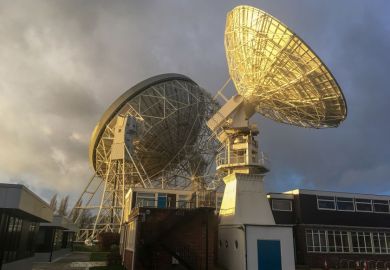
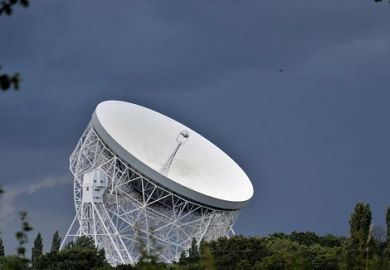
The projects cut included a funding stream for the Jodrell Bank telescope and an upgrade to an experiment the UK was leading at the Cern, the European particle physics organisation.
Jon Butterworth, professor of physics at UCL, told MPs that the reduced level of funding for PPAN will lead to a “general erosion in capability and ambition in one of the most exciting areas of science, that we currently lead”.
He explained that “these areas of science are actually attractive to international students in the UK, despite various policy decisions… But it’s such a fragile system… It’s just one pillar, if the research pillar falls, not only do you lose the financial ability there [to attract funding], but then you lose the staff, then you lose the attractiveness for students, and you hit a spiral of decline, basically.”
Butterworth added that falling into this spiral is a “serious danger” for some institutions currently.
He said that the decision UKRI made in January to withdraw from leading the Cern project upgrade, called the LHCb, has done “huge damage” to the country’s reputation as international partners” and that “the shock is still being felt”.
Register to continue
Why register?
- Registration is free and only takes a moment
- Once registered, you can read 3 articles a month
- Sign up for our newsletter
Subscribe
Or subscribe for unlimited access to:
- Unlimited access to news, views, insights & reviews
- Digital editions
- Digital access to THE’s university and college rankings analysis
Already registered or a current subscriber?