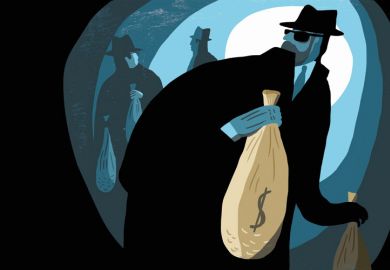
Statements made by scientists are often seen as less credible than the views of businesspeople in the eyes of the public, according to a new study, with the focus on impact and industry engagement thought to be one of the factors.
The paper, published in the Elsevier journal Research Policy, is based on an analysis of nationally representative surveys in both Sweden and the UK that involved more than 6,000 responses.
It says the results “paint a rather bleak picture: scientists’ credibility is only superior to that of government officials, but not businesspersons or issue advocates”.
Its findings contrast with previous studies on public trust in science, which have found that the views of scientists are generally held in high regard.
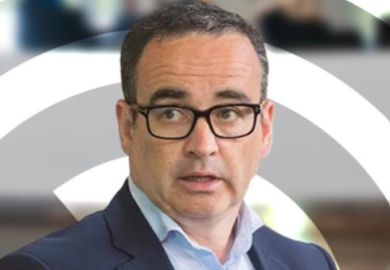
One of the study’s three co-authors, Anders Broström, associate professor at the KTH Royal Institute of Technology in Sweden, told Times Higher Education that the findings should concern those who receive public funding for science.
“The use of science needs public trust in the process and into the people doing it so it can be as meaningful as possible,” he said.
Broström added: “We are in this business [science] because we think that we can learn something that is of use beyond the immediate domains of academia, to weigh in on important debates about socially complex issues.”
But “then we’re being told by our own data that the public is not really ready to listen to us as much as when a businessperson comes along,” he said.
The findings that statements are viewed as more (or equally at best) credible when associated with a businessperson than a scientist were consistent across both countries, regardless of the context.
“But this negative effect appears to be countered in technological scenarios,” the study says. For instance, a scientist speaking about the societal implications of technology, is likely to be “perceived as more credible” compared with other actors.
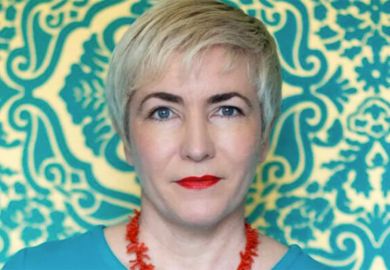
Co-author Cornelia Lawson, professor of economics of science and innovation at the Manchester Institute of Innovation Research, told THE that she found it “surprising and concerning” that scientists are evaluated as having less credibility “when it comes to more social issues where technology doesn’t play a role”.
For instance, these could be debates on areas such as the future of work or equality, she said.
Co-author Mabel Sánchez Barrioluengo, senior lecturer in science policy and innovation at the Alliance Manchester Business School, added that the findings show it is important to target science communication in certain areas of research.
The study results reveal that non-technological research was where “we still need to push that engagement with the public to make our message understood”, Barrioluengo told THE.
The paper also finds that “concerns about scientists being partisan due to either private interests or ideological bias clearly threaten the credibility of scientists as experts”. They “face a delicate balancing problem when seeking to avoid falling short in relevance on the one hand and trustworthiness on the other,” it adds.
Funders can play a role in this, Broström said, “by overly focusing on scientists collaborating with industry and being involved in debates that have impact…we are actually contributing to them not being perceived as credible anymore”.
“We need to think about where these concerns come from and if there is anything we can do to mitigate these concerns and perceptions,” he said.
Register to continue
Why register?
- Registration is free and only takes a moment
- Once registered, you can read 3 articles a month
- Sign up for our newsletter
Subscribe
Or subscribe for unlimited access to:
- Unlimited access to news, views, insights & reviews
- Digital editions
- Digital access to THE’s university and college rankings analysis
Already registered or a current subscriber?