Iranian students in the Netherlands are calling on universities and the Dutch government to provide emergency financial support, warning they risk having to abandon their studies after months of conflict at home left many unable to receive money from their families.
The war with the US and Israel, which began in February, has deepened the country’s economic crisis. Disrupted banking channels and restrictions on international transfers have made it nearly impossible for families to send money abroad, while the Iranian rial has plunged to historic lows, eroding the value of savings.
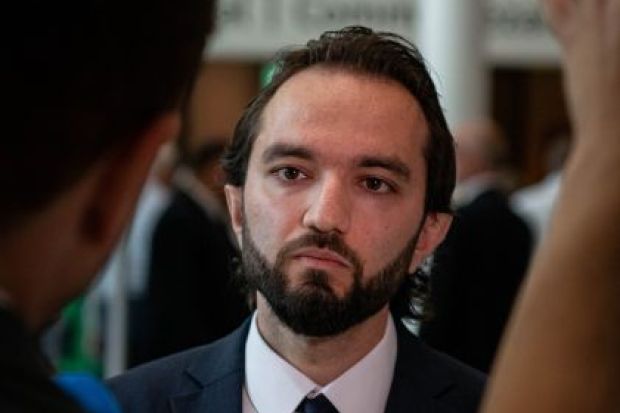
“I have no confidence that I can pay my tuition fees without assistance,” said Armin Taherioun, a student at the Inholland University of Applied Sciences in Amsterdam, where the annual tuition fee for international students is about €10,000 (£8,500).
Taherioun is one of 1,213 Iranian students studying in the country, according to Dutch international education organisation Nuffic. He moved to the Netherlands two years ago on a student visa and relied on savings and financial support from his family in Iran to cover his tuition and living costs.
“Now, transferring money outside Iran is prohibited. If our parents transfer large amounts of money, it will flag the banking system and our parents could be called in for questioning,” he said.
Before the conflict, Taherioun paid his tuition through a licensed exchange service in Hungary, where transfers incurred a 3 per cent fee. “That is no longer an option,” he said.
His savings ran out six months ago. Since then, he has relied on part-time work and a relative in Canada to cover his rent and everyday expenses.
Four months ago, the 26-year-old launched a petition calling on the Dutch government to provide emergency financial support for Iranian students, temporarily relax the 16-hour work limit for international students and allow affected students to pay the lower domestic tuition rate.
The petition, which has nearly 900 signatures, points out that Dutch universities introduced support measures for Ukrainian students after Russia’s invasion in 2022 and argues that Iranian students facing exceptional circumstances should also get similar support.
But with tuition fees for the new academic year due by 31 August, students say time is running out.
Taherioun said he had raised the issue with Dutch members of parliament but was told a decision was unlikely before October.
“I have also been emailing all the executive board members at my university for two months,” he said. “Eventually they said they would give students emergency funding of €300 a month until the end of August, but we have to repay it by August 2027.”
“Beyond that, they said they will give us a tailored solution, but we haven’t seen any improvements.”
“Without help, I’ll have to drop out. How can I come up with €10,000?”
Times Higher Education contacted the university and the Dutch Ministry of Education for comment.
Being away from family as the war continues has also taken a heavy emotional toll.
“In the first weeks of the war, [Iranian students] were all glued to our phones, hoping for a message from family members because the internet was blocked in Iran. We had no contact with them,” Taherioun said, adding that he had to resit an exam because he could not focus on his studies.
“My parents tell me to just focus on my studies, as they are used to the uncertainty. But it’s impossible not to worry about them. My parents, cousins and close friends are all in Iran.”
For Parsa Mojtahedi, a 22-year-old dentistry student at Radboud University, the war has worsened an already precarious financial situation.
Mojtahedi pays about €30,000 a year in tuition fees. He and his mother moved to the Netherlands from Tehran five years ago and had spent years saving for his education. “My mother works six to seven days a week and I’m also working alongside my studies,” he said.
But by April those savings had run out, forcing him to launch a crowdfunding campaign that raised enough money to cover another academic year as he said the university had not offered much help.
“The war made my situation worse,” the second-year student said. “The internet blockade made it really hard to reach my family, even to ask for help.”
For months, he was unable to contact his father and his grandparents in Iran. He was only able to establish contact two weeks ago.
“I’ve become very anxious because you don’t know if your family is alive in those moments,” he said. “I had to redo my exam because I just couldn’t study.”
Although the fundraising campaign has allowed him to continue into his third year, he worries that he may have to abandon his dreams of becoming a dentist if he is unable to pay the fees in the following year.
“I also want to live a student life and enjoy time with my friends,” he said. “Instead, I’m constantly thinking about how to pay the next instalment.”
Radboud was also contacted for comment.
Register to continue
Why register?
- Registration is free and only takes a moment
- Once registered, you can read 3 articles a month
- Sign up for our newsletter
Subscribe
Or subscribe for unlimited access to:
- Unlimited access to news, views, insights & reviews
- Digital editions
- Digital access to THE’s university and college rankings analysis
Already registered or a current subscriber?