Vice-chancellor/principal
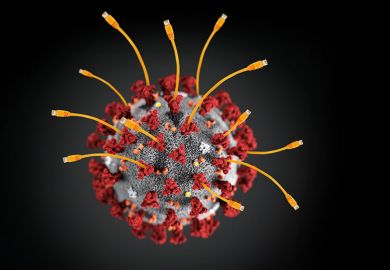
The sudden closure of university campuses across China and elsewhere has necessitated the virtual delivery of vast numbers of courses. And while there have been inevitable teething problems, observers are wondering whether the future might just have become the present. Joyce Lau reports
Analysis of THE World University Rankings data shows number of women leading highest-ranking institutions has risen slightly
President of research powerhouse Sigbritt Karlsson calls for realism about openness while continuing to foster culture of innovation and entrepreneurialism
Employers value higher and degree apprenticeships. Restricting access to them would be counterproductive, says Jane Longmore
‘Freedom of speech is a question of interpretation,’ says v-c who maintains art studio in Beijing
Pioneering university leader who went on to promote higher education’s social responsibility remembered
Sydney v-c says upcoming move to London ‘made more interesting’ by uncertainty around city’s global position
The financial urge to allow Chinese students to begin the new university year must not trump public health concerns, says Salvatore Babones
UK academics love the ERC, but selective participation in Horizon Europe is unlikely to be on the table, says John Womersley
Coventry University’s endeavours notwithstanding, other international education initiatives are more sustainable, say Philip Altbach and Hans de Wit
Scottish Funding Council review condemns how bumper payments to secure ‘orderly exit’ of Sir Ian Diamond were awarded
Sinn Féin’s desire for an all-Ireland education system could see it reject fee rises north of the border, says Diana Beech
Developing countries cannot cower from technological progress if they and all their citizens are to advance, argues Tshilidzi Marwala
University president who became a New York ‘Living Landmark’ remembered
Ed Byrne warns Office for Students could be creating a model where university leaders have less freedom
University of Massachusetts Boston enables departments to bid for second position for under-represented scholar when undergoing existing search
Academics are key to lifting public engagement with climate change and stopping the spread of nonsense passing as news, says David Lloyd
The hunt for a new UK research supremo continues, apparently after the shortlisted candidates failed to pass muster
The appointment of Manuel Castells as the country’s universities minister signals a change in fortune, says José Martinez-Sierra
India’s students have surprised many observers by standing up together to protest against injustice, says Pushkar
With student debt escalating and concerns persisting that college graduates are not job-ready, increasing numbers of companies are taking the training of their workers in-house. But where does that leave the higher education sector, asks Paul Basken
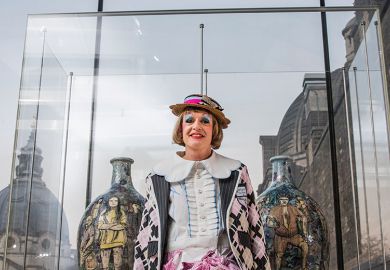
The ‘transvestite potter’ is used to creating a stir, but is his freewheeling approach a benefit or a curse when it comes to being a university chancellor? And should art schools still tolerate students like him? Matthew Reisz fires the questions
Augar’s questions remain largely unanswered but proposals for further education are largely comprehensive and coherent, says Nick Hillman
Catholic institution hires TEQSA chief executive who led QAA and Ucas
Overseeing an Athena SWAN application convinced an anonymous academic that if tasks cannot be properly resourced, they should not be attempted at all
The analogy has lessons for both higher education institutions and the bodies that oversee them, says Richard Oliver
Actions by the current government suggest official discomfort with the basic purpose of public universities, says Jayati Ghosh
The looseness of regulations around collaboration with overseas contacts will intimidate scholars into silence and isolation, says Katarzyna Kaczmarska
Student income support is increasingly insufficient and in urgent need of reform, says Dawn Freshwater
The apparently political murder of an undergraduate at a top Bangladeshi university by other students has stunned a nation, writes Nahid Neazy
Home Office will nearly double number of fellowships where visa applications are fast-tracked, while ‘MIT of north’ plan is also floated
Leader says that desire to maintain tranquillity can deter islanders from pushing ideas to ‘breaking point’
Universities must face up to some legitimate complaints, but they can also play a key role in helping the new government meet its ambitions, says Alistair Jarvis
Being transparent about the existence of poor-quality provision is essential if we are to tackle it effectively, says Nicola Dandridge
Strikes notwithstanding, more pay restraint and greater pensions contributions from UK staff seem unavoidable, writes Bernard Casey
Political, economic and demographic considerations all suggest that the demand-driven system won’t endure, says Nick Hillman
Independent process ‘found several areas in which we will need to improve our board of governors’ processes’, says UEL
The plan promises big leaps in innovation, quality assurance and lecturer training, say Youmin Xi and Xiaojun Zhang
Offering two-year programmes at FE colleges as part of four-year degrees could redress the UK’s spending bias in favour of HE, says Geoff Mason
The former Sussex vice-chancellor on coming late to reading, his long fascination with India and different interpretations of the colonial era
Critics fear initiative could widen social inequalities
Sector leaders say Augar-inspired cut to tuition fees in England would damage sector
The EU’s next framework programme, Horizon Europe, is due to start in just over a year. But while its broad shape is settled, political wrangling over budget and participation rights means researchers are still unclear over their future funding prospects. David Matthews reports from Brussels
Some students have been murdered while others are living on the streets, says Lynn Dobbs
Universities preach meritocracy but, in reality, bend over backwards to protect toxic personalities, says Irina Dumitrescu
Lorenzo Fioramonti wants to ‘put his ideas to the test’ and end the country’s brain drain
£9,000 fees permitted per-student funding to rise even at the height of austerity, argues former minister David Willetts
Universities, local authorities and others must heed the Centenary Commission on Adult Education’s recommendations, says Jonathan Michie
Raj Kumar wants greater focus on liberal arts studies, against existing preoccupation with science
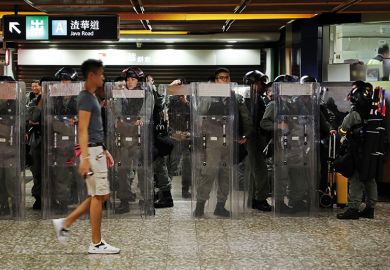
The ongoing wave of student protests is testing the diplomacy skills of the territory’s vice-chancellors to the limits. But is it possible to keep the peace on campus and maintain good relations with the Hong Kong and Chinese governments while maintaining unrestricted freedom of speech, asks Joyce Lau
Leading sociologist of inequality fears boosting the status of a select few universities could mean a closed educational elite, as in the US or France
Restrictions on loan access for university courses with low graduate earnings under consideration for Tory manifesto, though Augar-inspired cuts not ruled out
The Australian National University’s rejection of massification will reap rich rewards for its students, says Brian Schmidt
Former higher education minister will leave in December to seek consultancy and advisory positions
Andrew Atherton placed on leave after just nine months in post
If a Canadian programme’s success rates are replicated in the US, it must be adopted, says John Banzhaf
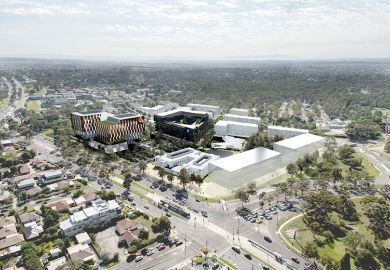
While some universities are funding huge building projects out of international student fees, an increasing number in Australia and elsewhere are finding that the ground beneath their feet is the best foundation for reaching to the sky. But should universities really be swapping ivory towers for commercial skyscrapers? John Ross cranes his neck and wonders
A much wider use of sophisticated video conferencing will help – but no one is saying this will be easy, reflects Richard Davies
The REF is a prime example of the sort of elaborate, burdensome process that potentially adds comparatively little value
President says Ivy League institution is reaping reward of looking past academic silos and selecting staff on ability to tackle external challenge