Vice-chancellor/principal
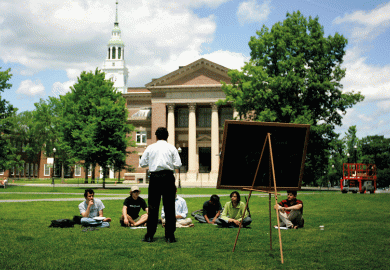
President says Ivy League institution is reaping reward of looking past academic silos and selecting staff on ability to tackle external challenge
Universities should offer a safety net for recent graduates forced into menial work by financial circumstances, says Roy Celaire
A cross-continental push to improve Europe’s best universities will make them more globally competitive, says Jan Palmowski
As governments around the world increasingly look to follow US states’ lead and link university funding to the recruitment, retention and employability of students, Paul Basken surveys the results of the Wall Street Journal/Times Higher Education US College Rankings 2020 for clues about the strategy’s effectiveness
One in 12 students now pays to go private in Germany, attracted by ‘niche’ courses, smaller classes and flexible learning schedules
Algorithms may simply lead to ‘self-fulfilling prophecies’ and do not give reasons for their decisions, Oxford researcher warns
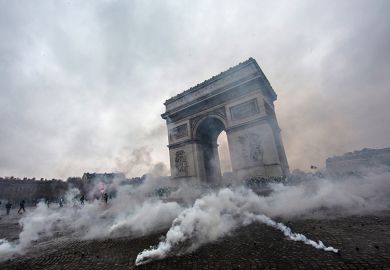
France’s president responded to the gilets jaunes movement with a surprise plan to abolish the grande école ENA, reigniting debate about the country’s intensely hierarchical higher education system. John Morgan explores what lies behind the proposal and what it says about the role of exclusive institutions in a populist, anti-elitist age
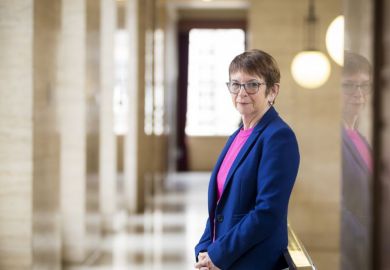
The University of London’s new vice-chancellor reflects on her Canadian working class roots, leadership lessons from local government and her time in 10 Downing Street
A policy to recruit genuinely the brightest and best students would have to look beyond revenue maximisation
Pension fund’s deficit is likely to be worse than feared rather than better, says Sir David Eastwood
Colonial hangovers and political interference are holding back India’s large public universities, says Saikat Majumdar
ETH rector says academia should focus on ‘excellent performances’, not quantity of research
Times Higher Education flagship event will take place in Canada for first time
Brexit, domestic funding threats and declining public trust could conspire to undermine a critical national asset, says Louise Richardson
Brian Schmidt says academia is losing brightest researchers because they cannot endure ‘intolerable’ precarity throughout their thirties
Higher education institutions urged to change tactics when lobbying for extra funding
Recent clashes over Hong Kong and Tiananmen Square have strained universities’ diplomatic sinews, says Roger Smyth
Critical thinking is not enough. Students must be taught dynamics of social media, say Darren Linvill and Patrick Warren
Universities often claim to be competing in a global market, but their recruitment of leaders typically results in domestic appointments. With some of the world’s top institutions led by people from abroad, John Ross asks whether more should be following suit
Andrew Rhodes says he was called a ‘psychopath’ and blamed for the death of a colleague
Union leader calls for Michael Arthur’s successor to rethink institution’s direction
Northwestern head says declining terms of presidents leave serving leaders wondering when they will be pushed out
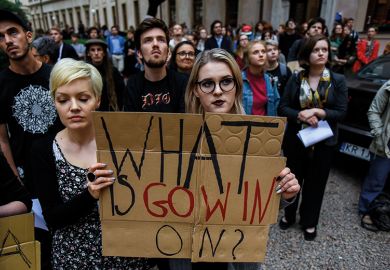
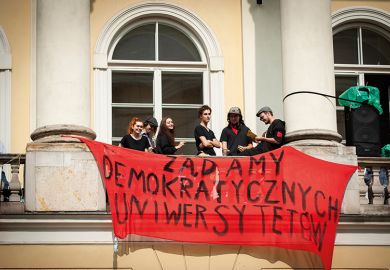
Poland’s authoritarian government is routinely compared to its widely criticised counterpart in Hungary, and its university reforms sparked a wave of protest by students and academics fearful of political interference. But, one year on, are those concerns being realised? David Matthews travels to Warsaw to find out
Poland’s underperforming university system raises hard questions for those who advocate academic self-government over ‘managerialism’
Leader, who will relinquish post in September 2020, credited with leaving institution in ‘very strong’ position
Pan-continental prosperity will suffer if the UK’s near-absence from the European University project is a sign of things to come, says Martin Paul
If universities don’t assert their expertise, demands from ministers and industry will become ever more misguided, says Dawn Freshwater
Building a diverse staff and student body requires a nuanced approach, says Sarah Springman, who identifies three areas where institutions can push for more inclusion, especially around gender
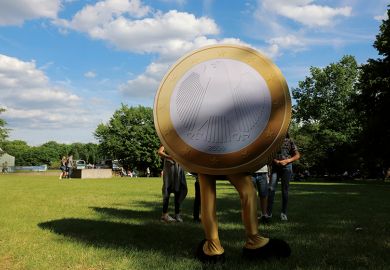
The live unveiling of Germany’s Excellence Strategy institutions is greeted by champagne, confetti and a changing of attitudes
Students from poorer regions who enter their local workforce after graduation should also be celebrated, says Sir David Bell
Universities must draw up agreements with local partners that have the public voice at their heart, says Richard Brabner
University of Alaska cuts are just the latest example of what is probably the new normal in US political culture, says Ben Trachtenberg
Nesta finds proportion of female AI researchers was higher in the mid-1990s – although universities fare better than tech firms
The well-known economic and social benefits of higher education have been tossed aside for short-term political gain, says Steven Brint
New vice-chancellor of federal university to focus on boosting international programmes and ‘selling London brand’ post-Brexit
Investigation launched following Dominic Shellard’s departure highlights a disturbing example of how things can go wrong, says John Coyne
Review says university’s handling of case created ‘profoundly unsatisfactory outcome for almost every single person involved’
Human beings can only work at full capacity for so long before they become incapable of doing any work at all, says an anonymous university employee
Joy Carter says fellow v-cs must act on climate emergency and make sustainability integral to all teaching and a ‘way of life’ on campus
Review chair’s comments on ‘discretionary’ funding raise disturbing questions, say Mark E. Smith, Sarah Randall-Paley and Andrew McConnell
Formulating and implementing a strategic plan is core to the modern university leader’s job description. But amid complaints that such documents are vacuous, generic and irrelevant to the wider community, John Ross asks how the process can be improved
Crowdsourcing a new configuration for the University of South Australia boosted brainpower and perhaps even institutional loyalty, says David Lloyd
President’s appointment of new Islamic university rector raises academic freedom concerns
Means-tested fees discounts would remove the rationale for fruitless widening participation efforts, argues Norman Gowar
Universities’ income, collaborations and reputation will all suffer if the country doesn’t re-engage with expertise before it is too late, says Gavin Esler
Data on more than 19,000 institutions show Europe lags behind leading anglophone sectors on female leadership
Augar’s failure to grasp the differential effect of government policy on different kinds of universities is his report’s Achilles heel, says Greg Walker
University leaders more likely to have attended Oxford or Cambridge compared with five years ago, but also to have gone to a comprehensive school
Sir Ian Diamond reportedly did not trigger his 12-month notice period until his departure from the university
It is not enough for UK universities with charitable status merely to conduct teaching and research, say Nicola Dandridge and Helen Stephenson
The Advertising Standards Authority is wrong to permit to any provider of training to graduates to declare itself a “graduate school”, says Viv Ellis
Overseas branch campuses have mushroomed in the past two decades, but with the risks larger than initially assumed and the returns less certain, stories of abandoned ventures have begun to mount. Ellie Bothwell asks whether the model still has a future
Asking for higher contributions is painful but unavoidable in such uncertain times, says USS chair Sir David Eastwood
Gradual changes to lifestyles will not save the planet. Universities need to go beyond Cambridge's recent lead and think bigger, says Peter Harper
Brexit or no Brexit, scientists across the continent have an obligation to keep standing up for ideals such as integrity, trust and cooperation, writes the European Union’s former director-general of research, Robert-Jan Smits
Three vice-chancellors get CBEs, as Anna Vignoles, Lee Elliot Major and Kevin Fong also among those honoured
A weekly look over the shoulders of our scholar-reviewers
Former president who won an ‘Emmy’ for his work to open US courtrooms to television cameras remembered
The controversy over a Harvard dean’s defence of Harvey Weinstein is no reason to disregard the core academic mission, says Sandro Galea
Reviving maintenance grants will redirect taxpayers’ money to those who don’t need it. Better to spend it on lifelong learning, says Ryan Shorthouse