There was a time when the ill fame of being ideologically motivated and economically irrelevant belonged primarily to interdisciplinary fields that have grown up relatively recently around minoritised identities.
Gender studies, sexuality studies, Native American studies and all those double adjectival programmes – Asian American, African American and the like – may be academically innovative, but their contents – and, therefore, value – remain largely mysterious to the public and, importantly, to employers.
The more traditional humanities – English, history, even philosophy and comparative literature – were more recognisable and, therefore, valued more highly, if only marginally so. From a politically conservative perspective, the social sciences seemed more radical but were esteemed to the extent that their approach was deemed to be quantitative and rigorous. Naturally economics, with its near-mathematical orientation, was at the top of the food chain. Lower down were political science, sociology and, finally, the most humanistic and qualitative of them all, anthropology, with its close kinship to literary studies.
Before returning to India, I taught in two departments/programmes of interdisciplinary studies in North America – English and cultural studies at McMaster University and modern thought and literature at Stanford University. These experiences, in the first and the early second decades of the 21st century, gave me insights not only into the various forms of interdisciplinary humanities and social sciences, but also into their perception by outsiders and the employment patterns of their graduates.
While the former was always slightly sceptical and the latter a little patchy, interdisciplinarity at the time was nevertheless seen as vibrant and relevant to public policy. As one looked around campuses, and particularly at the interdisciplinary research centres and thinktanks, it was possible to see substantial connections between research, policymaking and statesmanship, both on the political left and the right. Stanford’s Hoover Institution appointed George W. Bush’s former secretary of state Condoleezza Rice as a fellow, for instance, and I still remember the huge protests that erupted when it also sought to appoint Bush’s defence secretary Donald Rumsfeld, who was identified especially closely with the US’ botched war in Iraq.
But these were conservative politics of a pre-Trump era. In the later second and early third decades of the 21st century, as vast stretches of the world have elected illiberal regimes led by populist autocrats and near-dictators, the connections between academic research and policy decisions have largely withered. As decisions get taken on a megalomaniac whim, supported by populist anger, the long-term overviews and wise counsel offered by scholarly research have become increasingly irrelevant to politicians. And that is almost as true for research produced by conservative academics as it is for that produced by progressives. Thought, analysis or data of any kind have very limited relevance unless they have immediate mass appeal. There remain few better illustrations of this than the UK’s Brexit referendum.
Many of the softer social sciences have therefore been relegated to the space to which the humanities were exiled quite some time back – that of economic and (ironically) social irrelevance. Alongside their content and methodology, their vision of the world also comes under attack. If this vision includes equality, social justice and attention to the violated rights of minoritised groups, the subject is immediately condemned on the populist right as “woke”.

Indeed, as the world moves further and further in that political direction, even moderate and liberal positions start to look radically left-leaning. We have arrived at a point where most, if not all, of the humanities and the softer social sciences are perceived as disciplines shaped by ideology rather than by method or archive: as both economically useless and socially dangerous, drawing attention to exploitative patterns of racism and imperialism that the right is keen to downplay and outright deny as incompatible with their national visions.
But in previously colonised and semi-colonised nations such as India and China, the humanities and social sciences are considered by reactionary forces to be just as dangerous. Their insights into the deep structures of social hierarchy and inequality are not palatable to authoritarian governments keen to project rosily optimistic visions of their nations.
Even though both India and China are civilisations with rich and ancient humanistic, cultural and artistic traditions, the monolithic trajectories of development they have pursued – with administrative centrality in China and ethno-religious purity in India – have in different ways distorted or suppressed the methods, archives and consciences of the humanities and social sciences. Equally, that suppression has, ironically, revealed the enduring power of these subjects in a world where rhetoric and emotions play far greater roles than science or data, as I have previously tried to point out.
To be fair, for Asian humanities and the social sciences, the “useless” label remains large enough to largely hide the “dangerous” tag that lurks behind it. In 2024, for instance, the Chinese education blogger Zhang Xuefeng, who has 24 million followers on Douyin, the Chinese version of TikTok, made news with his response to a woman who asked him whether her son should study liberal arts at the university. His answer caused widespread outrage even among those who felt there was harsh truth in it: “All liberal arts graduates are joining the service industries! And all they need [as a graduate skill] is grovelling.”
There is also, of course, an element of pure economic and corporate pragmatism in the veneration of science and technology above all else on campuses. The US pioneered the corporatisation of the university long before the Trump era, and perhaps the most recent instance that caught wide attention is the significant diversion of resources by the University of Chicago to start-up ventures and the quick monetisation of applied scientific research.
Coming from a university known for deep research in the fundamental arts and sciences and for running world-renowned humanities programmes, this was surprising. Not that it is not doable – I saw it done rather cannily at Stanford – and for a developing nation like India, the temptation to chase the financial returns of tech transfer are especially difficult to resist.
But when such a temptation combines with the quest for cultural pride in the context of poor research quality, we get the kind of gaffe that erupted last week when a private university, Galgotias, tried to claim a Chinese-made robotic dog as its own invention at the AI summit in Delhi.
Moreover, we all now know that it did not go well for Chicago – contributing to significant financial losses that are now being paid for by redundancies and admissions freezes in – where else? – its humanities and languages programmes.
Assumptions of relevance and utility have always had close connections to funding in Asia. As Hong-Kong based academics Rui Yang and Yujie Lin have revealed, support for humanities and social sciences in China is often trapped between the vertical (government-led) and horizontal (stakeholder-driven) tracks of research funding. With the vertical track prioritising national technical development goals and the horizontal track favouring immediate, practical solutions to real-world problems, many fields of the humanities and the social sciences fall through the cracks.

Nevertheless, the political restrictions on social science research are more deeply structural, as Jørgen Delman, a professor of China studies at the University of Copenhagen, has pointed out, “Article 39 of China’s Higher Education Law from 1998 stipulates unmistakably that the Presidents of Chinese universities are subject to the leadership of ‘grass-roots committees of the Chinese Communist Party’ in their institution.” A party secretary’s role in determining teaching and research programmes, therefore, is often seen as more influential than that of the presidents themselves.
The dissemination of Chinese research is also under political control, with various restrictions on publishing in – or even reading – some Western social science journals. This prevents Chinese scholars both from accessing controversial research and from publishing on politically sensitive subjects.
India is similar to China in that here too the word research almost exclusively signifies developments in the natural sciences and technology. But the current lopsidedness in scholarship’s valuation goes far beyond the traditional hierarchy of economic importance between the humanities, social sciences, natural sciences and technology.
The key difference now is political. It is possible to celebrate science and tech research as universal progress: the obvious accelerators of a modernity that is benevolent for all humanity. But in a country like India, even the most superficial attempt at honest research in the humanities and the social sciences must reveal inconvenient disparities in the benefits conveyed by technological progress: the violent historical inequalities, inequities and discrimination that still shape current realities and threaten to define the nation’s future.
That contemporary India is one of the most staggeringly unequal societies is immediately obvious even to the casual observer. To a social scientist of any methodological conscience, such inequities – most notably in caste, class, gender, and the entanglement of religion with all of those – come across as deep-seated and widespread across time and space, both territorially and through India’s global diaspora. Almost all spaces beyond the Hindi heartland – the separatist regions in the north and the north-east, and even oppressed tribal groups and castes in the prosperous south – strain both the idea of the nation and its sovereignty.
Of course, highlighting this huge diversity also underlines the miracle of this country’s existence as a nation in the first place, a miracle in which Indians can take just pride. But that pride is healthy and sustainable only in tandem with the recognition of the forces that disrupt it, and the deep histories of grievances, violations and discriminations from which they do so. But research into those issues cannot be flattering to rhetoricians of a nation eager to champion its image as the great spiritual leader and preacher to the world. It is also, incidentally, inconvenient to the current corporate stakeholders in STEM research, who are economically and politically invested in a rosily optimistic vision of India.
It wasn’t always this way. Independent India set out on its developmental trajectory with a keen focus on the production of research and pedagogy in technology and natural sciences, yes, but also in social sciences, as articulated in the pioneering vision of prime minister Jawaharlal Nehru and his cohort of like-minded policymakers.
This focus on knowledge and institution-building played a key role in the making of the new nation. Hence, alongside centres of research in the quantitative and natural sciences – such as the Tata Institute of Fundamental Research, the Indian Statistical Institute and the Indian Institute of Science – a range of institutions focusing primarily on the social sciences came to thrive. Examples include the Centre for the Study of Developing Societies; the Centre for Studies in Social Sciences, Calcutta; the Centre for Policy Research; the Tata Institute of Social Sciences; and the Institute for Social and Economic Change. Key institutions of advanced postgraduate training and research also grew along similar trajectories, notably Jawaharlal Nehru University and the Delhi School of Economics.
Together, history and social sciences such as economics and political science – as well as, perhaps to a lesser degree, anthropology and sociology – came to build a vision of the nation, both domestically and internationally. Along the way, they trained multiple generations of academics, politicians and policymakers, while also preparing millions of graduates for the various public services examinations in which they figure prominently.
How fast all of this has changed since the BJP came to power in 2014! How quickly history became colonised by propaganda and ethno-religious ideologies, not only by trolls and politicians of questionable education but also by certain public intellectuals, is also disturbingly familiar to conscientious historians and citizens alike.
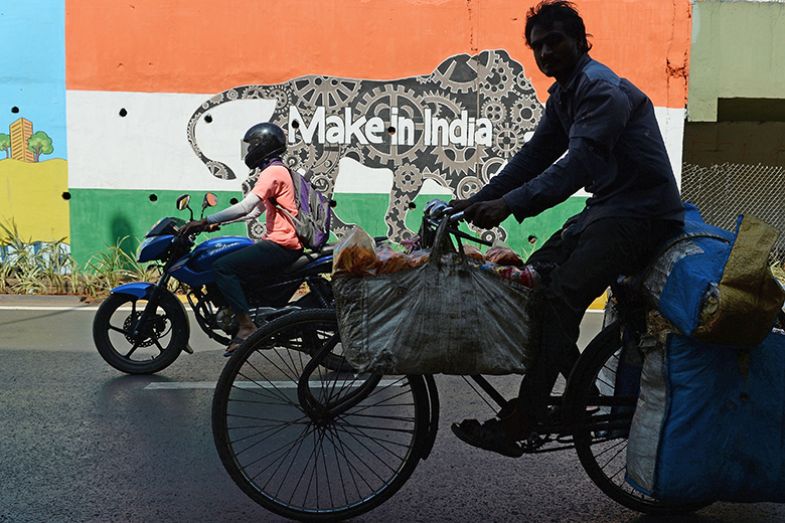
The malignant pedagogic and curricular consequences of this colonialism (a particularly ironic term in this context) are also well known. But all ironies renew in unprecedented ways. It is quite something to hear private and corporate stakeholders in higher education join eulogists of initiatives such as the government’s “Make in India” manufacturing-boosting initiative in celebrating narratives of research excellence (even though they are mostly that, narratives) that are identified exclusively with science and technology – even as research in the contemporary social sciences is defunded and promptly disowned by the very institutions that produce it the moment it reveals unpleasant truths about the shining nation.
It is difficult for honest research initiative to survive in a political climate that refuses to hear difficult truths. No centre for political data, no centre for policy research, no critical colloquium on resource and rights can exist in an ecosystem that shrieks the glory of research as synonymous with the glory of the nation.

It would be stupid and self-destructive for any university researcher to question the celebration of science and technology research, especially in a developing postcolonial nation. But what is troubling is how this aspiration for research excellence in the STEM fields now works in tandem with the active suppression of genuine research in the academic humanities and particularly the social sciences. That is what bends us towards this scepticism.
In the end, the most damaging consequence of the polarisation of support for the hard and the social sciences may lie in the socio-political entanglements of technology itself. Damaging enough has been the celebration of mass smartphone empowerment in India without caveats about data-colonialism by cloud-capitalists – or the government’s violation of data privacy. And that is to say nothing of the communal destruction wreaked by uninformed “WhatsApp wisdom” and doctored videos.
That wealth generated by AI will deepen inequalities even in the post-industrial West has been pointed out by leading scientists such as Geoffrey Hinton. What havoc will it wreak in India’s nightmarishly segregated society? Bot-bias stands to magnify many times over the endless hierarchies and discriminations that define it. But only a well-supported tradition of conscientious social science research will be able to track and highlight this.
Can the nation really be expected to celebrate a research culture that glorifies research in science and technology while suppressing the unpleasant but vital-to-hear home truths brought to light by the social sciences?
Saikat Majumdar’s most recent book is The Amateur: Self-Making and the Humanities in the Postcolony.
Register to continue
Why register?
- Registration is free and only takes a moment
- Once registered, you can read 3 articles a month
- Sign up for our newsletter
Subscribe
Or subscribe for unlimited access to:
- Unlimited access to news, views, insights & reviews
- Digital editions
- Digital access to THE’s university and college rankings analysis
Already registered or a current subscriber?