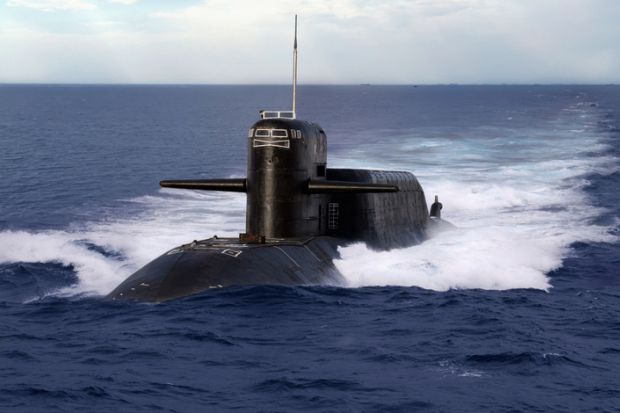
Canberra’s ambition to acquire nuclear submarines has allowed the “penetration” of Australian tertiary education by the “military industrial complex” of the US and UK, a “crowdfunded” review has found.
Universities are becoming “too dependent” on defence-related research grants, “to the detriment of other research opportunities”, according to the 113-page report from the “Public Inquiry” into the Australia-UK-US (Aukus) deal.
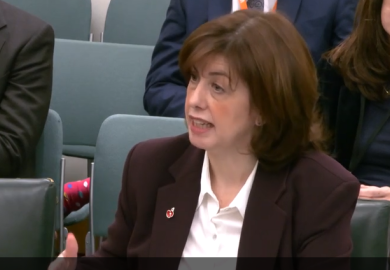
The inquiry was headlined by former federal school education minister and Midnight Oil frontman Peter Garrett, former Western Australian premier Carmen Lawrence and former defence force chief Chris Barrie. It was commissioned because of a perception that the A$368 billion (£191 billion) Aukus deal, signed by former conservative prime minister Scott Morrison and embraced by the current Labor government, had never been properly scrutinised by parliament.
The inquiry’s principal recommendation is that pillar 1 of the agreement – concerning the delivery of nuclear-powered submarines – should be terminated as soon as possible because of the cost, security risks, difficulty of storing nuclear waste and doubts that the submarines will ever materialise, among other issues. “Aukus is the worst, riskiest and most costly defence decision ever made by an Australian government,” the report asserts.
Garrett told the National Press Club that the agreement was also “distorting” tertiary education – a concern highlighted in submissions from academic and student groups. “Financial pressures and defence-related funding opportunities are increasingly reshaping university priorities in ways that risk subordinating independent research and education to military and industrial objectives,” the National Tertiary Education Union told researchers.
The report cites the federal government’s A$128 million commitment to fund some 4,000 additional university places in STEM disciplines, “specifically” to help generate a nuclear submarine workforce.
Submissions also highlighted the “opportunity cost” to education – along with climate, housing, cyber protection, AI regulation, health, aged care, indigenous advancement and other social services – from diverting so much money into a defence project.
“Aukus is a threat to peace and jobs, a wasteful diversion of critical public funds, a risk to Australia’s independence, environment and community safety, and a driver of militarisation in society and educational institutions,” the New South Wales Teachers Federation said.
The report is less critical of pillar II, which outlines advanced technology sharing arrangements among the three participating countries, but says this “uncosted” part of the pact should be “reviewed and recast”.
“The arrangements erode controls related to indemnity and [intellectual property], resulting in a set-up that is less beneficial to Australia compared to pursuing cooperation with a variety of partners,” the report says.
Australia’s research-intensive universities have embraced pillar II as a potential wellspring of research funding. But submissions said the links with “submarine warfare” was influencing how research into advanced technologies was “costed and prioritised”.
“The government has not published a baseline comparison demonstrating what Aukus pillar II achieves that existing bilateral frameworks do not,” thinktank Policy Watchdog Australia observed.
Register to continue
Why register?
- Registration is free and only takes a moment
- Once registered, you can read 3 articles a month
- Sign up for our newsletter
Subscribe
Or subscribe for unlimited access to:
- Unlimited access to news, views, insights & reviews
- Digital editions
- Digital access to THE’s university and college rankings analysis
Already registered or a current subscriber?