When the journal Studies in Higher Education was first published in 1976, issues commanding researchers’ attention included reforming examinations, education innovation and how to launch new courses – a contents list that would not look entirely out of place today.
But much else about the journal, which celebrates its 50th anniversary this year, has changed.
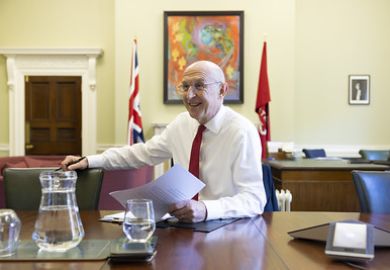
Maria Slowey, a senior editor on the title, said “it’s such a totally different environment” now compared with when the first two issues were published.
There has been “an enormous transformation in academic publishing generally, and it’s reflected in our journal”, she said.
To mark the milestone, contributors have analysed the more than 3,000 articles published during the journal’s half-century of activity, tracing a gradual shift from a focus on teaching and learning to broader debates about academic identities, governance and the changing role of universities in society.
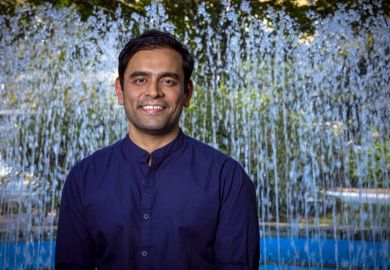
In the journal’s infancy, articles were penned by scholars from sociology, psychology, history and political science who had begun turning their attention to higher education, said Creso Sá, editor-in-chief.
This helped to lay the foundation for the academic study of higher education, a field that now has “a far more robust institutional base in universities, research institutes, scholarly societies, journals and conferences in many countries”, Sá said.
But its “origins still leave an imprint” because the “literature remains multidisciplinary and porous”.
Sá, a professor of science policy, higher education and innovation at the University of Toronto, has held the top editor role since 2022. He said the field “remains open to contributions from other disciplines, but it now has its own momentum and a core set of areas of study…that make up a clearly identifiable literature”.
Like many journals, Studies, which is published by Taylor & Francis on behalf of the Society for Research into Higher Education, is grappling with an increased number of article submissions resulting from the rise of artificial intelligence and paper mills.
Last year, Slowey estimated, the “journal was up to about 7,500 submissions”, although she attributed the uplift in part to Studies being “one of – if not – the leading higher education journals”.
“Many of those [manuscripts] we can discard,” she said, calling them “slop”. Studies operates a desk rejection policy to prevent “AI-generated papers of no academic value” clogging the system, Sá said.
He added: “We are, by necessity, disciplined and methodical in the review process, starting with desk review. We do not send manuscripts with obvious weaknesses or glaring omissions for peer review.”
Slowey, emeritus professor at Dublin City University, explained that all abstracts submitted are first read by Sá, with those papers he deems to fit the journal’s remit then going to its five assistant editors before being sent out for peer review.
Bjørn Stensaker, professor of higher education at the University of Oslo, has been contributing for the journal for 20 years. What is “unique” about the journal is it’s “one of those rare, comprehensive journals that brings the field together”, he told Times Higher Education.
He, too, is experiencing the impacts of the surge of submissions as a reviewer. “I can see that the number of requests I have each year, and even for month to month, is increasing,” he said. Stensaker added that the number of manuscripts that go into the journal is “crazy”.
The resulting “strain” is put on the workloads of both reviewers and authors, he said. “Reviewers are getting tougher”, with both “stamina” and “motivation” now being a requisite to getting published in the journal.
Over the years, Slowey said, the “scale and shape” of higher education institutions and systems have changed to point “where universities now constitute just one part of much wider, and more diverse, tertiary systems”.
For Slowey, what has remained distinctive about higher education studies “is the commitment to fostering independence of thought and knowledge creation” through research and teaching. But, she added, “as a social construct, it is not surprising that higher education often fails to achieve its lofty aspirations”.
Looking ahead, Sá said: “We are keen to continue expanding the global reach of the journal, publishing more work on less well-known HE systems. We remain focused on publishing highly original work, wherever it comes from.”
Register to continue
Why register?
- Registration is free and only takes a moment
- Once registered, you can read 3 articles a month
- Sign up for our newsletter
Subscribe
Or subscribe for unlimited access to:
- Unlimited access to news, views, insights & reviews
- Digital editions
- Digital access to THE’s university and college rankings analysis
Already registered or a current subscriber?