A former vice-chancellor and an ex-head of Ucas will take part in an independent review of human resources (HR) processes at the University of Cambridge, established after a tribunal found a whistleblower was victimised for raising concerns over the treatment of female staff.
Colin Riordan, who has previously led the universities of Cardiff and Essex, and Mary Curnock Cook, chief executive of the UK’s central admissions body Ucas from 2010 to 2017, will sit on a five-person committee to examine how Cambridge handled bullying allegations made by astrophysics professor Wyn Evans.
In August an employment tribunal found a “clear pattern of trying to shut down” allegations of bullying made by Evans in a bid to “protect the university from any possible damage”. The two-year investigation into Evans was ruled as “baseless” and “filed in retaliation…and was therefore likely malicious and vexatious”.
It also strongly criticised vice-chancellor Deborah Prentice for failing to scrutinise correspondence written by others but submitted in her name, noting how “ghost-writing was a consistent and a concerning theme throughout this matter”.
Faced with a potential motion, known as a “Grace”, from the university’s Regent House demanding an external audit of HR practices, Cambridge has announced an independent review which will be led by Laura Whyte, a former HR director at John Lewis who led a 2019 review of HMRC’s leadership.
Cindy Butts, who previously chaired the Independent Commission for Equity in Cricket, and Helen Fairfoul, who was chief executive of the employers’ pay representatives the Universities and Colleges Employers Association (Ucea), have also been appointed to the committee.
This week Prentice told university staff that Cambridge is “committed to learning from recent negative events, and we are bringing in independent experts to facilitate that learning”.
“We are not marking our own homework here; we want the rigour and clarity that outside experts can provide,” she added.
According to the review’s terms of reference, published on 2 October, the “priority focus” will be on “areas referenced in the recent ET outcome, specifically whistleblowing, grievance and complaints handling”.
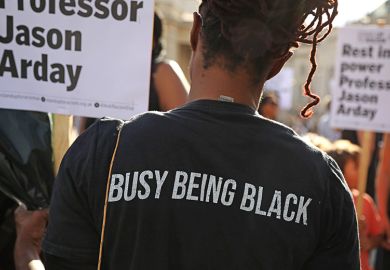
“The review will operate independently of, but alongside, the independent review being commissioned by the University Council following the death of Professor Jason Arday,” it adds, referencing the recent passing of the former sociology of education professor who had faced media scrutiny this summer over claims he had plagiarised his PhD thesis and invented stories in his memoir, published posthumously this summer.
Former public prosecutor Nazir Afzal, the University of Manchester’s chancellor, will lead the first stage of a review into support available for Arday, with wider matters related to Arday’s appointment and the university’s response to misconduct allegations to be considered separately.
The HR review will “assess whether university practices referenced in the ET outcome…are fit for purpose, and consistently applied” and “review the broader governance, oversight and reporting of the university’s process for considering and monitoring whistleblowing, staff grievances and complaints”.
It will also seek to “understand the lived experience of staff who have navigated these processes – including those who have raised concerns or complaints (or considered doing so), as well as those responsible for leading, administering, investigating and implementing them.”
Stating that the review “shall be conducted at pace”, the terms of reference add “its phase one report will be anticipated within three months of the chair’s appointment. The university’s audit committee will then receive updates on progress from the Review Panel as appropriate during the review process.”
The university council will receive the report “in full” but only a summary will be shared with the wider community, it adds.
Responding to the announcement of the review’s members, the 21 Group, a lobby group representing university staff founded by Evans, described the committee as “seriously unbalanced”.
While acknowledging that several of the university-affiliated members were “independent of the organisation commissioning the review in the narrow sense”, they were “university insiders” who were “deeply embedded in the institutional world being reviewed”.
“This is particularly true of Curnock Cook, Fairfoul and Riordan. Their natural empathy is likely to be with the difficulties of running a large organisation with many staff, and with the management problems created by disputes involving those staff. Only Butts brings a particularly strong track record of challenging institutions from the outside,” the group said.
“Given the investigation was prompted by a damaging employment tribunal loss, the absence of an employment lawyer is absolutely astonishing,” it added.
Register to continue
Why register?
- Registration is free and only takes a moment
- Once registered, you can read 3 articles a month
- Sign up for our newsletter
Subscribe
Or subscribe for unlimited access to:
- Unlimited access to news, views, insights & reviews
- Digital editions
- Digital access to THE’s university and college rankings analysis
Already registered or a current subscriber?