University councils in Australia’s most populous state would be supported by secretariats headed by state government appointees, operating independently from vice-chancellors, under recommendations from the latest report into the sector’s “governance failures”.
Universities would have to demonstrate that they had not already decided to pursue restructures before consulting staff. And elected staff and students would dominate council subcommittees overseeing senior appointments and executive remuneration.
The proposals are among 23 recommendations in the 310-page final report from the New South Wales (NSW) Standing Committee on Social Issues, following its year-long inquiry into the state’s universities. The committee “repeatedly heard that current governance systems do not provide the transparency, accountability and effective oversight expected of publicly funded institutions”, the report says.
It cites “declining trust within university communities, poor workplace culture and staff well-being, fears of reprisal among staff who raise concerns, and governance arrangements that often fail to adequately explain or justify decisions”.
The committee found that universities had “swung too far towards corporatisation” to address their financial challenges. “Universities are not private corporations,” the report says. “They are public institutions…supported by public resources.”
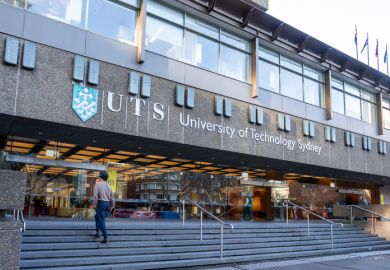
Committee chair Sarah Kaine, a former University of Technology Sydney (UTS) academic and National Tertiary Education Union office holder, said the inquiry had exposed systemic problems.
“For years, we have seen headlines exposing governance failures, controversial spending decisions, soaring executive salaries, overreliance on consultants, cuts to staff and worsening workplace culture,” she said.
“The challenge now is ensuring these recommendations do not sit on a shelf. The future strength of our university sector depends on our willingness to act.”
The NSW government shrugged off or deferred the recommendations from the committee’s interim report in April. They included probes of UTS and the University of Wollongong, and measures to force universities to disclose their consultancy spending.
However, the final report says, the governance concerns “extend well beyond” any single institution. “What happens next matters,” Kaine said. “If governments and universities fail to act, we risk further erosion of trust in institutions that are fundamental to our state’s future.”
The report says university autonomy must be complemented by “stronger accountability arrangements. Governance structures and legislative settings…are no longer consistently delivering the transparency, representative decision-making, effective oversight and public confidence expected of public institutions.”
It says universities are not transparent enough about their commercial operations, senior appointments, conflicts of interest, executive pay, spending on consultants or council decisions. Despite this, administrators are happy to share staff and student data with third-party organisations for “benchmarking, analytics and comparative performance purposes”.
The state government should ban universities from disclosing data in this way “unless the explicit informed consent of affected staff and students has first been obtained”, the report says.
The government should also ban universities from using “adjusted financial measures” to justify restructures and “other significant organisational changes”, unless the adjusted measures accord with the audited financial statements, the report says.
Some of the committee’s proposals have already been embraced by the federal government following university governance inquiries at the national level. They include mandatory disclosure of consultancy spending, regular conflict-of-interest declarations and publication of the outcomes of council meetings.
The NSW inquiry also recommended that elected staff and students should make up at least 50 per cent of governing councils’ membership. The recent Victorian university governance inquiry recommended minimums of three elected staff and two elected students on each governing body.
Register to continue
Why register?
- Registration is free and only takes a moment
- Once registered, you can read 3 articles a month
- Sign up for our newsletter
Subscribe
Or subscribe for unlimited access to:
- Unlimited access to news, views, insights & reviews
- Digital editions
- Digital access to THE’s university and college rankings analysis
Already registered or a current subscriber?