Politicians in Australia’s most populous state have recommended probes of two highly ranked institutions, in an interim report from one of several inquiries into the governance of the country’s universities.
The New South Wales (NSW) Standing Committee on Social Issues has also recommended changes to rules that allow university councils to avoid scrutiny of their deals with contractors through exemption clauses and “commercial‑in‑confidence” claims.
Although the committee’s inquiry is not due to report until later this year, chair Sarah Kaine said evidence aired during its first three public hearings warranted “immediate and targeted action” against the University of Technology Sydney (UTS) and the University of Wollongong.
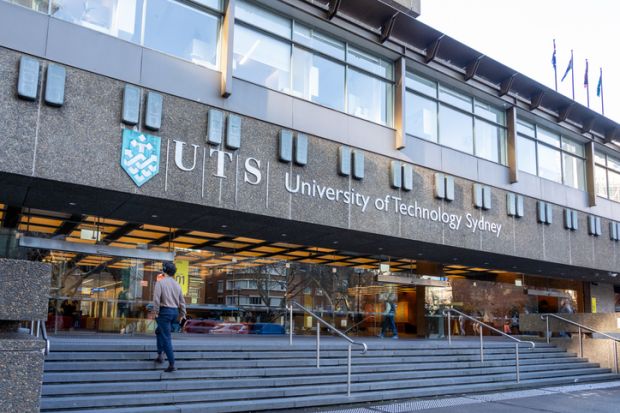
The committee has called on the NSW auditor general to conduct a performance audit of UTS’ governance integrity, financial and workforce management, “psychosocial risk” oversight, use of consultants and governance of controlled entities.
The committee also wants the state’s tertiary education minister, Steve Whan, to exercise his power under the University of Wollongong Act to obtain a report on the commercial activities of the institution’s marketing and recruitment arm, UOW Global Enterprises (UOWGE), which runs overseas campuses in Dubai, Hong Kong, India and Malaysia and plans to open a fifth in Saudi Arabia.
The inquiry heard concerns that the overseas operations were undermining Wollongong’s primary mission of providing education and research for NSW’s southern coastal region. Staff had also expressed “strong opposition” to the Saudi plan, citing “value inconsistencies” and “ethical or reputational risks” from an association with a country blighted by “human rights issues”.
The report also highlights governance concerns around UOWGE, which operates like “a private corporation rather than a public university”. The committee heard whistle-blower claims that two unnamed university council members were receiving undeclared A$50,000 (£26,300) salaries as directors of one of the overseas campuses. Managing director Marissa Mastroianni told the committee that her salary was “in the range of A$600,000” but later declined to be more specific, citing “privacy and confidentiality parameters”.
The interim report also highlights UTS as “a case study of rapid organisational change”, criticising the “overuse of consultants”, “sidelining of collegial governance processes” and “weak student representation and consultation” over the university’s plans to cut hundreds of jobs and courses.
“UTS acknowledges the release of the interim report and that the inquiry is ongoing,” a spokesman said.
The committee also probed the composition and orientation of university governing bodies, their use of consultants and the “transparency” of their contracts. It found that just one of the state’s 10 public universities had not taken advantage of a clause exempting university councils from “detailed and prescriptive requirements” to disclose spending on consultants in their published financial accounts.
The report recommends removal of this exemption and a similar clause in NSW public information legislation. The committee also wants stronger oversight of contract registers “to ensure that claims of commercial‑in‑confidence are applied consistently and satisfy the public interest test”.
Kaine, a former UTS academic, said the recommendations were aimed at restoring confidence in universities and ensuring governance consistent with their public purpose.
“These are publicly funded institutions, entrusted with billions of dollars and significant public assets,” she said. “Yet the systems that are meant to ensure transparency, accountability and alignment with the public interest are demonstrably inadequate.”
The Council of Australian Postgraduate Associations (Capa) said the report also showed that students were “structurally marginalised” through a university culture of “consent by silence”, where decisions were taken “not by formal vote but by the absence of dissent”.
Capa president Jesse Gardner-Russell said NSW politicians needed to act, ideally by adopting reforms proposed for Victorian universities. “When students and staff are isolated from governance, when decisions happen in the dark and when consultants replace internal academics, universities stop serving the public,” he said.
Capa secretary Mitch Craig said student and staff representatives need to be embraced as “community experts” rather than a “box-ticking” exercise. “When you dilute the elected voice and fill councils with external appointments, you do not get better governance. You get faster decision-making that serves the executive and sidelines everyone else.”
Register to continue
Why register?
- Registration is free and only takes a moment
- Once registered, you can read 3 articles a month
- Sign up for our newsletter
Subscribe
Or subscribe for unlimited access to:
- Unlimited access to news, views, insights & reviews
- Digital editions
- Digital access to THE’s university and college rankings analysis
Already registered or a current subscriber?