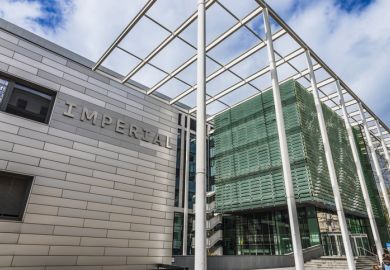
Imperial College London has banned beef and switched to seaweed-based packaging as it leans on its scientists and graduates to turbocharge its sustainability goals.
The university’s Sustainable Imperial Strategy that was launched earlier this year and runs until 2030 also includes carbon labelling to inform people of the environmental footprint of the product they’re buying and aims to increase plant-based meal choices to 40 per cent of the catering offering.
Another significant presence in Imperial’s canteens is Notpla, a seaweed-based packaging expected to replace more than 450,000 single-use plastic items on campus a year.
Designed by graduates from the Innovation Design Engineering programme, Pierre Paslier and Rodrigo Garcia Gonzalez, the compostable technology won the Earthshot Prize in 2022.
Fellow former students Sandra Go and Nikhil Dawda, whose start-up Emissiv is pioneering an exterior paint that reflects more than 95 per cent of sunlight, helping to keep buildings cool, have put their invention to the test on portacabins for construction workers at Imperial’s White City campus.
Meanwhile, the four co-founders of biomaterials company Ponda are partnering with their alma mater to make branded university clothing from wetland-grown plants.
The project is helping to create a revenue stream for wetlands regeneration – an “incredibly powerful mechanism for nature regeneration and carbon capture”, according to Harriet Wallace, sustainability strategy director for the university.
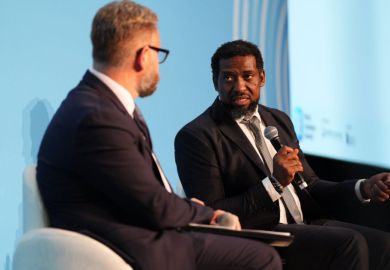
“It’s quite a febrile debate around climate change at the moment,” Wallace told Times Higher Education (THE). “There are people who don’t want to believe it’s happening, but there are also people who just think it’s too hard.
“That’s where I think the work that Imperial does in research and innovation to find easier solutions and to role model taking them up ourselves is really important because that’s what makes it feel possible to do the things that actually a lot of people know we need to do, but that can feel difficult.”
As part of the overall sustainability action plan unveiled in June, Imperial has also made several commitments to capital works.
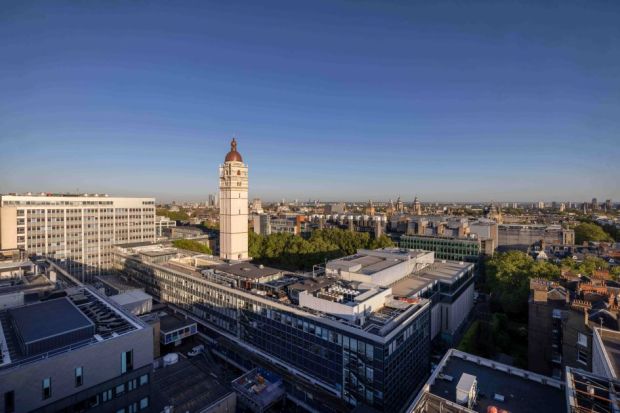
It has already removed any trace of its legacy steam heating and hot water network at its South Kensington campus, knocking down the overall carbon footprint by 5 per cent, and has just opened its first fossil-free research facility. Funded by a £10 million donation from the man for which it gets its name, the Dr Victor Phillip Dahdaleh Building will be home to work supporting the National Heart and Lung Institute.
On the postgraduate Silwood Park campus, meanwhile, Imperial has recently secured final planning approval for its new “community hub” – combining refectory, study and social spaces – designed to operate at net-zero carbon emissions. It is expected to open sometime in 2027-28.
Asked about budgeting for these works, Wallace said the sum will amount to a “multimillion-pound investment” but “over a protracted period”.
By the end of July 2025, Imperial had committed £79.8 million for contracted building projects across its spaces.
“What’s really interesting about this is that as you work through the projects, the amount you need to spend changes,” Wallace said. “Actually, some of the things we were planning to do are coming out cheaper than we’d originally feared.”
Wallace, former director of international research and innovation at the since-dismantled Department for Business, Energy, and Industrial Strategy, said: “I think there are a bunch of organisations who’ve kind of rushed at net zero and sustainability, set themselves incredibly ambitious goals for really good reasons, but are actually finding that those are not achievable. And it’s a little bit like the hare and the tortoise, right?”
“Imperial is very ambitious, but also very grounded,” she continued. “We didn’t set ourselves unachievable targets. We set ourselves ones that we thought we could achieve and we’re going slowly and steadily towards them.”
Register to continue
Why register?
- Registration is free and only takes a moment
- Once registered, you can read 3 articles a month
- Sign up for our newsletter
Subscribe
Or subscribe for unlimited access to:
- Unlimited access to news, views, insights & reviews
- Digital editions
- Digital access to THE’s university and college rankings analysis
Already registered or a current subscriber?