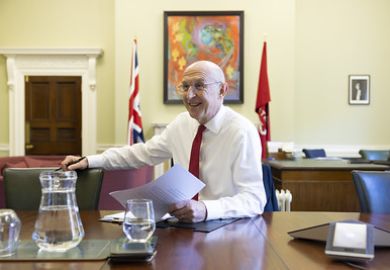
Top-ranking universities should give up on trying to present a united front and distance themselves from sector wrongdoing in order to negotiate “carve outs” on immigration policy, according to a former government adviser.
Iain Mansfield, now Policy Exchange’s director of research, said it was “simply bizarre” for a “fly-by-night business school to be treated in the same way as Imperial College [London]”.
Appearing at a Universities UK International conference on overseas student recruitment, the former special adviser to three Conservative education ministers said universities should aim for the “reverse” of Benjamin Franklin’s famous quote: “We must, indeed, all hang together or, most assuredly, we shall all hang separately.”
Mansfield said encouraging greater differentiation from their competitor providers might help more elite universities to convince policymakers to grant them sweeteners on a case-by-case basis when they are looking to attract more international students.
The government is currently pursuing a range of policies that are generally feared to be detrimental to universities’ efforts to recruit international students including a £925-per student levy and shorter graduate visas.
A recent announcement that students graduating from institutions with “strong labour market outcomes” will be allowed to stay and work longer in the UK showed how some could gain more favourable treatment, said Mansfield.
“This decision to hang together has been the policy of the sector in the UK in general, and it has resulted in you all being lumped together by my Home Office,” Mansfield told the event.
“I would suggest universities which consider they have a genuine value proposition of which they could convince the government of any party – it might be those in the top 200, maybe 400 [spots] of the international league tables – maybe should be negotiating specifically for carve outs... in order to get more generous terms.”
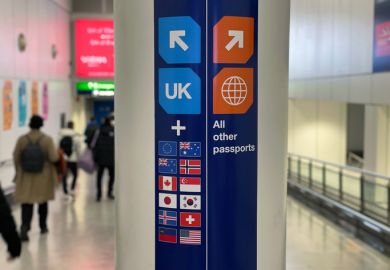
His comments follow updates to Basic Compliance Assessment rules, introduced in June, under which universities risk losing their sponsorship licence to recruit overseas students if more than 5 per cent of applicants are rejected.
The changes have coincided with reports of visa officials turning down far more applicants from international students, with some source countries especially affected, like Pakistan and Nigeria. It followed concerns among ministers that many institutions accepting students that had no intention of studying but were using the visa as a “backdoor” for immigration.
Heather Rolfe, a senior research fellow at British Future, said it was important for the sector to understand changing attitudes to international student numbers, noting that the majority of the public “do support a reduction in net migration” – s although added that many were not necessarily “thinking about students” as migrants.
Citing research by her organisation, Rolfe said: “There are concerns international students would be recruited in preference to home students...
“But then, when the public were asked about other options for funding universities, [or asked] what should universities do if they can’t recruit international students, people say, actually, they would rather keep international students, rather than increasing funding for home students.”
Register to continue
Why register?
- Registration is free and only takes a moment
- Once registered, you can read 3 articles a month
- Sign up for our newsletter
Subscribe
Or subscribe for unlimited access to:
- Unlimited access to news, views, insights & reviews
- Digital editions
- Digital access to THE’s university and college rankings analysis
Already registered or a current subscriber?