“The US is falling apart…this president and his crew are destroying all of what made America great.”
This lament from Nobel prizewinning German astrophysicist Reinhard Genzel – who for many years had a part-time full professorship at the University of California, Berkeley – was far from an isolated cri de coeur at the recent Hong Kong Laureate Forum.
On the crowded conference floor, Trump-induced funding chaos, visa restrictions and tightened security protocols around overseas collaboration were widely discussed by the hundreds of attending early-career researchers and handful of senior scientists.
Such comments were particularly noteworthy given the location of the event in a city that often bills itself as an interface between East and West. If the US has shot itself so disastrously in the foot, the obvious question is whether its place at the top of the global scientific pecking order is about to be taken by China.
By some measures, that has already happened. Volume is one of them. China nearly tripled its output of science and engineering papers between 2012 and 2022, according to the US National Science Foundation’s indicators, accounting for 26.9 per cent of global output in 2022, compared with the US’ 13.7 per cent.
The quality of Chinese science is rising, too. China has led the world on total citation count since 2020, according to Scimago’s 2024 country rankings. It has also led the US on citations per paper since 2021. And, since 2023, it has topped the Nature Index count of papers in top journals; its proportion of the total rose by 12.7 per cent in that year (compared with a 5.9 per cent fall for the US) and 17.4 per cent between 2023 and 2024 (when the US fell by 10.1 per cent).
China’s spending on R&D in its economy as a whole is also rising steeply. Although the US was still the largest absolute spender in 2023, according to the Organisation for Economic Cooperation and Development, China spent nearly as much: its expenditure ($917 billion (£687 billion)) was 96 per cent of the US’, up from 72 per cent 10 years earlier – although on market exchange rates China’s spending was only 49 per cent of the US’, up from 42 per cent in 2013.
Meanwhile, US science spending has gone into retreat since Donald Trump returned to power in January. According to a recent analysis by The New York Times, the country’s major agencies are funding fewer grants in every area of science and medicine, amid a crackdown on “woke” research topics and the freezing of grants for researchers at some major US institutions, including Harvard University.
Spending at the biggest agency, the National Institutes of Health, has declined by 13 per cent this year, compared with the 2015-24 average, while the number of individual grants awarded has declined by 22 per cent.
For the NSF, the declines are even bigger: 18 per cent in spending and 25 per cent in grant awards. In addition, the Trump administration is proposing to slash the agencies’ budgets by 40 and 55 per cent respectively for 2026. Those cuts have been rejected by Congress, but a resolution has not yet been reached.
“If the question is can China become the next great scientific hub, my answer is yes,” said John Peacock, professor of cosmology at the University of Edinburgh, pointing to the country’s “immensely high” funding levels and the fact that Chinese scientists “have really figured out how to do the things that are needed”, including building major facilities and nurturing talent pipelines.
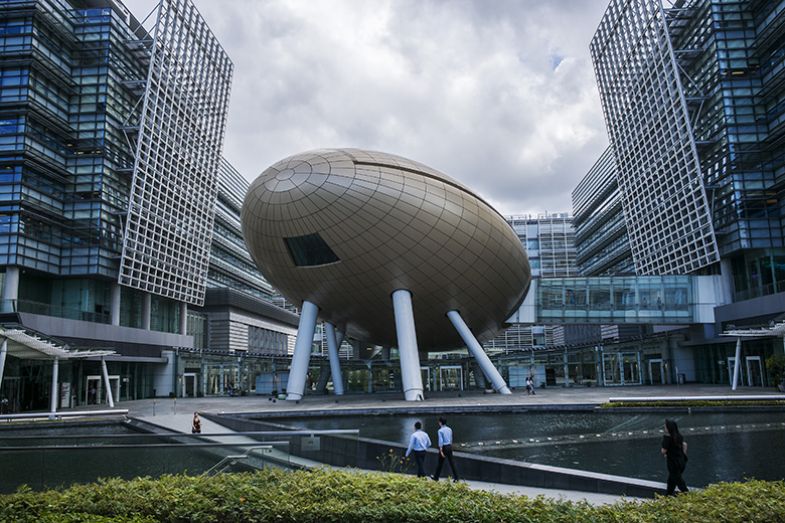
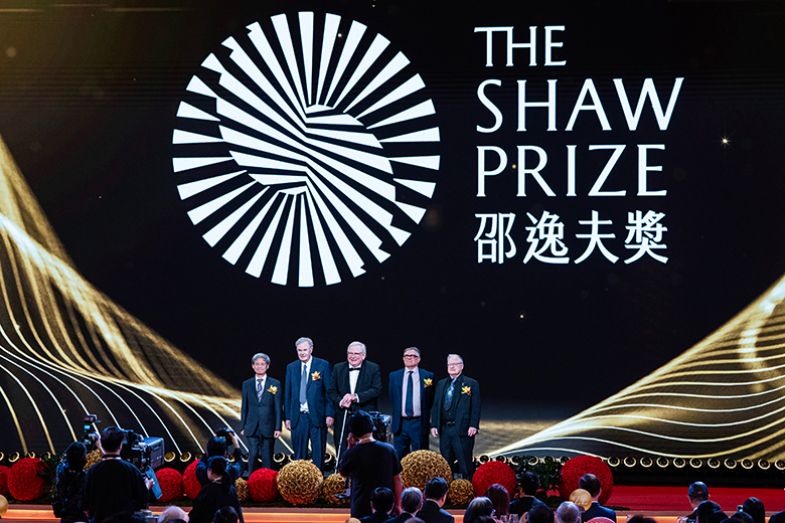
In 2014, Peacock shared the $1.2 million Shaw Prize, established in 2002 by the late Hong Kong billionaire Run Run Shaw and often described as the “Nobels of the East”. The Laureate Forum – sponsored by another Hong Kong billionaire, Lee Shau-kee – aims to bring together Shaw Prize winners with promising young scientists from around the world, and its Hong Kong Science Park location – all reflective glass, clipped shrubs and water features – is another emblem of the region’s lofty scientific ambitions.
The forum describes itself as “an international platform to encourage cross-cultural dialogue, promote collaboration and understanding among diverse scientific communities”.
Yet one China-related metric that has conspicuously failed to maintain a stratospheric trajectory is international collaboration. Indeed, according to data from Clarivate’s annual G20 scorecard, only 20 per cent of the more than 700,000 papers published by China-based researchers in 2023 involved international co-authorship – the lowest proportion in the previous decade and down from a peak of 27.4 per cent in 2018.
It is significant that of the US-China collaborations that remain, Chinese researchers take the lead role in almost half (45 per cent), according to recent research, illustrating their rising global prestige. But the declining overall rate is hard to ignore given the role that international collaboration is widely believed to play in boosting scientific quality – reflected in factors such as higher citation rates.
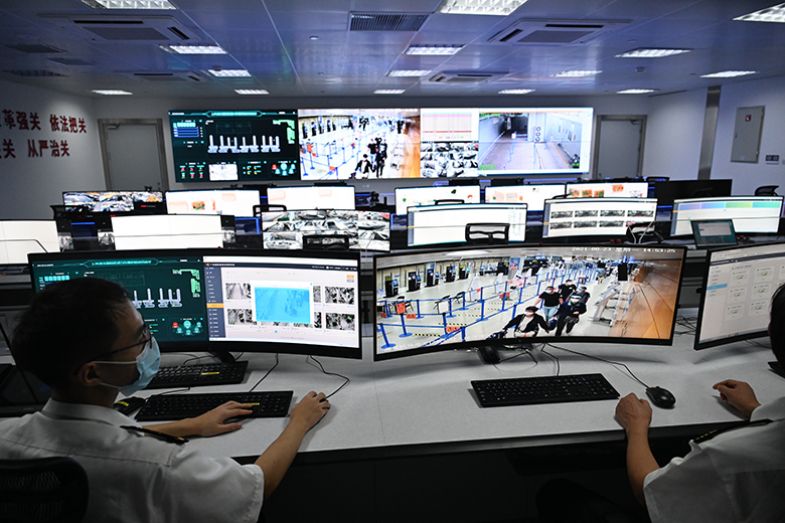
No doubt the geopolitical situation is a big factor for the downturn in collaboration with China. Many Western delegates at the forum expressed wariness about travelling to the country or collaborating with Chinese researchers given governments’ increased scepticism about the merits of such openness amid concerns about national security.
“Mutual suspicion means that the governments put lots of barriers in the way of exchange of people,” commented Simon White, a Shaw Prize winner in 2017 and the director of the Max Planck Institute for Astrophysics before his retirement in 2019. Western researchers now travel to China with “burner phones and a separate laptop”, he said, because “they fear they’re being monitored” there by the Chinese Communist Party.
But Western governments are also keeping a close eye. Australia’s 2018 foreign interference laws required universities to register certain partnerships and funding sources linked to foreign governments, including China. Several joint programmes were quietly discontinued, Confucius Institutes came under heightened scrutiny, and institutions adopted much more conservative positions on China-related research. Scholars describe a “chilling effect” that now shapes fieldwork, collaboration and long-term research planning; Chinese research partnerships on the Australian Research Council’s Discovery Projects, its biggest annual funding stream, fell from a typical 50-80 to 23 in 2022.
In the UK, controversy over the use of Huawei 5G technology in 2020 triggered a broader mistrust of China, with parliamentary committees calling on universities to review Chinese links, ministers warning of “undue foreign influence”, and institutions increasingly forced to conduct exhaustive due diligence on research partnerships. That caution is still palpable, but the mood is shifting a little.
In November 2025, science minister Patrick Vallance travelled to Beijing and signed a revised bilateral science agreement, under which UK–China collaboration will now be refocused on “non-sensitive” areas, such as health, climate, planetary science and agriculture, deliberately excluding sensitive technologies like satellites, robotics and remote sensing. Vallance argued that the UK must pursue a “pragmatic, mutually beneficial relationship”, acknowledging China as “a strong scientific nation”, while emphasising that cooperation must align with national security safeguards.
That slight thawing of attitudes is reflected in the figures. According to a recent Clarivate report, China’s co-authorship rates with the UK and Australia have started to recover after dips earlier this decade.
However, Chinese collaboration with the US took a much sharper dip following the Department of Justice’s China Initiative, launched during the first Trump presidency. The programme led to a series of high-profile investigations into academics with China links. Although several of the cases against academics collapsed and the initiative was formally terminated in 2022, its effects linger. US researchers describe a “long shadow” that continues to discourage collaboration, with many now avoiding joint projects, shared appointments or data exchanges with Chinese institutions for fear of political scrutiny.
As a result, collaboration figures barely recovered even in the Biden years, according to the Clarivate analysis. And the NSF’s 2024 Science and Engineering Indicators reveal that the absolute number of US–China co-authored papers peaked in 2017 and had fallen by nearly 20 per cent by 2022. Nor is there any sign that attitudes will change during the second Trump administration, with further restrictions on collaboration being proposed in Congress.
“There are very strict limits for US citizens going to China,” said Edinburgh’s Peacock. “You’re not going to get lots of Americans going to China at the moment.”
By the same token, lots of Chinese scientists are going back to China, as a result of the tensions. For instance, “Many Chinese research mathematicians have gone back”, said mathematician Nigel Hitchin, Savillian professor of geometry at the University of Oxford and a Shaw Prize winner in 2016.
According to an analysis by Stanford University researchers, departures of China-born, US-based scientists increased by 75 per cent in the wake of the China Initiative, with two-thirds of the departing scientists moving to China. Of those that remained, more than three in five were considering leaving.
The question is whether flatlining or declining collaboration with global science’s traditional leaders will significantly stall China’s assumption of global scientific leadership in its own right. After all the country is vast, with, by now, many options for high-quality collaborations within its own borders.
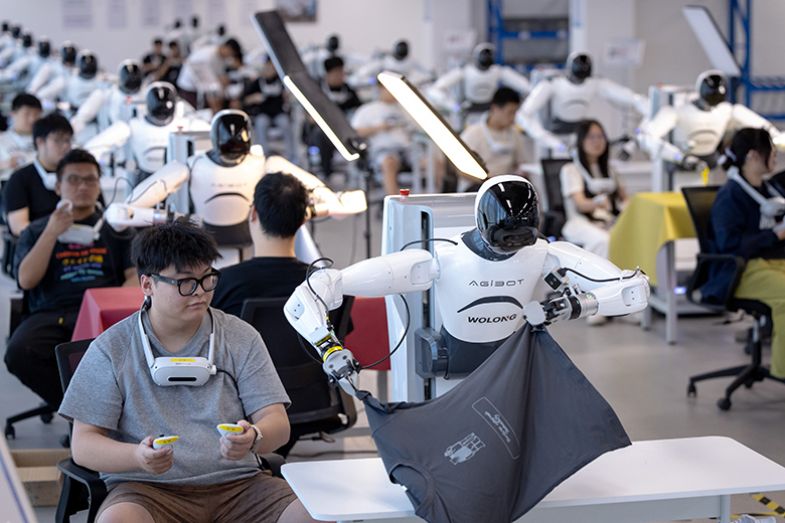
China’s prowess in AI – rivalled only by the US – may also stand it in good stead. Countries with the computational power to train increasingly large models will be those making the big scientific leaps, argued physicist Alexander Wai, president of Hong Kong Baptist University (HKBU), a trend that “will widen the gap” between the US and China and other nations.
At Hong Kong Polytechnic University, AI education has been compulsory for every undergraduate since September 2022, and the institution opened a new Faculty of Computer and Mathematical Sciences and an Academy for Artificial Intelligence this year. PolyU’s president Jin-Guang Teng predicts this fast adoption of AI will soon pay dividends, even “changing the paradigm of research”, including in disciplines which hitherto have made only limited use of mathematical approaches. For example, in the humanities and social sciences, said Teng, scholars will increasingly be able to work with data in ways that give their fields “a more mathematical perspective”, altering how questions are framed and answered.
Yet overseas institutions have even become “sensitive” about working with Hong Kong universities in certain fields, he conceded, including AI. That dissonance between Hong Kong’s positioning as open and globally connected and the wariness with which it is now regarded in the West was a recurring theme in discussions at the forum. That probably reflects the introduction in 2020 of Hong Kong’s National Security Law, which is widely perceived to have increased China's ideological control over Hong Kong. Yet “academic freedom is well protected” in the territory, Teng said.
The impact of the second Trump administration has certainly been felt in Hong Kong, HKBU’s Wai concurred. He described travelling to a major university in Texas to build support for a bid for a joint medical school. Faculty were enthusiastic, but the partnership collapsed when the state’s governor, Greg Abbott, banned public institutions from working with China. “Then all the efforts are gone,” he said.
But Hong Kong universities’ proximity to China’s technology heartland of Shenzhen – home to TenCent and Huawei – means the institution is still a massive pull for potential overseas academic partners, PolyU’s Teng said. Access to the mainland is “very important … in terms of economic and technological power”, he said, on the potential for Hong Kong-based researchers to transfer technologies into Chinese supply chains.
Moreover, several forum delegates suggested that the withdrawal of the US from international collaboration on many fronts potentially makes collaboration with China more attractive for those who would previously have preferred the US.
For instance, Genzel said collaboration between Nasa and the European Space Agency (ESA), had dropped to a “minimum” because of the current political situation. A collaboration with the China National Space Administration (CNSA) could “end up restoring the capability that the Americans will take away”. But it is another question whether the CNSA would want to partner with ESA, he conceded: “There is the question of whether the Chinese government prefers to have their own triumph.”
Moreover, whatever the practical allure of replacing US collaboration with Chinese for European and Australian researchers, the geopolitical difficulties continue to loom large. As White, the astrophysicist, noted, “the obstacles are not about the science, but about the politics”.
Several scientists at the forum stressed that sustaining global leadership, not just domestic excellence, ultimately relies on the kind of open exchange now under strain. But whether those obstacles hold back Chinese science more than Western science remains to be seen – particularly given the US’ internal issues.
“Academic freedom and basic research:…that is our bread and butter,” said Peter Walter, a German-American molecular biologist who shared the 2014 Shaw Prize in life science and medicine. “We need to talk. We need to foster each other. We help each other because we want to drive science forward. We had much better connections…a couple of years ago…Hopefully that pendulum will swing back the other way.”
Register to continue
Why register?
- Registration is free and only takes a moment
- Once registered, you can read 3 articles a month
- Sign up for our newsletter
Subscribe
Or subscribe for unlimited access to:
- Unlimited access to news, views, insights & reviews
- Digital editions
- Digital access to THE’s university and college rankings analysis
Already registered or a current subscriber?