US universities should give money to their local communities to be “good neighbours”, not to boost public relations, scholars have said.
Most institutions are exempt from paying property taxes and are regularly asked to contribute money to their local area through payments in lieu of taxes (PILOT) or grants.
Yale University recently announced that it would pay $230 million (£173 million) over the next seven years in voluntary contributions to the city of New Haven – which it said was the largest payment of its kind anywhere in the country.
With property taxes central to the health of public schools, author and sociologist Sara Goldrick-Rab said wealthy universities are indirectly starving the local school system if they refuse to pay PILOTs.
“If a university has enough money to build a luxury dorm or grow a massive endowment, it has enough money to ensure the local fire department stays open and the local schools are funded. Universities shouldn’t do it to improve their reputations, but rather to live their stated values.
“You cannot claim to value education while your tax-exempt status makes it harder for the neighbour’s child to have a functioning library or a modern classroom.”
Because universities often expand into low-income neighbourhoods, driving up rents and displacing long-term residents, Goldrick-Rab said PILOTs are also ways to mitigate the harm of gentrification.
“It’s a mechanism to ensure the university’s presence actually creates a shared prosperity rather than just an ivory tower surrounded by a moat of housing insecurity.”
Yale’s announcement comes just a month after Northeastern University agreed to increase its payments to Boston by 40 per cent, and Johns Hopkins University doubled its payments to Baltimore in November.
Lily Geismer, professor of history at Claremont McKenna College, said all three institutions have had recent lay-offs which hurt local workers, and have historically had “fraught relationships” with their cities.
Geismer said the growing use of PILOTS can undoubtedly help enhance public opinion of universities at the local level but to be perceived as more than simply a public relations effort, she said institutions should make contributions annually.
“It would be important in starting to address longstanding tensions and inequities and to demonstrate a seriousness and enduring commitment. A one-off gift might backfire and cause even further town-gown tension.
She said this type of donation could become a model for other universities and non-profits and prove vital in ensuring a city’s ability to continue to provide key services, given many have been constrained by cuts in federal funding.
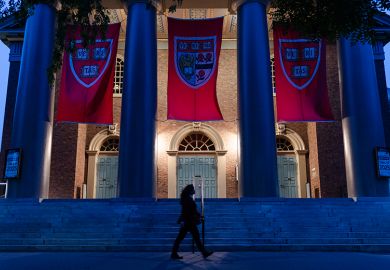
Last year, Harvard University cited federal funding uncertainties behind its decision to pay the city of Cambridge $6 million but not commit to a long-term PILOT.
Despite the fanfare around some PILOTs, Davarian Baldwin, professor of American Studies at Trinity College, said the money paid by universities will still fall well short of the 25 per cent standard property tax they would pay if not exempt.
Baldwin said universities facing pressure “from above” via the White House, and “pressure from below” from grassroots campaigners, are trying to create a “public relations safety net”.
“I think the calculation comes with to what degree is the presidency watching us, to what degree are grassroots organisations mobilised.
“They’re running these calculations from a public relations standpoint, and not from a position of goodwill of being a good neighbour.”
Register to continue
Why register?
- Registration is free and only takes a moment
- Once registered, you can read 3 articles a month
- Sign up for our newsletter
Subscribe
Or subscribe for unlimited access to:
- Unlimited access to news, views, insights & reviews
- Digital editions
- Digital access to THE’s university and college rankings analysis
Already registered or a current subscriber?