Secret surveillance of Chinese students on UK campuses should be seen as a grave threat to student safety and well-being rather than just an attempt to stifle free speech, an anti-censorship campaigner has argued.
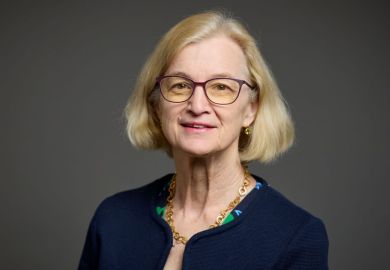
Michelle Shipworth, who teaches at UCL’s Bartlett School of Environment, Energy and Resources, said she was increasingly worried by reports that comments from Chinese students in seminars in UK universities were being relayed to Beijing authorities by fellow classmates.
“Any Chinese student who deviates a tiny bit away from being 100 per cent positive [about China] is taking a risk – things happen to their families,” said Shipworth, speaking at a meeting of King’s College London’s Free Speech Society, a student-led organisation established in 2025 to combat self-censorship and encourage respectful and open debate on contentious topics.
“I know what has happened to their families and it is completely life-changing for what were inconsequential comments or very low-level dissent,” said Shipworth.
She claimed the scrutiny of in-class remarks was led by UK branches of the Chinese Students and Scholars Association, which brings together Chinese students and staff on campus.
Groups such as Human Rights Watch and the Human Rights Foundation have criticised this student-run network – linked to the Chinese Communist Party – for monitoring overseas Chinese students and scholars and reporting dissent or criticism.
“Chinese students tell me that they speak out when they see a Chinese or hear a Chinese voice – one man said he didn’t even know if he could trust his girlfriend at the time,” said Shipworth.
With four out of five students coming from China on some UCL courses, this was a problem faced by a “whole welter of people who now feel they can’t speak up,” said Shipworth, who was pressured in late 2023 into dropping a teaching exercise related to China following a student complaint. In February 2024 senior leaders at UCL admitted her academic freedom had been unfairly restricted.
“These students are holding up [financially] the university and it makes me angry that we are not protecting our students’ safety,” said Shipworth.
In October 2025 England’s free speech champion Arif Ahmed said he was increasingly concerned by the “coercion or harassment” of foreign students over opinions voiced in seminars which have been passed on by classmates to government officials.
His remarks came amid reports families of Chinese students at UK universities have been contacted by authorities over critical comments secretly recorded by other students. A study published by the UK-China Transparency thinktank in August 2025 also stated that UK academics had been warned by Chinese government officials not to discuss certain subjects in their class – a claim denied by the UK’s Chinese embassy.
Times Higher Education has also contacted the UCL branch of Chinese Students and Scholars Association for comment.
Shipworth’s comments follow a rare public alert by the national security agency MI5, issued on 30 September, which warned that over 100 academics linked to UK institutions have unknowingly contributed to projects funded by a research institute “with very strong ties” to China’s intelligence service.
Among the institutions later identified include UCL, Queen Mary University of London, Birkbeck, University of London and the universities of Surrey, Warwick, Leicester, Hull, Southampton, Strathclyde, Lincoln, Sheffield, Cambridge, Manchester, Middlesex and Exeter.
Register to continue
Why register?
- Registration is free and only takes a moment
- Once registered, you can read 3 articles a month
- Sign up for our newsletter
Subscribe
Or subscribe for unlimited access to:
- Unlimited access to news, views, insights & reviews
- Digital editions
- Digital access to THE’s university and college rankings analysis
Already registered or a current subscriber?