Spanish universities are stepping up their presence in China with a flurry of new campuses and institutes as they seek closer ties with the country’s research and technology sectors.
Spain has historically had a relatively limited academic presence in China, but several of its major institutions have established or announced new bases in the country recently.
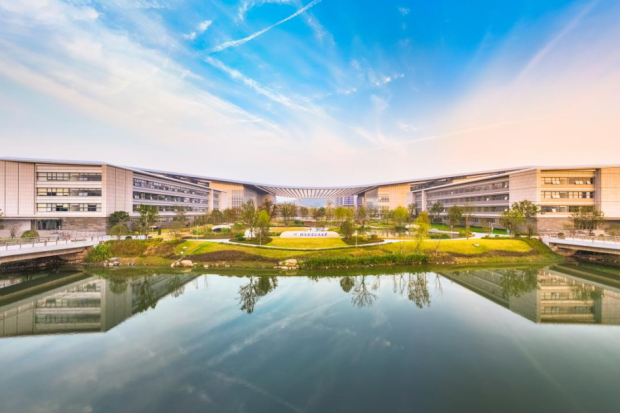
The Polytechnic University of Valencia (UPV) this month officially opened the Beihang Valencia Polytechnic Institute in Hangzhou, developed with Beihang University. UPV describes it as “the first permanent academic presence of a Spanish university in China”. Courses at the institute, focused on subjects including artificial intelligence and engineering, will be taught in English. Nearly 400 students have enrolled in the bachelor’s and master’s degree programmes on offer, according to the university.
Just days earlier, the University of Barcelona announced plans to open a campus in China in partnership with Harbin Institute of Technology, one of the country’s leading engineering and technology universities. A statement from the university said the HIT-UB Joint College will be located in the eastern province of Shandong and offer master’s degree programmes in subjects such as marine sciences and analytical chemistry.
The expansion comes after Spanish prime minister Pedro Sánchez’s visit to Beijing in April, when Spain and China agreed to strengthen cooperation in science, technology and education, including through the development of joint university campuses for teaching and research.
Joan Guàrdia, rector of the University of Barcelona, told Times Higher Education that expanding in China was a “natural step” in the university’s internationalisation strategy.
“China is today one of the world’s largest and most dynamic research and higher education systems, and a university with global ambitions cannot be absent from that conversation,” he said.
Last year, the Complutense University of Madrid inaugurated the WUST-Madrid Complutense Institute in Wuhan with the Wuhan University of Science and Technology. The institute, which opened with about 300 students, offers programmes in areas including artificial intelligence, data science and applied statistics.
The expansion also comes as European research policy is placing more emphasis on technological development and the ability to turn basic research into innovation – an agenda that Guàrdia said was affecting how universities think about international partnerships.
There was now a greater emphasis across Europe on “translating knowledge into solutions” in areas including sustainability, health and technology. For universities such as Barcelona, that meant strengthening links with institutions with strong engineering and technological expertise, he added.
“China is one of the world’s leading producers of scientific research and technological development, so engaging with its strongest institutions is part of being a relevant research university today,” Guàrdia added.
There has also been scrutiny in Brussels over universities’ academic links with China, particularly in strategically sensitive areas. But Guàrdia said Barcelona’s collaboration would be “selective and responsible” and follow European guidance on research security. “Openness and responsibility are not opposites. Good international collaboration requires both,” he said.
José E. Capilla, rector of the Polytechnic University of Valencia, said the university’s decision to open a campus in Hangzhou was the culmination of more than three decades of cooperation with Chinese universities.
“We expect the campus to make our relationship with China much more intensive and, importantly, more bidirectional,” he said. “It will create new opportunities for Chinese students to study on programmes jointly developed by UPV and Beihang, while also giving Valencian and Spanish students a much closer gateway to China.”
He said being based in Hangzhou, one of China’s major technology hubs, would allow the university to strengthen its research collaborations, as well as develop closer relationships with companies.
China had become “one of the world’s major centres of scientific, technological and industrial development”, he added, making it “a natural partner” for universities focused on engineering and innovation.
Register to continue
Why register?
- Registration is free and only takes a moment
- Once registered, you can read 3 articles a month
- Sign up for our newsletter
Subscribe
Or subscribe for unlimited access to:
- Unlimited access to news, views, insights & reviews
- Digital editions
- Digital access to THE’s university and college rankings analysis
Already registered or a current subscriber?