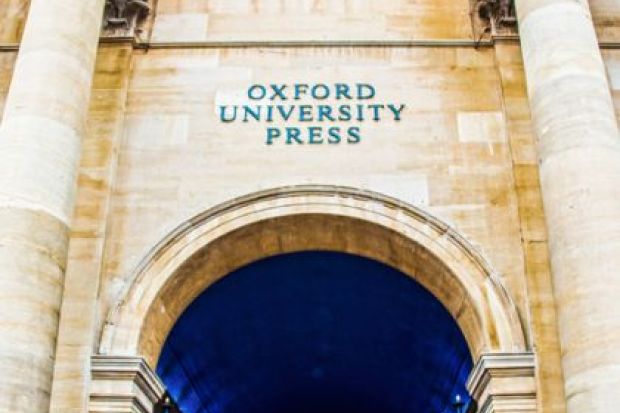
Oxford University Press India has apologised for “unverified statements” contained in a book about the 17th-century Indian ruler Chhatrapati Shivaji Maharaj, more than two decades after its publication triggered protests, a ban and criminal complaints.
The apology relates to Shivaji: Hindu King in Islamic India, written by American academic James Laine and published in 2003.
In a public notice issued on 6 January, the Indian arm of the publisher acknowledged that certain statements in the book were “unverified”, adding: “We sincerely regret publishing those statements”.
Shivaji, whose full name was Shivaji Shahaji Bhosale, was a warrior king in western India whose resistance to the Mughal Empire made him a hero in his lifetime and a powerful cultural and political symbol today, particularly for Hindu nationalist groups.
Across India, Shivaji’s name has been given to a range of places and public infrastructure, including transport facilities, roads and civic landmarks.
The book’s title and framing provoked anger soon after publication, especially in Maharashtra, where critics argued that describing Shivaji as a “Hindu” king ruling in “Islamic India” misrepresented his legacy.
Critics argued that Shivaji ruled as a territorial leader rather than a religious figure, pointing to an administration that included Muslims and policies that safeguarded religious sites.
Tensions intensified in January 2004 after more than 150 protesters attacked the Bhandarkar Oriental Research Institute in Pune, accusing it of assisting Laine’s research. At the time, the institute denied any wrongdoing.
The Maharashtra government subsequently banned the book, and state officials said they would seek the arrest of Laine, a professor of religious studies at Macalester College in Saint Paul, Minnesota, through Interpol, a move that drew international concern over academic freedom.
The latest apology follows a long-running legal case initiated in 2005 by Udayanraje Bhosale, a descendant of Shivaji and the 13th hereditary Chhatrapati.
Bhosale filed a private complaint in a court in Maharashtra’s Satara district against Sayeed Manzar Khan, then managing director of Oxford University Press India, and three others, alleging defamation of the ruler.
The case was later heard at the Kolhapur bench of the Bombay High Court. In December 2025, lawyers representing Khan and the others accused told the court that their clients would issue an apology to Bhosale and publish it in widely circulating Marathi and English language newspapers.
In its 6 January statement, which is attributed to its former manager director Khan, OUP apologies to Bhosale and the public at large “for any distress and anguish caused to him” .
Register to continue
Why register?
- Registration is free and only takes a moment
- Once registered, you can read 3 articles a month
- Sign up for our newsletter
Subscribe
Or subscribe for unlimited access to:
- Unlimited access to news, views, insights & reviews
- Digital editions
- Digital access to THE’s university and college rankings analysis
Already registered or a current subscriber?