Australian universities will be forced to adopt definitions of three types of racism amid a fresh wave of governance obligations imposed on the sector.
New rules will require universities to separately define antisemitism, Islamophobia and racism against indigenous Australians as part of broader efforts to “maintain safe and inclusive” environments for students and staff.
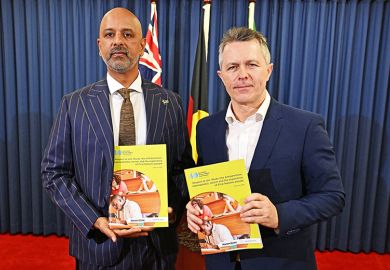
Education minister Jason Clare said a “new anti-racism standard” would compel administrators to develop transparent complaints processes and “enable representation and participation in decision making”.
Universities will also have to “provide clear guidance” to students and staff on how to improve safety and security on campus and online. Failure to comply could lead to court action and fines, pending forthcoming legislation empowering the higher education regulator to fine institutions directly.
The new standard was foreshadowed by last December’s terrorist attack at Bondi Beach. It becomes law as eight new governance “principles”, also trailed last year, are incorporated into the higher education standards by which universities and colleges are regulated.
Repeating an oft-used phrase, Clare said anybody unaware of challenges in university governance must have been “living under a rock”.
“There is no place for antisemitism or any type of hate in our universities or anywhere else,” he said. “This is about making sure our universities meet the standards their students, staff and whole communities expect.”
Clare said the sector had been “caught flat-footed” by the abuse, intimidation and harassment inflicted on Jewish students. “In fairness to the universities, some of them have made important improvements over the course of the last few years, but not enough,” he told Sky News. “There’s a lot more to do.”
University administrators, academics and students are among the witnesses set to testify to the Royal Commission on Antisemitism and Social Cohesion, which has scheduled a week of public hearings examining “lived experiences” of antisemitism on campus.
The Melbourne hearings, commencing on 13 July, will also look at universities’ responses to antisemitism and “reports, surveys and studies” on its nature and prevalence.
The University of Sydney has confirmed that it will be appearing. “We have made important progress over the last two years but we know our work is not yet finished,” it said.
The amended standards also require public universities to publish the outcomes and decisions of their governing council meetings, along with details about their spending on consultants, remuneration of vice-chancellors and any external roles held by vice-chancellors or other senior executives.
Universities will also be required to report annually to the regulator on how they have upheld the eight new principles, or why they have failed to do so. The principles, adopted on the recommendation of the Expert Council on University Governance, include “accountability”, “transparency” and “diversity of perspectives”.
The government has also announced that there will be no change to the “national planning level”, which guides numbers of fresh international students, with next year’s figure to remain at 295,000 – about 8 per cent below the immediate post-pandemic peak. The newly established Australian Tertiary Education Commission will take on the job of enforcing the quota from 2027.
“The government will not back off from managing the size and the shape of the onshore international student market and ongoing moderation in student numbers towards a more sustainable sector,” said the assistant minister for international education, Julian Hill.
Register to continue
Why register?
- Registration is free and only takes a moment
- Once registered, you can read 3 articles a month
- Sign up for our newsletter
Subscribe
Or subscribe for unlimited access to:
- Unlimited access to news, views, insights & reviews
- Digital editions
- Digital access to THE’s university and college rankings analysis
Already registered or a current subscriber?