An appendix to a damning exposé of racism at Australian universities, suggesting it overestimates the incidence of campus racism at least twofold, has been removed from public view on the orders of the Australian Human Rights Commission (AHRC).
The 420-page technical document provided a detailed analysis of last year’s “Racism@Uni” survey. The document had been posted on the website of the Australian National University’s Centre for Social Policy Research (Polis), which developed the survey.
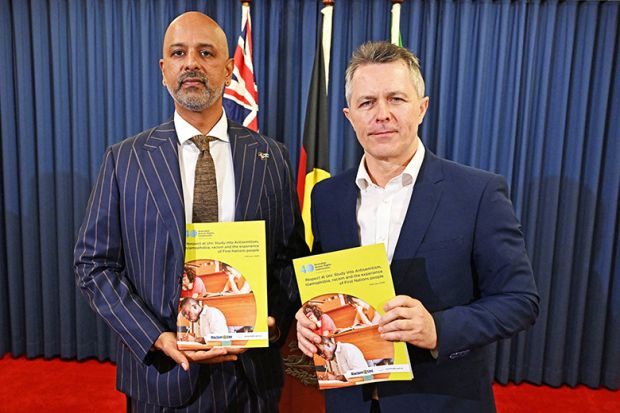
The survey formed the backbone of the AHRC’s “Respect at Uni” study, which reported that racism was “deeply entrenched” in the sector’s policies and practices, with 15 per cent of respondents saying they had personally experienced racism at university and 70 per cent reporting “indirect” racism. Race discrimination commissioner Giridharan Sivaraman said the findings were “deeply troubling” and “reveal that universities are falling short of their duty of care”.
Polis’ technical document offers a wealth of information that is not available in the AHRC report, including a detailed analysis of response bias in the survey. A questionnaire conducted by Polis found that students were more than twice as likely to have completed the survey, and staff were four times as likely, if they had personally experienced racism on campus.
“These patterns strongly suggest that the…survey disproportionately attracted participants with direct experiences of racism,” the Polis document says. “Its published figures…should be treated as an upper bound rather than an accurate estimate.”
The technical document has now been removed from the Polis website, after the AHRC issued a legal demand for it to be taken down. Polis director Matthew Gray said his centre had complied “pending university consideration of how to respond”.
Gray said the technical document had been referenced as “Appendix E” in the AHRC report’s endnotes. “You would assume…they wanted it to be in the public domain because they’re referring people to it,” he said.
An AHRC spokeswoman did not say why the commission had issued the legal directive. She said the document and “full survey dataset” would be made available on a public research repository following “an extensive process of deidentification”. Gray said the Polis material did not identify any individuals.
The Polis document, unlike the AHRC report, compared the incidence of reported racism at universities with background rates in the broader community. It found that the community rates were more than twice as high.
International students were less likely to encounter racism at university than in public transport, social media, shops, housing or employment, the document says.
Its “key finding” was that the high levels of racism reported at universities “reflect wider racism across the Australian community, rather than simply being specific to universities”.
Nevertheless, racism “impacts negatively” on careers, study and mental health and is “deleterious to people’s participation at university and their sense of belonging”, the document says.
The AHRC did not include any links to the Polis document in material promoting the study, but said it had referenced the document “throughout” its report. The 248-page report contains two references to the document on page 239.
Education minister Jason Clare has vowed to change the threshold standards, which universities must comply with to maintain their registration, to require universities to show that “they are taking action against racism”. His office did not say whether he had been made aware of the Polis document, or read it.
Times Higher Education asked the AHRC why its report had devoted the same amount of space to separate analyses of the Māori and Pasifika communities – who constituted 0.5 per cent and 1.1 per cent of respondents respectively – as a combined analysis of Asian respondents, who made up 34 per cent of the sample. The commission offered no response.
“[There was a] heavy focus, as perhaps you’d expect, on a small number of particularly sensitive groups,” said Monash University policy expert Andrew Norton. “But…all the major international student source countries were put into this one Asian group. This is about a few maybe fashionable victim groups rather than the broader student experience.”
The Council of Australian Postgraduate Associations said the AHRC report lacked “granular and statistical” data such as comparisons between different study levels. “This severely limits our ability to use the report to inform robust policy changes,” said president Jesse Gardner-Russell.
“We look forward to the full release of the study data so that postgraduate students can develop evidence-based and intersectional recommendations which combat the unique ways postgraduates experience racism.”
Salvatore Babones, a quantitative comparative sociologist at the University of Sydney, said the survey’s “census-based” research design was known for generating response biases. The AHRC had marketed the survey using “language which appeals to activists”, according to Polis.
Babones said the survey’s “very broad view” of racism had included respondents’ feelings of being unable to express their views openly or getting lower marks than they deserved. “The study also measured ‘indirect’ experiences of racism that occurred when students ‘witnessed racism directed not at them but at other groups’. It’s hard to know if these indirect experiences constituted racism at all.”
Register to continue
Why register?
- Registration is free and only takes a moment
- Once registered, you can read 3 articles a month
- Sign up for our newsletter
Subscribe
Or subscribe for unlimited access to:
- Unlimited access to news, views, insights & reviews
- Digital editions
- Digital access to THE’s university and college rankings analysis
Already registered or a current subscriber?