The emergence of courses about Korean culture, including K-pop, at US institutions highlights the “incredible” growth of the field and will provide a gateway to discuss wider topics, including global politics, according to academics.
The University of Southern California (USC) is set to launch its first course devoted entirely to a single K-pop artist.
From next spring, students at the Los Angeles institution will be able to enrol on “Crooked Studies of K-pop: The Case of G-Dragon”, a new class examining the music career and cultural impact of the South Korean musician.
Often referred to as the “King of K-pop”, G-Dragon first rose to prominence as the leader of the South Korean boy band BigBang, which went on to become one of the best-selling boy bands in the world.
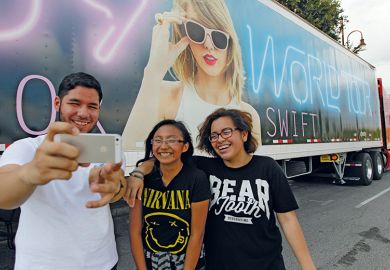
Although this marks the first time a full-credit course focused on a K-pop artist has been available at the school, the programme mirrors others on offer in the US such as one on Beyoncé at Yale University and Taylor Swift at Harvard University.
It follows a broader pattern in which universities have increasingly embraced contemporary popular culture – from pop music to celebrity and fandom – as a legitimate subject of academic enquiry.
The new class at USC has also drawn attention from scholars who say it highlights the growing academic recognition of Korean popular culture.
CedarBough Saeji, assistant professor of Korean and East Asian studies at Pusan National University, said, in general, higher education institutions have struggled to keep up with developments in popular culture.
“Universities are quite slow to adapt to cultural change, and the way that contemporary youth have rejected traditional ideas of cultural capital, or found cultural capital within popular culture, has not immediately meant the ‘ivory tower’ approves new courses.”
The new course, he continued, “indicates a lot about the level of student interest in Korea, and the maturation of academic discourse on K-pop.
“The field has grown incredibly in the past few years. The approval for this course also shows that even a major school like USC sees studies of Korean media as important.”
Henry Jenkins, professor of communication, journalism and cinematic arts at USC, said “almost all” undergraduates in the school – domestic and international alike – were “following K-pop closely”, as interest in international content, such as anime and Bollywood, soars among students.
“We are responding to shifts in demand and interests in our student bodies,” said Jenkins.
Works of popular culture “provide a gateway through which to examine a broad range of topics from media industries to consumption, from global politics to gender and sexuality, from religion to performance styles,” he said.
Courses on K-pop are already taught at Duke University, UC Berkeley, MIT and Yale, as well as universities in Canada, Europe and South Korea. Jenkins said he expected more universities to follow.
At Yale University, Grace Kao, professor of sociology, said that growing student and faculty interest had led to more courses on K-pop and the Korean Wave, noting that instructors could use such topics “to talk about the cultural production of music and other media, South Korea, soft power, race and nationalism, images of Asia and Asian America, community-building, fandoms and parasocial relationships”.
Register to continue
Why register?
- Registration is free and only takes a moment
- Once registered, you can read 3 articles a month
- Sign up for our newsletter
Subscribe
Or subscribe for unlimited access to:
- Unlimited access to news, views, insights & reviews
- Digital editions
- Digital access to THE’s university and college rankings analysis
Already registered or a current subscriber?