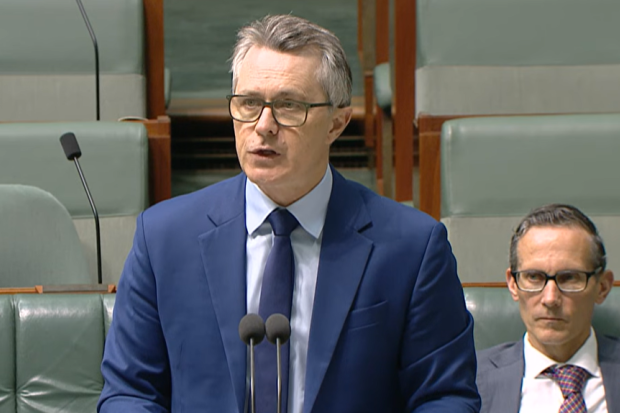
Australia’s higher education regulator will ensure that “the things that have put universities on the front page of newspapers for the wrong reasons are fixed for good”, under legislation introduced into parliament by the federal education minister.
Jason Clare said the “strengthening governance” bill would give the Tertiary Education Quality and Standards Agency (Teqsa) better tools to “step in and act when it’s justified in the public interest”, and to address “systemic risks” rather than confining its work to issues of individual institutional compliance.
The tools include powers to force universities and colleges to “rectify” breaches of regulatory standards. Specified fines for regulatory violations would rise tenfold to A$436,800 (£220,400), with maximum penalties of almost A$2.2 million. Particularly egregious offences, such as awarding degrees while unregistered, could attract fines of almost A$5.5 million.
Teqsa would also gain the power to assess “systemic” risks to students’ experience or the integrity of higher education – by conducting “thematic assessments” across multiple institutions, if necessary – and advise universities, the minister or the Australian Tertiary Education Commission about these issues.
But a proposal to pre-empt such risks, by empowering Teqsa to serve institutions with legally enforceable “general directions”, has been removed from the bill. This measure provoked outrage when it was communicated to university representatives in early November.
Also gone is a proposal allowing Teqsa to demand information relevant to any aspect of its legislated responsibilities. This could have compromised staff legally and potentially exposed them to fines of almost A$55,000, while reframing the agency more as “an integrity commission than a quality assurance regulator”, according to Universities Australia (UA).
A source agreed. Compelling people to comply with investigations of breaches is “very different” from compelling them to comply with “any question about anything”, he said. “That’s just police state stuff.”
UA said the “meaningful” changes demonstrated the value of engaging with government before legislation found its way into parliament. “But there’s more work to do,” it told its members. “We…need to look at these changes in the context of the growing regulatory burden on our universities.
“It’s about getting the balance right – holding universities to account while respecting their independence.”
Measures in the bill would also ease the regulatory burden on many private colleges by relieving them of the obligation to renew the accreditation of their courses. Powers to appoint and direct Teqsa’s CEO would be transferred from the minister to Teqsa commissioners.
The bill also includes amendments to strengthen the governance, accountability, representation, appointment processes and “institutional culture” of the Australian National University (ANU), Clare told parliament. The university’s legislation would be modernised to include “transparent and merit-based processes” for appointing the chancellor and vice-chancellor, while the nominations committee – which recommends council appointments – would be overhauled, among other changes.
The bill “bakes into the ANU Act the best practice governance approach recommended by the Expert Council on University Governance,” Clare said.
Debate on the bill has been adjourned until parliament sits again in early February. Scrutiny from a Senate committee inquiry is expected in the meantime.
“This bill is a chance to act on the recommendations of the multiple inquiries and reports into university governance,” said committee member Mehreen Faruqi, the Greens’ tertiary education spokeswoman. “It’s critical that we strike a balance between autonomy and accountability that sets universities on a course out of this governance crisis.”
Register to continue
Why register?
- Registration is free and only takes a moment
- Once registered, you can read 3 articles a month
- Sign up for our newsletter
Subscribe
Or subscribe for unlimited access to:
- Unlimited access to news, views, insights & reviews
- Digital editions
- Digital access to THE’s university and college rankings analysis
Already registered or a current subscriber?