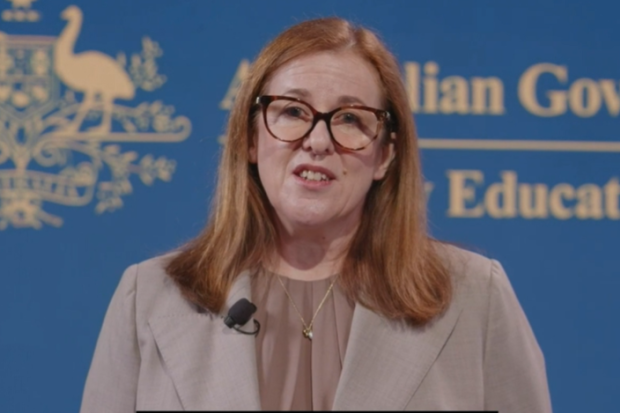
The head of Australia’s higher education regulator has pushed back at claims of overreach, saying universities must get their own houses in order.
Mary Russell, CEO of the Tertiary Education Quality and Standards Agency (Teqsa), said universities’ regulatory headaches had not emerged from nowhere. “Institutional autonomy is a defining feature of Australian higher education, but autonomy and accountability go hand in hand,” she told Teqsa’s annual conference.
“In recent years, we’ve seen serious and recurring governance concerns across the sector. These issues did not arise because of regulation; they emerged within institutions and ultimately must be addressed by those institutions. Substantive regulatory reform responds to identified needs for change.
“The community rightly expects Teqsa to act when necessary. There’s an important message here for all of us: we should not need to wait for legislative reform to do what good governance already requires.”
The conference is taking place days before a bill to give Teqsa extra powers – including fining institutions over A$2 million (£1 million) and dictating the “steps” they must take to “correct” breaches of their registration conditions – is due to be tabled in parliament.
Russell said legislative settings were a matter for the government and parliament, but the sector had brought the problem on itself. “I have never seen regulations changed unless there’s a perception that the regulated entities are in some way not responding, not hearing messages, not meeting expectations
“There are often signals…in complaints, staff and student feedback, changing behaviours, changing expectations and challenges to stakeholders’ trust and confidence. What matters is whether those signals are recognised and acted upon.”
David Turvey, CEO of the Australian Tertiary Education Commission, backed Russell’s message. “Institutions…are very keen to maintain their autonomy, but that requires them to take accountability for how they’re engaging with the community,” he told the conference.
Russell said universities needed to “go beyond” their grievances about over-regulation. “We could get so focused…on reducing the burden that we miss the opportunity to really question what these regulatory changes [are] in response to.”
While institutions tended to be reflexively “defensive” when new regulatory obligations were imposed, Russell said they should be more introspective. “We recognise that you’re autonomous institutions, but your own governing bodies should be asking the same questions as we…are.”
National Student Ombudsman (NSO) head Sarah Bendall said that after taking on her role, she had been surprised at the sector’s “basic” understanding of the need to provide quality student experiences.
“Students are paying a lot of money,” she told the conference. Expecting a high-quality student experience…is a right that they have, not a nice-to-have. It’s a fundamental of the delivery of higher education services, and it isn’t [often] framed that way in the sector.”
Bendall said timetabling was as much a “pain point” for students as it had been 20 years ago. She said administrators had not addressed students’ grievances about shortcomings in academic appeal, exclusion and misconduct processes, even though “their own data” highlighted the problems.
“I…wonder why more isn’t being done to co-design those processes with students to make them less confronting or more transparent. The things that we’re seeing through the NSO are fairly basic. I think there’s some heavy lifting to do.”
Russell said universities would also need to rethink the extent to which protests and “political statements” should be allowed in class, or even on campus. “Is it reasonable now to expect that some of those things don’t belong in teaching and learning spaces, [and] there need to be separate…spaces where those things can be expressed?
“They’re still part of freedom of speech [and] potentially academic freedom, but that doesn’t mean…they can be exercised without constraint [or] respect for others. That’s part of the fundamental issue about what ensuring a safe and supportive learning environment will mean over the coming five to 10 years.”
Register to continue
Why register?
- Registration is free and only takes a moment
- Once registered, you can read 3 articles a month
- Sign up for our newsletter
Subscribe
Or subscribe for unlimited access to:
- Unlimited access to news, views, insights & reviews
- Digital editions
- Digital access to THE’s university and college rankings analysis
Already registered or a current subscriber?