The role of the United Nations’ Sustainable Development Goals in inspiring continuous progress in sustainability remains important, but overly rigid objectives may hinder the flexibility and innovation needed to address complex challenges
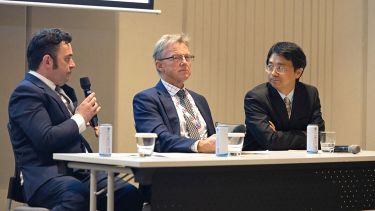
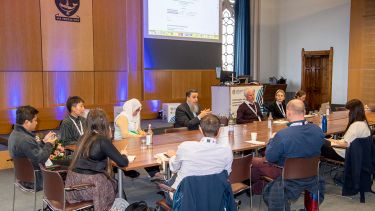
The limited progress on many global objectives included in the United Nations’ Sustainable Development Goals (SDGs) highlights the need for reevaluating the current approaches and identifying new pathways for advancement. At a panel discussion, held in partnership with the University of Auckland, during the 2025 Global Sustainable Development Congress, experts came together to discuss strategies for translating targets into genuine impact. The discussion was moderated by Dawn Freshwater, vice-chancellor of the University of Auckland.
Freshwater called on higher education to look beyond slogans and focus on solutions, aligning SDG ambitions with realistic and evidence-informed outcomes. “Evidence lies at the heart of academic endeavour, yet when it comes to the greatest challenges facing the world, the targets set are unrealistic,” she said.
“A central theme for moving forward is the development of breakthrough technologies,” said James Liao, president of Academia Sinica in Taiwan. “Current technologies are often insufficient for tackling the scale and complexity of global issues, meaning significant further investment in next-generation technology is paramount. This isn’t just about scientific discovery but also the application and societal integration of these innovations.”
It’s also crucial to ensure community buy-in, necessitating a strong emphasis on public participation. Scientists and engineers must engage with society from the outset of technology development to prevent negative public reaction or rejection.
“Effective leadership is vital to bridging the gap between scientific knowledge and actionable change,” said Liao. “Leaders, especially those with scientific backgrounds, must become advocates for technology, clearly communicating both the benefits and potential downsides to foster public trust. Transparency is key. No solution is perfect, and acknowledging limitations builds credibility.”
The panellists discussed the ongoing relevance of the SDGs and the underpinning science behind the goals. “These are really important,” said Freshwater. “They’re also, to a certain extent, heavily influenced by what’s happening politically and economically and the geographical tensions that we face.”
While the SDGs represent noble aspirations, such as eradicating poverty and hunger, their aggressive targets can be viewed as declarations rather than concrete, actionable plans. Achieving such goals will require unprecedented shifts in resources and political will.
“Instead of being presented as rigid goals, the SDGs could be viewed as values or long-term aspirations,” said Ehud Keinan, Benno Gitter professor of chemistry in the Schulich Faculty of Chemistry at the Israel Institute of Technology. “Problems like hunger, for instance, are not due to a lack of food production but rather political and distribution issues. This highlights that many global challenges are deeply intertwined with socio-political factors, not solely scientific ones.”
Solutions to today’s complex problems, such as climate change, resource scarcity and pandemics, are likely to emerge from future, unforeseen technologies. Scientists need the freedom and resources to conduct research away from rigid deadlines. “Solving global challenges requires a holistic approach, where politics, society, science and technology all contribute,” Liao said. “No single domain can solve everything. Instead, each should focus on what it can contribute, working together towards common objectives.”
The journey towards sustainable development is a collective endeavour, requiring collaboration across disciplines and a long-term perspective. It’s about recognising that solving global problems is a continuous process of progress. “Specific solutions will constantly evolve,” Keinan said. “Rather than focusing on static solutions, the emphasis should be on fostering an environment of continuous scientific inquiry and technological innovation.”
The panel:
- Dawn Freshwater, vice-chancellor, University of Auckland (chair)
- Ehud Keinan, Benno Gitter professor of chemistry, Schulich Faculty of Chemistry, Israel Institute of Technology
- James Liao, president, Academia Sinica
Find out more about the University of Auckland.