Higher education can be a powerful catalyst for social change and tackling sustainability challenges. But leadership, engagement, collaboration and measurable action will be crucial for making a real difference
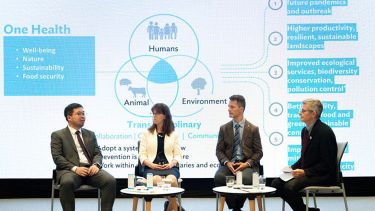
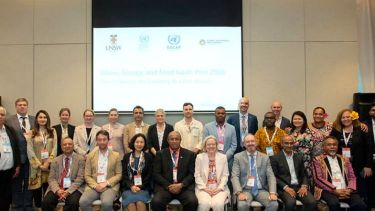
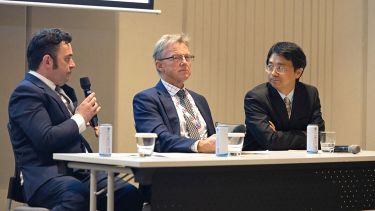
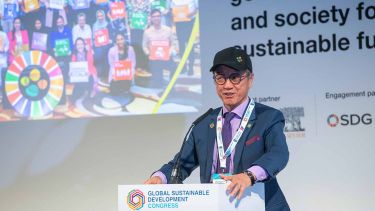
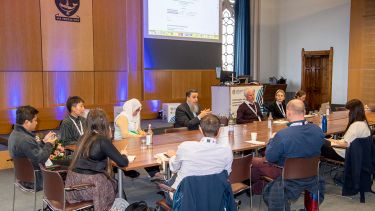
Many universities have made their commitment to the United Nations’ Sustainable Development Goals (UN SDGs) a strategic priority. But bridging the gap between strategy and action to deliver real-world impact is more challenging. A panel discussion, held in partnership with The Hong Kong Polytechnic University (PolyU), during the 2025 THE Global Sustainable Development Congress, featured experts who shared their insights on how the higher education sector can boost its SDG impact and help society mount a response to the most urgent issues we face today.
Wing-tak Wong, deputy president and provost of PolyU, called for a deep-rooted institutional commitment to social responsibility, where the SDGs are embedded at all levels. Leadership could steer top-level strategy, but tackling the SDGs requires the engagement of everyone at the university. “Senior management at universities should have clear guidelines and standards throughout the community,” he said. “However, to work out all the little details, you have to be bottom-up. Progress very much depends on the university’s main policy facilitating both of these operations.”
When the UN officially launched its SDGs in 2015, universities had already anticipated many of its objectives. From tackling gender inequality and climate change to improving access to education, universities had strategies in place. “We developed a framework that started our sustainability office from the beginning,” said Matsheliso Molapo, vice-principal of strategy, risk and advisory services at the University of South Africa. “Even before we had the language of calling it sustainable development, those initiatives were already there.” This gave universities a head start on SDG efforts.
Molapo spoke about the University of South Africa’s success in widening participation in higher education. However, the university needed collaborators, partnerships with industry and the support of the communities it serves to maximise impact. “We do this jointly with non-governmental organisations, community and faith-based organisations and our traditional leaders in the villages,” said Molapo. “That’s where we see the fruits of our work at the community level, which builds up to our research outputs as a university.”
Dawn Freshwater, vice-chancellor of the University of Auckland in New Zealand, said that there was no substitute for good governance and leadership that is responsive to the changing needs of society and the evolving nature of the challenges under each SDG. Universities would be vital in creating a new generation of SDG champions.
“We don’t educate our young people enough on how to engage politically, how to understand the importance of their vote and the importance of understanding the environment around governance,” said Freshwater. An engaged community of students and researchers is a powerful resource. With the right support mechanisms and the means to measure SDG impact, universities can bridge that gap between words and meaningful action.
The panel:
- Dawn Freshwater, vice-chancellor, University of Auckland
- Chris Havergal, editor, Times Higher Education (chair)
- Matsheliso Molapo, vice-principal of strategy, risk and advisory services, University of South Africa
- Wing-tak Wong, deputy president and provost, The Hong Kong Polytechnic University
Find out more about The Hong Kong Polytechnic University.