Last month, Argentinian president Javier Milei took to the stage at Davos to mount an ardent defence of capitalism.
“Today, I will demonstrate that free enterprise capitalism is not only more productive, but also that it’s the only just system,” the far-right populist told the conference of world leaders and business people, before going on to attack state intervention, regulation and “wokeism”.
The speech was that of a leader newly emboldened after his plan to slash public spending and regulation in Argentina – as “shock therapy” to address the country’s high inflation and budget deficit – was shored up by an unlikely midterm election victory in October.
Since sweeping to victory in 2023’s presidential election, famously wielding a chainsaw as a symbol of his intentions, the macroeconomics professor-turned-television pundit had been forced to contend with minority support in both houses of the National Congress. And two years into his presidency, voters appeared to be growing tired of his austerity measures, and his reputation was further damaged by a bribery scandal linked to his sister.
In the midterms, however, his party won nearly 41 per cent of the vote, claiming 64 of the 127 lower house seats up for election and 13 of the 24 senate seats: a huge increase. Key to his success was the promise of economic support from Donald Trump’s US, principally in the form of a $20 billion (£15 billion) currency swap, that was guaranteed only if Milei’s party won the elections.
For Argentina’s public universities, already suffering under years of frozen budgets and high inflation, this was the worst possible outcome. Not only did Milei’s own party, La Libertad Avanza party (Liberty Advances), greatly increase its own power, it has also begun to attract politicians from other parties to vote with it.
“In Argentina, there is a long tradition of so-called opportunistic legislators: that is, lawmakers whose positions are not deeply ideological and tend to align themselves with whoever appears to be winning,” said Valeria Edelsztein, professor of analytical chemistry at Buenos Aires Institute of Technology. “After Milei’s midterm victory, many of these legislators stopped acting as a counterweight and instead shifted toward supporting his agenda.”
That makes it “much easier for the government to pass measures that would previously have faced at least some resistance, including an extremely harsh austerity budget”, passed in December, she said. “These policies were presented as unavoidable or ‘responsible’, and Congress largely went along with that framing.”
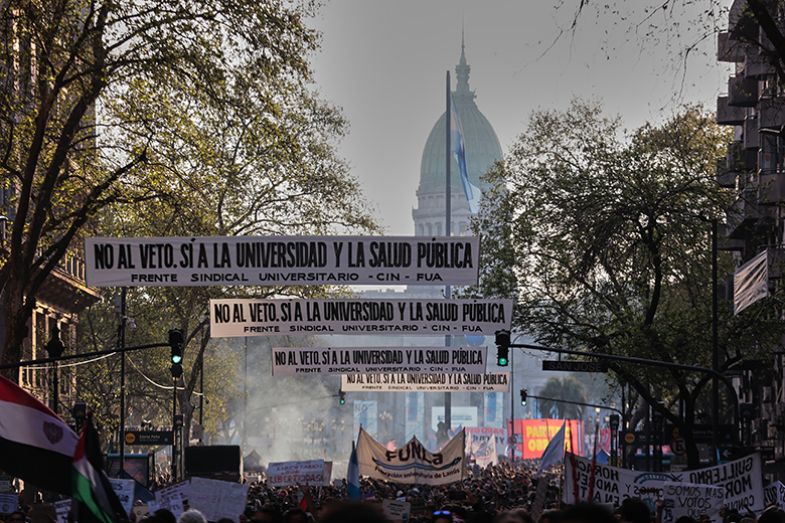
That contrasts with Congress’ behaviour prior to the midterms, when it sought to protect universities from Milei’s excesses with his chainsaw. Marcelo Rabossi, professor of higher education policy and management at Torcuato Di Tella University in Buenos Aires, told the World of Higher Education podcast in September that funding for Argentina’s public universities fell by around 30 per cent in real terms in 2024 and that, by 2025, the university budget was about 35 per cent lower than it had been in 2023. This resulted in a similar fall in the salaries of university workers, who reacted by going on strike last year amid estimates from one union that up to 70 per cent of them have incomes below the poverty line.
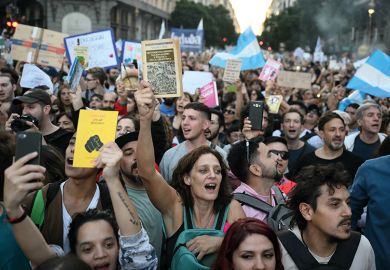
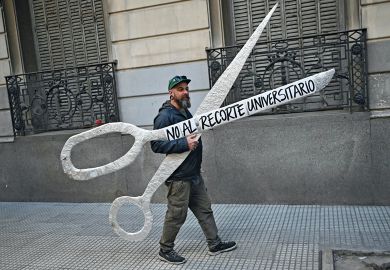
The university cuts provoked protests in Buenos Aires in April 2024 that were so large that some surveys reported that up to a quarter of the city’s population claimed to have taken part, amid warnings from university rectors that they faced a “critical situation”. Further protests followed.
Ultimately, the public concern prompted Congress to pass a University Funding Law last August that sought to ensure stable, long-term funding for public universities by guaranteeing inflation-linked funding rises for university budgets and staff wages. However, the legislation did not receive the two-thirds majority needed to override the presidential veto that Milei exercised the following month – a decision that sparked another wave of protests in Buenos Aires.
In a lengthy tug of war, Congress went on to override the veto before October’s election, this time surpassing the required two-thirds threshold. Milei’s opponents attacked the government’s argument that it needed to save money, pointing to tax exemptions made to grain exporters that cost far more than the funding for universities would have. Yet Milei still refused to implement the law, attempting to repeal it as part of the 2026 budget. Amid opposition to that move, the country’s budget was eventually passed in December without repealing the law.
But whether Milei accepts the defeat and enacts the law remains to be seen. “Rather than stabilising support for the university sector after the earlier turmoil, the political momentum has translated into a sense of entitlement within the executive to push further cuts and to roll back funding guarantees enshrined in law,” said Diego Golombek, a biology professor at the National University of Quilmes.
And the budget was hardly a win for universities in other ways either. It removed the legal requirement to allocate at least 6 per cent of GDP to education, reduced investment in science and technology and almost entirely eliminated a dedicated fund for technical and vocational education.
Hence, Argentina’s academics are braced for a worsening of their situation, both personally and institutionally. It is already becoming “practically impossible” for academics to survive on their dwindling salaries, according to Valeria Levi, vice-dean of the Faculty of Natural Sciences at the University of Buenos Aires – and other academics told Times Higher Education that it is increasingly common for academics to supplement their income by working as Uber drivers.
Beyond salaries, “the rest of the university budget has also been severely cut,” Levi added. “This budget is used for everything from paying electricity bills to purchasing reagents for teaching laboratories [but] the government is not readjusting [it] in line with inflation, and, thus, our resources become more limited every month. We feel like we are going backwards in time, progressively losing our teaching capabilities and the high standards we once had.”
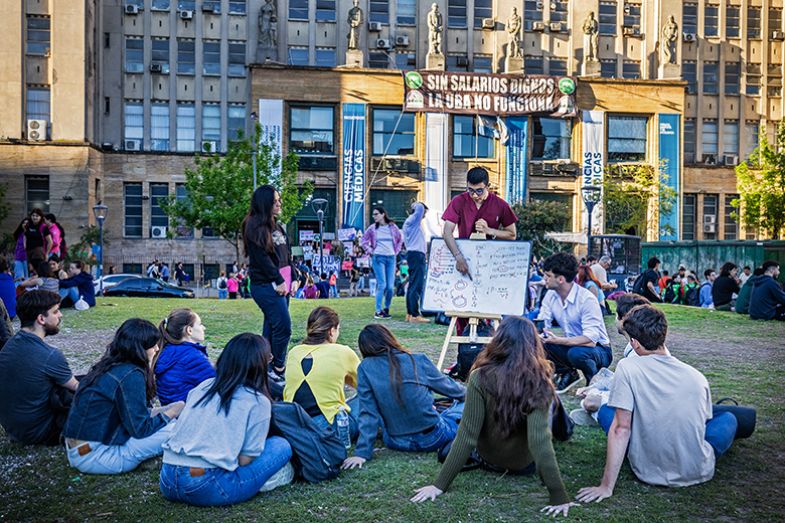
The statistics on science spending also bear out that bleak prognosis. Since the beginning of 2024, Argentina’s public spending on science and technology has fallen by nearly 44 per cent in real terms, with the budget for the main science funder, Conicet, decreasing by nearly 31 per cent over that period, according to the Ibero-American Center for Research in Science, Technology and Innovation (CIICTI). Meanwhile, salaries at Conicet institutes have fallen by 38.5 per cent in real terms since November 2023, while university salaries have fallen by 33.4 per cent, CIICTI has calculated. Nearly 4,500 jobs have been lost in public science and technology agencies, including nearly 2,000 at Conicet – while 850 early-career researchers whose hiring was approved by the previous government saw their fellowship offers withdrawn, prompting fears of a brain drain.
Politicians in Milei’s party have suggested that the bill for research should instead be picked up by private companies. Indeed, Milei himself told a right-wing conference that if academics “think their research is so valuable, I invite them to go out into the market like any ordinary person, publish a book and see if people are interested, instead of cowardly hiding behind the coercive power of the state”.
This attitude “reveals a worrying lack of understanding” of how science works, Rabossi warned. “In no country in the world is basic science left to private hands because its costs do not translate into private benefits but into social ones. Without basic science, there is no applied science; it is the foundation.”
Claudio Cormick, a researcher at Conicet, warned of the consequences of that: “Work on neglected diseases – such as Chagas disease, which mainly affects poor populations, or research on social issues such as teenage pregnancy – will gradually be lost, with measurable consequences for the quality of life of the population.”
Edelsztein went so far as to say that “what is being lost is not only funding, but a model of education and science as a public good”.
Again, there has been pushback. In March 2024, for instance, 68 Nobel laureates wrote an open letter to Milei warning that the Argentinian scientific system was approaching a “dangerous precipice” and that devaluing or cancelling research would be a grave mistake. Yet it apparently made no impression on Milei, despite Argentina’s pride in its status as the only country in Latin America to have won three Nobel prizes in science – a fact multiple interviewees for this article emphasised.
That pride extends to the public university system that trained those laureates: “In fact, all our five Nobel prizewinners [two of them being recipients of the peace prize]…were trained in public universities,” said Cormick.
There are also worries about what the deterioration of the public university system means for Argentina’s social fabric. “Argentina’s public universities have historically been one of the country’s most powerful engines of social mobility, offering free, high-quality higher education regardless of social background,” said Edelsztein. “As public universities weaken, inequality grows.”
Indeed, Cormick’s own mother was a beneficiary of the opportunities opened up by Argentina’s fee-free public universities. She was “a peasant woman with 13 siblings, raised on the brink of poverty”, but, as an adult, “obtained a degree in sociology free of charge at the University of Buenos Aires and was taught by the best sociologists in the country. This kind of possibility is increasingly unlikely to be repeated: day after day, we see excellent professors and researchers moving their teaching and their teams to fee-paying universities.”
But few consider private universities to be save havens for Argentina’s academic culture and prowess. While such institutions have become well established in much of Latin America, Dan Levy, a professor in the School of Education at the State University of New York, said private higher education in Argentina has “always lagged” the rest of the continent, and may have reservations about expanding given the populist administration’s negative stance on higher education. “The heads of the top private universities, which aren’t that large in Argentina, basically don’t want the ship rocked,” Levy said.
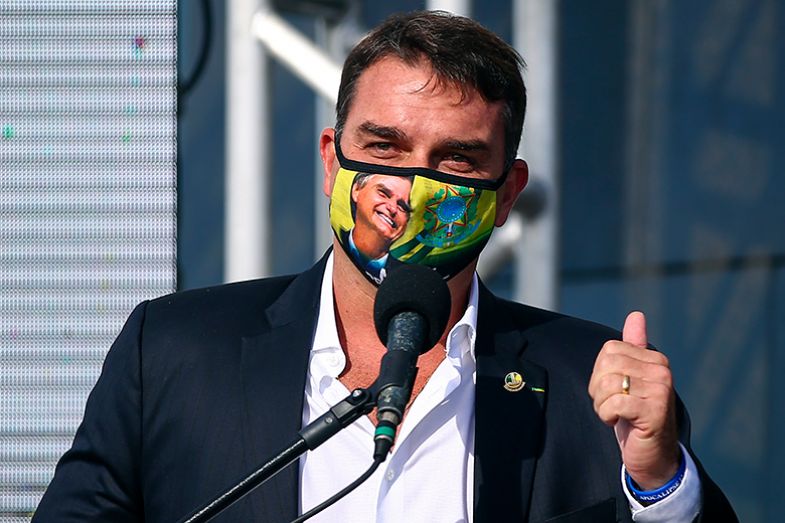
An assault on science and universities by right-wing populists is hardly unique, of course. In Argentina’s eastern neighbour, Brazil, Javier Bolsonaro wreaked similar destruction during his four years as president, from which the country is still recovering. Bolsonaro, in power between 2019 and 2023, slashed the federal science budget by 90 per cent, interfered in university governance and tried to limit academic freedom.
Brazil will hold its next presidential election in October, and while Bolsonaro is now in prison for plotting a military coup, his eldest son, Flávio, continues to carry the torch for “Bolsonarismo” and is forecast to be the incumbent president Luiz Inácio Lula da Silva’s main challenger. And while Lula continues to lead in opinion polls, the likely result of a second-round run-off between Lula and Bolsonaro is currently too close to call.
The model for both Bolsonaro and Milei, of course, is Donald Trump – who, in his second term, has attempted to slash research funding and defund the Department of Education, cancelled ongoing projects he doesn’t like, such as diversity and climate change, and tried to coerce top universities into agreeing to advance conservative ideas on campus in exchange for government funding. However, in the US, universities, the courts and Congress have pushed back, at least to some extent, limiting the damage. For instance, Trump’s proposal to slash the budget of the National Science Foundation by more than 50 per cent were overturned in a budget bill signed by Trump last month. An appropriations bill defending the budget of the National Institutes of Health from similarly huge cuts was passed by the Senate last Friday.
For his part, Milei stopped short of a campaign promise to abolish Conicet entirely, and while he has criticised “so-called scientists and intellectuals” and identified them with a malign “caste” supposedly responsible for Argentina’s economic woes, he has not actively sought to suppress their freedom of speech. Still, academic freedom in Argentina is at risk, argued Levi, because “you can only have academic freedom if your country provides the possibility of building an academic career…In Argentina, this possibility currently seems non-existent. If your salary is not enough to cover basic expenses, you have no access to grants, and you are constantly under attack, you lose the possibility of pursuing an academic career and, consequently, academic freedom itself.”
Argentina’s western neighbour, Chile, recently followed in its political footsteps, electing a far-right president, José Antonio Kast, in December. That left academics fearful of Milei-style budget cuts. And Milei ended his speech at Davos by exalting the role of the western hemisphere in influencing the global order.
“The world has begun to awaken. The best proof of this is what is happening in the Americas, with the rebirth of the ideas of liberty,” Milei said.
The National University of Quilmes’ Golombek agreed that his continent was heading in a rightward direction – though he takes the opposite view on whether that is a good thing. “While each country’s context is different, the trend toward deprioritising public knowledge infrastructure in favour of short-term fiscal narratives poses a real risk for Latin America’s collective development trajectory,” he said.
But universities should not quietly acquiesce to wider political forces. Instead, they should “communicate clearly and systematically to the broader public the links between higher education and societal outcomes”, he believes.
“In short: we must defend the public mission of universities without burying our heads in the sand about fiscal and political realities.”
Register to continue
Why register?
- Registration is free and only takes a moment
- Once registered, you can read 3 articles a month
- Sign up for our newsletter
Subscribe
Or subscribe for unlimited access to:
- Unlimited access to news, views, insights & reviews
- Digital editions
- Digital access to THE’s university and college rankings analysis
Already registered or a current subscriber?